Activity
Mon
Wed
Fri
Sun
Jun
Jul
Aug
Sep
Oct
Nov
Dec
Jan
Feb
Mar
Apr
May
What is this?
Less
More
Memberships
Break Into Aerospace
109 members • $19/month
6 contributions to Break Into Aerospace

9h •
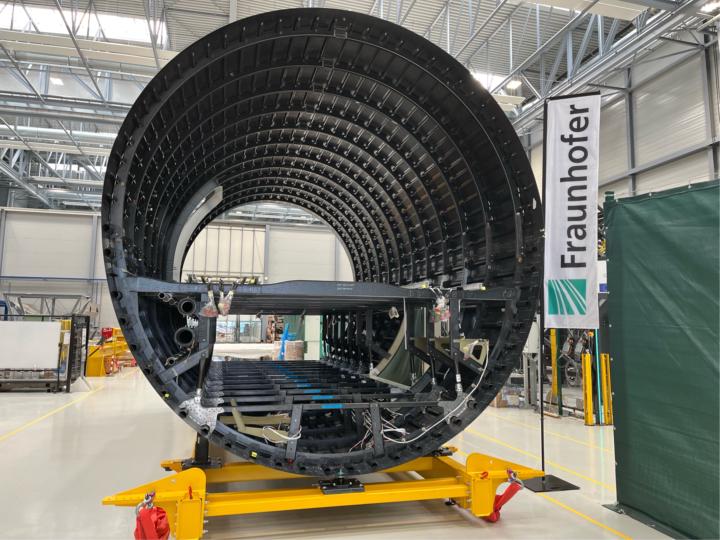
Understanding the Aircraft Fuselage
The fuselage is the main body of an aircraft, but from a structural engineering perspective, it is a complex assembly designed to maintain aerodynamic shape, protect internal contents, and most importantly bear significant flight and pressure loads. 1. The Core Functions What does the fuselage actually do? - Load Bearing: It must withstand forces from maneuvers, take-off, landing, and internal pressurization. - Shape Definition: It provides the aerodynamic profile necessary for flight. - Environmental Protection: It protects passengers and equipment from external conditions. 2. Structural Classifications In aerospace, we categorize structures based on how critical they are: - Primary Structure: Critical load-bearing elements.If these fail, the entire aircraft is at risk (e.g., the main fuselage shell). - Secondary Structure: Elements that only carry local aerodynamic or inertial loads (e.g., fairings or the dorsal fin). 3. The "Stiffened Shell" Concept Modern pressurized aircraft are essentially thin-walled pressure vessels. Because a simple thin skin would buckle under compression, we use a "stiffened shell" concept. The key components working together are: - Fuselage Skin: Carries the primary cabin pressure loads and shear. - Stringers (Longitudinals): Longitudinal members that stiffen the skin and carry axial loads (tension/compression). - Frames (Transversals): Circular or oval members that maintain the fuselage's cross-sectional shape and prevent the stringers from buckling. - Bulkheads: Heavy-duty frames located at ends of pressurized sections or where major loads (like wings) are attached. - Longerons: Longerons are heavy longitudinal stiffeners designed to carry particularly large loads, acting as primary structural members within an airframe. While similar to stringers in their longitudinal orientation, they are distinguished by their greater cross-sectional area and the intensity of the loads they are engineered to handle.
1 like • 6h
@Lluís Foreman Absolutely! Semi-monocoque construction became dominant because it provides an excellent balance between structural efficiency, damage tolerance, manufacturability, and maintenance accessibility. The Deperdussin Monocoque was revolutionary historically, but pure monocoque structures generally lacked the redundancy and maintainability required for modern commercial aviation. In long-service aircraft, maintenance and inspectability become just as important as weight savings, especially under cyclic pressurization and fatigue loading. Thank you!
5d •
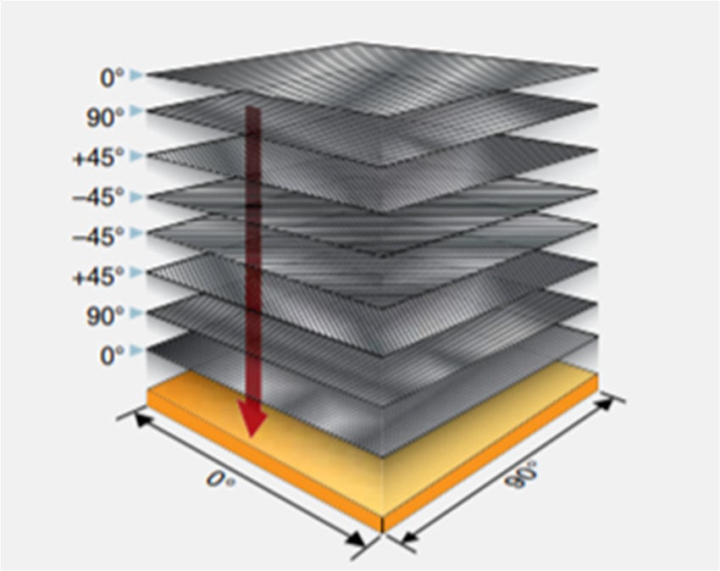
Today, let’s extend our understanding of material behavior in Aerospace Structure & Materials (ASM) by looking at two important classifications: quasi-isotropic and orthotropic materials.
Quasi-isotropic materials are engineered (mainly in composite laminates) to behave almost like isotropic materials in-plane. By arranging fiber orientations (e.g., 0°, ±45°, 90°), the laminate achieves nearly uniform properties in multiple directions. This approach is widely used when designers want the predictability of isotropic materials with the lightweight advantage of composites. Orthotropic materials, on the other hand, have three mutually perpendicular directions with different material properties. That means strength and stiffness vary along each principal axis. Many aerospace composites—and even some natural materials like wood—are orthotropic. This allows engineers to precisely tailor structural performance based on load paths. In practice: - Quasi-isotropic → balanced, uniform behavior (simplified design) - Orthotropic → directional optimization (high efficiency, high performance) Understanding these distinctions is crucial for designing advanced aerospace structures where load direction, weight reduction, and structural efficiency must be carefully balanced.
0 likes • 4d
@Lluís Foreman Thank you!
5d •
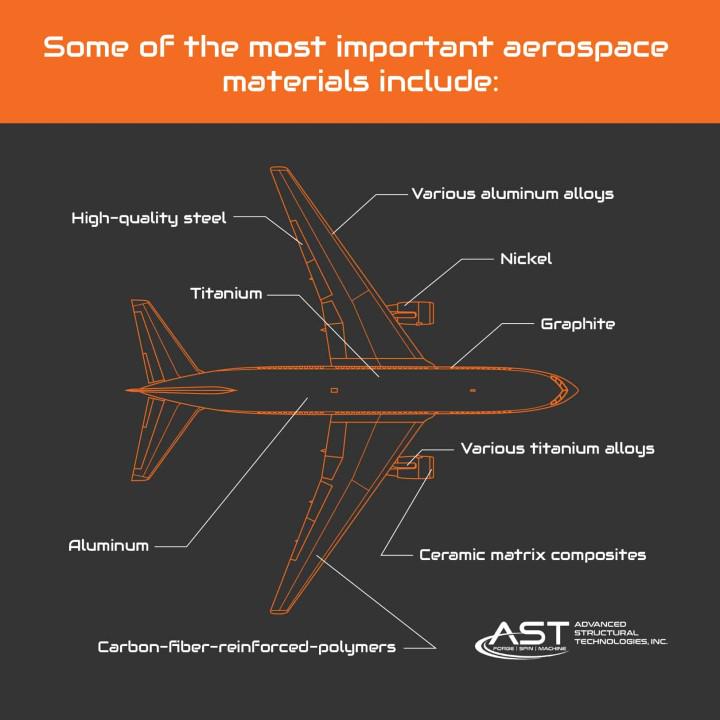
In Aerospace Structure & Materials (ASM), material selection is one of the most critical decisions in aircraft design.
The four primary categories of materials used in aerospace structures are: - Metals & Metal Alloys - Composites - Ceramics - Polymers Early aircraft were built from wood and fabric, but modern aviation has evolved significantly. Today, materials like aluminum, titanium, steel, and advanced composites dominate the industry, making up around 80–90% of a typical airframe’s structural components. Each material class plays a distinct role: - Metals → high strength, ductility, and well-understood behavior - Composites → exceptional strength-to-weight ratio and tailored properties - Ceramics → high-temperature resistance (ideal for extreme environments) - Polymers → lightweight and versatile for non-structural and semi-structural applications The real challenge in ASM is not just knowing these materials—but selecting and combining them efficiently to achieve strength, weight reduction, durability, and performance optimization.
0 likes • 5d
@Lluís Foreman You’re absolutely right! 3D printing (additive manufacturing) is rapidly transforming aerospace materials and production. A powerful example is the 3D-printed rocket engines developed by Relativity Space. Their Aeon engines are largely manufactured using metal additive processes, reducing part count drastically and improving production speed. This shows how materials science is evolving not just in what materials we use, but how we engineer and fabricate them. The shift toward additive manufacturing is redefining design freedom, efficiency, and performance in aerospace.
6d •
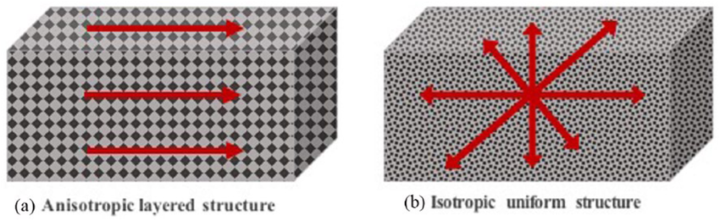
In Aerospace Structure & Materials (ASM), two fundamental concepts are isotropic and anisotropic materials.
a) An anisotropic material behaves differently depending on the direction of the applied load. Composite materials such as CFRP (Carbon Fiber Reinforced Polymer) are highly anisotropic because fiber orientation controls stiffness and strength. This directional behavior is what makes composites both powerful and challenging in aircraft design. b) An isotropic material has the same mechanical properties in every direction. Its strength, stiffness, and behavior remain uniform regardless of loading orientation. Metals like aluminum are commonly treated as isotropic materials in aerospace design because they simplify analysis and provide predictable structural performance. Modern aerospace engineering combines both concepts: - Anisotropic materials → lightweight, high strength-to-weight optimization - Isotropic materials → simplicity, reliability, uniform behavior The real engineering challenge is understanding when to use each material system for maximum structural efficiency.
1 like • 6d
I agree with You! Your explanation about fuselage pressurization loads and directional wing bending loads is an excellent real-world example of how isotropic and anisotropic behavior are applied in aerospace structures. Fiber orientation tailoring in CFRP really makes modern aircraft design more efficient and optimized.
7d •
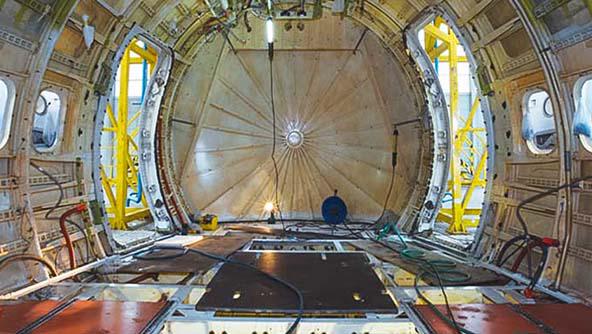
Aircraft Structure & Design (Where Engineering Meets Innovation)
Aircraft are not just machines, they are carefully engineered systems where every gram, every joint, and every material decision matters. From fuselage frames and wing spars to composite laminates and load paths, aircraft structural design is all about achieving the perfect balance between: 1. Strength 2. Weight reduction 3. Fatigue resistance 4. Damage tolerance 5. Aerodynamic efficiency 6. Manufacturability Modern aerospace engineering is rapidly evolving with advanced composite materials, digital twins, topology optimization, and AI-driven structural analysis transforming how we design next-generation aircraft. Some fascinating areas in aircraft structure & design: 🔹 Composite Structures for lightweight performance 🔹 Finite Element Analysis (FEA) for stress prediction 🔹 Fatigue & Fracture Mechanics 🔹 Aeroelasticity and structural vibration 🔹 Damage Detection & Structural Health Monitoring 🔹 Additive Manufacturing in Aerospace 🔹 Digital Twin frameworks for lifecycle prediction One thing I’ve learned: Great aircraft design is not only about making structures stronger, it’s about making them smarter, lighter, safer, and more reliable. What area of aircraft structures interests you the most?Composite materials? Wing design? FEA? Fatigue analysis?
1 like • 6d
@Lluís Foreman Thank you so much for the deep explanation! I totally agree, Aerospace composites such as CFRP beautifully connect textile engineering with aerospace structures. The idea of treating carbon fiber as an engineered textile architecture is what fascinates me most. Fiber orientation, weave structure, and resin interaction all play critical roles in determining strength, stiffness, and damage behavior in aircraft components. That connection is exactly why I’m interested in moving from textile engineering toward aerospace composites and structural design. It feels like an exciting extension of textile science into high-performance engineering applications.
1-6 of 6

@shadat-hossen-mahin-2337
A textile engineer who wants to transition into aerospace engineering.
Active 3h ago
Joined May 1, 2026