Activity
Mon
Wed
Fri
Sun
Aug
Sep
Oct
Nov
Dec
Jan
Feb
Mar
Apr
May
Jun
What is this?
Less
More
Memberships
The Watch Manual
32 members • Free
2 contributions to The Watch Manual

May 21 •
Jewels and horology: the story of a breakthrough
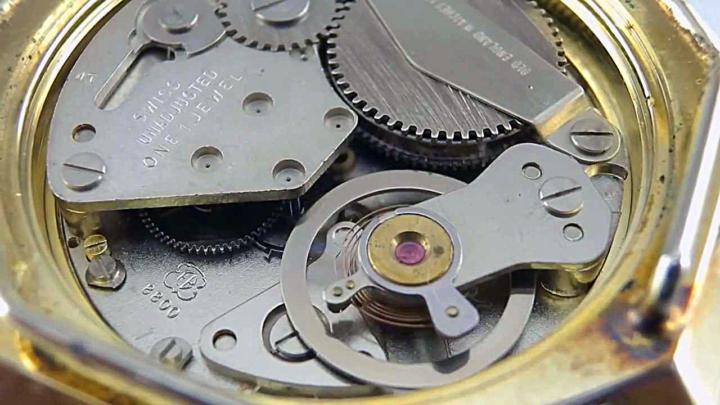
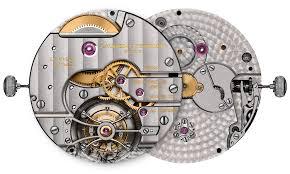
This is a longish and more advanced article coming from one of my ebooks, precisely "The Patreon Chronicles" (available in the Classroom here for purchase). It details jewels in watches, and complements the article about mainplates published earlier. _______________________________ What are the functions of a ruby or other precious-sounding gems in watch movements? While watches are considered among the rare items composing men’s jewelry, we need to understand the main differences between jewels “in” a watch and jewels “on” a watch. The words “ruby” and “precious stones” are indeed most evocative, but the reality is much more prosaic if we examine the application of these precious stones into watchmaking micromechanics. So, we’re not considering the precious stones that people display over their watches, and instead, check the much less glamorous aspect of what stays inside the watch: its heart, that is, the movement. First of all, let’s start by examining a real-life case. What you see below is a cheap watch movement called EB 8800. It was produced in mass quantities in the Seventies, and it is a relatively simple affair - equivalent to the cheap quartz-based calibers of today. As you can see, the top bridge has writing etched on it which says “Swiss - Unadjusted - One Jewel.” And the only jewel here is quite visible: it is the ruby located on the top of the balance wheel, at three o’clock. Apart from this, you can see the circular depressions in a lozenge-shaped array in the center of the watch. There are tiny holes practiced into them, and they host the pinions of the wheels turning inside the movement. You can see one of the wheels quite clearly next to the “EB” logo, with its teeth. Now, let’s check another photo of another movement. The movement is similar, but looking closely, you can spot a few key differences. Precisely, the very holes we talked about before showing the application of rubies, similar to the one over the balance wheel. Why the first movement has none, and the other does?

1 like • May 22
Another fantastic article. I have not seen sapphires (yet) in a watch. Have you?. they are also corundums w a mohs 9 hardness. W all the emphasis on movement display and aesthetics I have wondered why someone hasn’t used artificial sapphires which come in an endless array of amazing colors…..
0 likes • May 23
@Franz Rivoira Ha! Fantastic! C’est magnifique
May 18 •
Anatomy of a Watch: Let’s Talk About the Mainplate and Bridges
Let's start talking about the innards of a watch, and we can begin with its most fundamental part: the mainplate. If we were to compare a mechanical movement to a human body, the mainplate (or platina) would be its skeleton. It is the foundational base upon which everything else is built: wheels, bridges, balance, and escapement. Without a well-designed and well-executed mainplate, even the finest watch in the world cannot function properly. Yet, in most explanations aimed at enthusiasts, the mainplate is often overlooked or taken for granted. Today, we will explore it in depth. What Exactly Is the Mainplate? The mainplate is the primary plate of the movement. All other components — bridges, barrels, gears, and the regulating organ — are mounted onto it. In essence, it serves as the “chassis” of the entire mechanism. In its earliest forms, it was a simple slab of brass or bronze. Today, it can be made of brass, German silver (nickel silver), steel, titanium, or special alloys. The difference between an ordinary mainplate and one of the highest quality lies in the choice of material, the precision of the machining, and the care taken in its finishing. The Origins: From Tower Clocks to Pocket Watches The first mainplates appeared alongside the great tower clocks of the Middle Ages. They were heavy plates, often made of wrought iron, crafted more by blacksmiths than by watchmakers. Precision was relative — it was enough for the clock to indicate the hours approximately to regulate city life. With the transition to pocket watches in the 16th century, the mainplate became smaller and required greater care. Early Swiss and French watchmakers began using brass, which was easier to work with and less prone to rust than iron. This era saw the birth of the first “full-plate” mainplates, where most of the movement was covered by a single large plate - or better, two plates: one below and one above, housing all the gears in-between them. As they were quite similar, we can talk about a bottom plate and a top plate.
1 like • May 19
great article. I think some watches even use gold? Like Parmigiani.
1-2 of 2

Active 35d ago
Joined May 12, 2026