Activity
Mon
Wed
Fri
Sun
Nov
Dec
Jan
Feb
Mar
Apr
May
Jun
Jul
Aug
Sep
Oct
What is this?
Less
More
The Reset Circle
6.1k
5.0
Free
Bedrock Nation
177
Free
1 contribution to Bedrock Nation

Jun 18 •
The Real Reason We Can't Stop Scrolling
Hint: It's Not Dopamine. If you've spent any time on social media lately, you've probably heard people talk about "dopamine addiction." Dopamine detoxes. Dopamine overload. Dopamine fasting. Dopamine being the reason we can't put our phones down. But what if dopamine isn't the problem? What if we're blaming one of the body's most important systems for a problem it never created? Dopamine isn't bad. In fact, dopamine is one of the most remarkable systems God designed into the human body. Without dopamine: • You wouldn't pursue goals. • You wouldn't feel motivated. • You wouldn't experience anticipation. • You wouldn't enjoy learning. • You wouldn't strive for improvement. • You wouldn't seek meaningful connection. Dopamine is part of the system that helps move us forward. It was designed to reward behaviors that help us survive, grow, learn, connect, and fulfill our purpose. So if dopamine isn't the problem... Why can't we stop scrolling? Because modern life has learned how to trigger the reward without requiring the growth. For most of human history, dopamine was tied to effort. You learned a skill. You built something. You solved a problem. You worked toward a goal. You spent time with people you loved. You served others. You deepened your faith. You accomplished something meaningful. And dopamine reinforced those behaviors. Today, we can access the reward without the process. A notification. A like. A comment. A reel. A short video. A purchase. A swipe. A scroll. The brain receives a reward signal, but often without the growth, purpose, or fulfillment that was originally meant to accompany it. Over time, that disconnect can create imbalance. But I think there's an even deeper question worth asking. Why do some people scroll for ten minutes and put the phone down... While others lose three hours? Why can one person enjoy social media without becoming dependent... While another feels compelled to check every notification? The answer is usually much bigger than dopamine.


3 likes • Jun 18
This is powerful
1-1 of 1
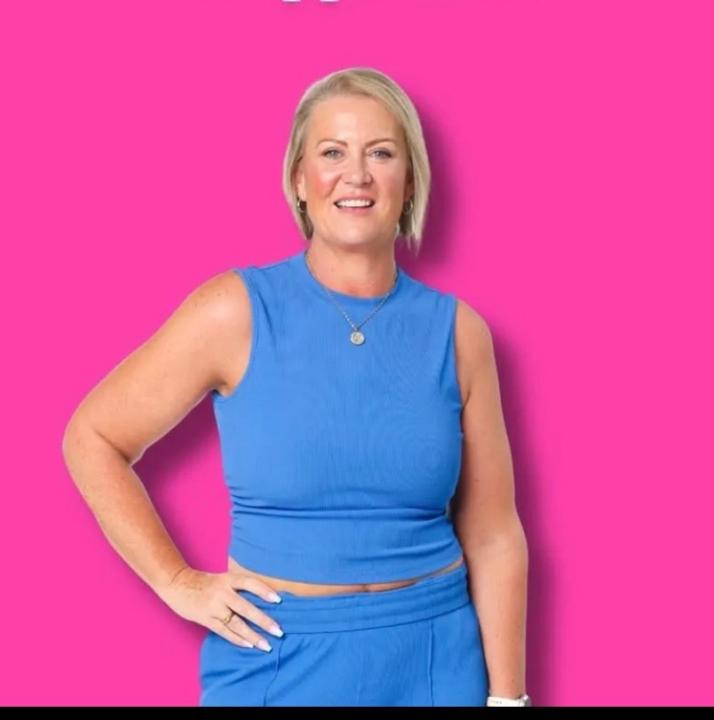
@sara-kersh-7672
Lost 220 lbs | Maintained it 10+ yrs
The Triple M Method:
Metabolism•Muscle•Micronutrients
Helping women 40+ rebuild
metabolism & maintain weight loss
Active 2d ago
Joined Nov 9, 2025
Charlotte NC