Activity
Mon
Wed
Fri
Sun
Jun
Jul
Aug
Sep
Oct
Nov
Dec
Jan
Feb
Mar
Apr
May
What is this?
Less
More

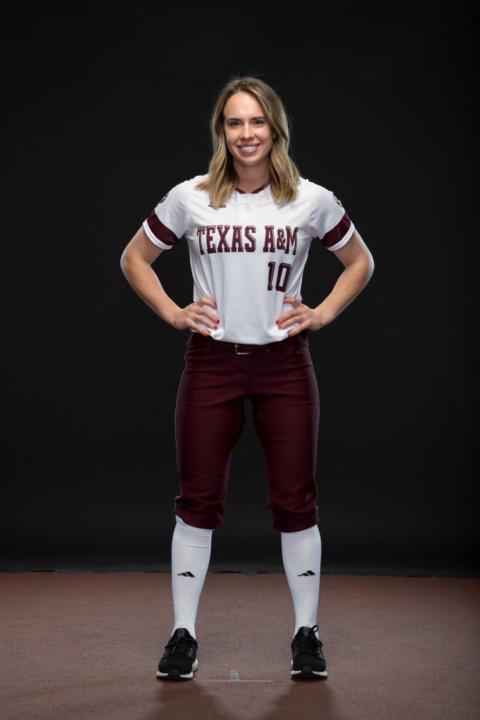
Owned by Riley

Baseball and Softball Training and Development Former Pro's Noah Vaughan and Riley Sartain-Vaughan Hitting Defense Mental Game

Memberships

12 contributions to Alpha PD Training Academy

NO MORE FLAT BAT AT CONTACT
I hear coaches cue hitters to “keep their bat flat” at contact all the time… but that’s usually what causes the barrel to cut across the ball instead of working through it. Good hitters keep tilt and posture. Your vertical bat angle should generally work parallel with your shoulder angle and perpendicular to your spine angle. Your body is rotating on a tilted axis, so the barrel should organize around that — not fight against it. Higher pitches usually need a flatter bat angle, while lower pitches need more vertical bat angle. The best hitters adjust naturally without losing posture or connection. When you maintain tilt, a few really important things happen: • the barrel stays in the zone longer • the bat can deliver a more direct blow to the back of the ball instead of a glancing strike (aka staying 'inside' the ball) • and your hands stay connected to the back shoulder instead of pushing away and disconnecting Flat shoulders and a flat barrel usually LOOK powerful, but they often kill adjustability and make the swing work around the ball too early. The swing isn’t supposed to be flat. It’s supposed to be connected, efficient, and on plane.
1
0
NO MORE FLAT BAT AT CONTACT
The Stats that ACTUALLY Matter
Batting average doesn’t tell the full story of a hitter. It shows outcomes, not how the at-bat was actually won. If you want a real picture of development, you have to track what actually translates. Here are the 3 statistics that aren't found in GameChanger that you should be keeping track of: Hard Hit Ball Percentage: This shows how often a player is producing quality contact. Consistently hitting the ball hard is one of the best indicators of long-term success, regardless of whether it falls for a hit. - Goal: 60% or higher - Formula: Hard Hit Balls ÷ Balls in Play - Why it matters: Measures true quality of contact, not luck - What it tells you: If your swing is producing real impact Two-Strike Percentage: This reflects how often a hitter is getting to two strikes in the first place. The best hitters control counts and avoid putting themselves in tough positions. - Goal: 30% or lower - Formula: Plate Appearances that reach two strikes ÷ Total Plate Appearances - Why it matters: Shows approach, pitch selection, and control of the at-bat - What it tells you: How often you’re putting yourself behind Hard Hit Ball Percent with Two Strikes: This is where competitiveness and swing quality meet. It shows who can still do damage when the count is toughest. - Goal: 50% or higher - Formula: Hard Hit Balls with Two Strikes ÷ Balls in Play with Two Strikes - Why it matters: Separates hitters who survive from hitters who produce - What it tells you: If your swing holds up under pressure Quick clarification (this is important): - Two-strike percentage is based on plate appearances - Hard hit metrics should be based on balls in play, not total at-bats Batting average can be influenced by luck, defense, and where the ball lands. These stats are different. They are repeatable, they reflect real skill, and they help us focus on the parts of the game we can control.
LOAD SCHOOL NOW AVAILABLE FOR FREE
We have been so thrilled with the response to launching this training academy. We want to offer one of our premium courses for FREEEEEEE! Advanced Hitting - Load School is now available under the classroom tab. This is one of our favorite courses as it works on one of the most misunderstood parts of the swing. Don't forget to post your progress on the Players at Work Community page! Let's work.
0 likes • 8d
@Jb Barnett Thanks for letting us know! Give it another try and see if you can access it
BAT SPEED TRAINING
We love the over/under loading approach to bat speed training! Bat speed doesn't come from your hands (hate to break it to you if this is your first time hearing it), but from how fast your body can rotate. Rotation speed has two components: 1) Explosive Strength: how much force your muscles can produce --> overload training 2) Neuromuscular speed: how fast your body can fire --> underload training To do over/underload training you'll need two different bats, you can hit with them or just do dry swings, both will accomplish the same goal. Try and take 30 swings with each bat in each training session at max effort. (make sure to get warmed up before) Overload: we love a wood bat that is 5-7 oz heavier than your game bat (https://amzn.to/4taUQTm or https://amzn.to/3Q332X7) Underload: either a wiffle ball bat OR a PVC pipe cut to size with a grip taped on, make sure to hit either wiffle balls or squishy balls (grip: https://amzn.to/4cisDnH) Train with this protocol 3-4x per week for 2 months and watch your bat speed skyrocket!
1
0
Let's Talk About Gloves
One question we get often is "What type/size glove do I need?" Here is our general guideline: Players under 12: 10.5-11.5 inches, any make or model but get something with a soft material that is squeezable. Avoid high end gloves unless you are okay with stiffer leather. (the #1 complain we get with young defenders is that they can't squeeze their glove. Players 12-18: Here we break it down based on positions. As ball players get older they usually start to narrow down a few key position they are skilled in. Different positions require different gloves. This is also a great time to invest into a nicer gloves (think Wilson A2000, Rawlings Pro Preferred, Nokona, etc.) This is what we recommend. Outfielders: 12-12.5 inches, Trapeze or H-Web 3B, 2B, SS: 11.5-11.75 inches, I-web is standard 1B: First Base Mitt Cather: Catchers Mitt Pitcher: 11.75-12 inches, weave web or something with FULL coverage (we want to hide our grips) Brand and colors are up to you and your personal preferences! The two most popular glove brands are Wilson and Rawlings. We know all the different options and selections can feel overwhelming, so this is the breakdown of their different glove lines. Each glove line usually differs in leather (or material) composition which makes the price different. A simple way to think about it is, cheaper leather (or non leather) is softer and will lose its shape sooner, more expensive leather is stiffer (and tougher to break in) but will hold its shape for decades if treated well. We will post our glove care routine next week! Wilson A500- $ A1000- $$ A2000 - $$$$ A2K - $$$$$ Rawlings Player Preferred - $ Select Pro - $$ R9/NXT/Liberty Advanced - $$$ Heart of the Hide - $$$$ Pro Preferred/REV1X - $$$$$ Let me know if y'all have any questions! Be sure to check out our official glove recommendations on the Equipment Recommendations page under the Community Tab!
1
0
1-10 of 12
Riley Vaughan
2
8points to level up
@riley-vaughan-2179
coach

Active 6h ago
Joined Jan 12, 2026
Powered by