Activity
Mon
Wed
Fri
Sun
Nov
Dec
Jan
Feb
Mar
Apr
May
Jun
Jul
Aug
Sep
What is this?
Less
More
Future Producer Society
89
Free
52 contributions to Future Producer Society
9d •
Has Drake Outgrown Hip-Hop… or Left It Behind?
I watched Drake's FOMO film, and I'm probably about to make myself the villain with this one. 😂 As a Gen Xer who grew up with hip-hop, I've always viewed hip-hop as more than a genre of music. It's a culture. It came from struggle. Reinvention. Making something out of nothing. And even as artists became successful, there was something powerful about remaining connected to the culture that created them. Watching FOMO, I found myself wondering whether Drake has crossed into something different. And I'm not saying an artist can't evolve. They absolutely should. I'm also not saying a rapper can't make country, R&B, pop, dancehall, house, or whatever else inspires them. Hip-hop itself has always borrowed, sampled, mixed, and reinvented. But there has to be a point where being influenced by other cultures and genres becomes something else entirely. Drake has reached a level of wealth and creative freedom where he can essentially make whatever he wants—and FOMO feels like exactly that. Hip-hop, R&B, country influences, goth aesthetics, luxury, pop culture...everything thrown into one world. And maybe that's the point. But it left me asking something bigger: At what point does an artist stop being a hip-hop artist who experiments with other genres and simply become a pop artist who also makes hip-hop? And here's the part that's probably going to get me in trouble: Should we even care? Part of me thinks we should. Because if hip-hop is a culture and not simply a musical genre, then I think there's value in preserving what makes that culture distinct—especially as it becomes increasingly global, commercialized, and blended into everything else. Maybe Drake represents hip-hop becoming bigger than its original boundaries. Or maybe he represents what happens when an artist becomes so big that the culture he came from is no longer big enough to contain him. So I'll leave y'all with two questions: Where's the line between evolution and losing connection to the culture? And maybe the bigger question...
3
0

9d •
Back at it
Hi im Jerome, just getting back into music after many years in the wilderness....looking to meet friends and collaborate and have fun. Check me out on TikTok @rometraxx1.
1 like • 9d
Welcome back man!
Jun 20 •
Is Akai Building the Apple Ecosystem of Music Production?
In the last few years, Akai has released: MPC Key 61, MPC One+, MPC Live III, MPC XL, MPC Sample, MPC One G2, MPC Key 37 G2. At first glance, it feels like they’re releasing a lot of MPCs. But after taking my MPC Sample on a trip, starting a beat on the road, then coming home and finishing it on my MPC X, I’m starting to wonder if Akai is building something bigger than individual products. It feels less like they’re selling MPCs and more like they’re building an ecosystem where every device has a purpose: • Capture ideas anywhere • Build tracks on the go • Produce in the studio • Perform live • Stay inside the same workflow Kind of reminds me of Apple’s approach. The iPhone isn’t competing with the MacBook. The iPad isn’t competing with the Apple Watch. They all serve different roles inside the same ecosystem. So I’m curious… Do you think Akai is releasing too many MPCs, or are they quietly building the strongest hardware ecosystem in music production right now? And what’s the one MPC you think they still haven’t built?
0 likes • Jun 20
@Chocolate Boyswagger I've only had my MPC X for about a year, and I'm finally getting to the point where I feel like I really understand it. Now Akai keeps dropping new MPCs that are more powerful, have new features, and honestly... I don't have the money to keep upgrading every time. But maybe that's the point. I'm starting to realize the real value isn't owning every MPC. It's mastering the one you already have. The funny thing is, the better I get with my current setup, the less I feel like I actually need the newest thing. Anybody else feel that way?
1 like • 9d
@Jerome Hindmon That’s one area I think Akai could really improve on. I don’t know if they’re at the scale where dedicated retail locations would make sense, but imagine an Akai version of Apple’s Genius Bar—somewhere you could actually bring your MPC in, have somebody diagnose it, repair it, answer questions, or even help with setup. When people are spending $1,500–$2,000+ on these machines, that level of support would make the whole ecosystem feel a lot more premium.
29d •
From a Beat Review to a Collaboration
Just wanted to share something that came directly from this community. I was watching one of Arkatech Beatz live beat reviews when OD tha Streetguard came on. I heard him rap and immediately thought, “Yeah, this dude can RAP.” So I reached out. We connected, I sent him three beats, and he ended up recording to the first one. When he sent it back, I was blown away by what he did with it. He recently put the finished record/video up on YouTube, so I wanted to share it here with everybody. This is actually one of the things I appreciate about this community. Sometimes you never know what can come from simply showing up, listening, connecting with somebody, and saying, “Yo, let's work.” @Collin Jugrnaut D live stream introduced me to an artist I probably wouldn't have crossed paths with otherwise, and now we've got a record together. Would love to hear what you guys think about the collaboration. OD the Street God x BigRiz https://youtu.be/8UNVWDZ1FiE?si=kFnpH91YfT5k5xlt
0 likes • 28d
@Collin Jugrnaut D honestly got you to thank. He got a couple more we working on. But shout out to you for providing the platform for producers and artist to connect.
0 likes • 27d
@Chocolate Boyswagger no sir just the beat engineer looped up the intro and shortened to fit bars.
29d •
Are We Overproducing Our Beats?
Something I’ve been thinking about... As producers, we’re constantly learning new techniques. More layers. More transitions. More counter melodies. More effects. More ear candy. But at what point does adding more actually make the record worse? Some of the greatest records have surprisingly simple production. The drums knock, the main musical idea is undeniable, and everything else has a purpose. I think one of the hardest skills to develop as a producer isn’t knowing what to add. It’s knowing when to stop. Sometimes that extra melody isn’t making the beat better. Sometimes it’s just proving that we know how to add another melody. 😂 How do you know when a beat is actually finished?
1 like • 28d
@Kazz Milz Trust me brother you ain't the only on that struggles with this. I'm muting tracks left and right that feel like there to much. Or trying to find a place for them somewhere else in the beat. If not the hook maybe a break or a switch up. It feels like a crime to waste a good melody.
1-10 of 52
@rick-chestnutt-1760
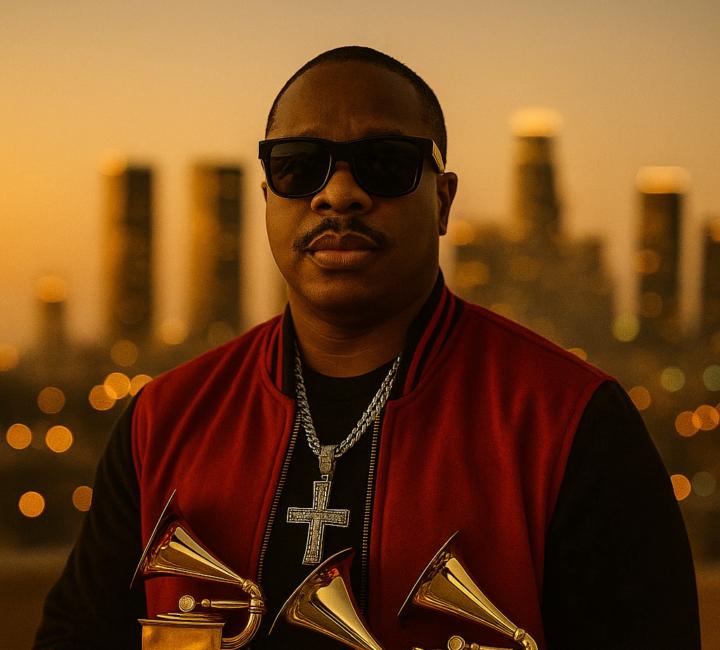
Rodrick “BigRiz” Chestnutt is a producer and AI Artist Architect blending R&B, Hip-Hop, and Street Soul with cinematic storytelling.
Active 2d ago
Joined Jan 19, 2026
Georgia
Powered by