Activity
Mon
Wed
Fri
Sun
Jun
Jul
Aug
Sep
Oct
Nov
Dec
Jan
Feb
Mar
Apr
May
What is this?
Less
More

Memberships

47 contributions to Future Producer Society

Native Instruments Just Got Acquired: Here's What It Means for Producers
WHAT HAPPENED Native Instruments, (the company behind Maschine, Komplete, and Traktor) just signed a definitive agreement to be acquired by inMusic. If that name doesn't ring a bell immediately, their portfolio will. inMusic owns Akai Professional, Moog Music, Denon DJ, Numark, Rane, and M-Audio. They now own the MPC ecosystem AND the Maschine ecosystem under one roof. I CALLED THIS I've been saying this for years. When a hardware company stops innovating fast enough, they don't survive ,they get absorbed. I watched it happen in real time. My first generation Maschine unit was rendered completely useless when I upgraded my CPU. No firmware update. No support. No path forward. That was over ten years ago. That's not a bug, that's a strategy failure. When you stop serving the people who built your brand, you lose the brand. WHY THIS HAPPENED Native Instruments spent years as one of the most dominant forces in music production software and hardware. But while the MPC was evolving into a standalone production powerhouse with continuous firmware updates, Maschine stagnated. The hardware fell behind. The software ecosystem got bloated. The community started migrating. Meanwhile inMusic kept investing in the MPC line — standalone operation, continuous updates, deeper DAW integration. The market made its decision before the acquisition papers were ever signed. WHAT THIS MEANS FOR PRODUCERS The brands will continue operating — NI, iZotope, Plugin Alliance, Brainworx all stay intact for now. But the consolidation of Maschine and MPC under one parent company is a massive shift in the hardware production landscape. A few things to watch: - Will inMusic unify the NKS and MPC ecosystems into something bigger? - Does Maschine get the firmware investment it's been missing? - How does this affect pricing and competition in the hardware market? - What happens to the NI software ecosystem long term? THE BIGGER LESSON This isn't just a music tech story. It's a business story every producer needs to understand. The companies that survive in this industry are the ones that keep serving their community with innovation. The moment you start coasting on your legacy, someone else is already building what your customers actually need. That's true for hardware companies. It's true for labels. And it's true for producers who aren't building their business infrastructure while they're still relevant.
Poll
7 members have voted
Native Instruments Just Got Acquired: Here's What It Means for Producers
2 likes • 4d
@Rick Chestnutt It's business 101 - There was no they could release an update years after and expect people to stay onboard.
0 likes • 1d
@Kote NeeDjani Hopefully they'll continue to develop the platform under akai
253 Million Tracks Are on Streaming Right Now: Almost Half Got Fewer Than 10 Plays
253 Million Tracks Are on Streaming Right Now. Almost Half Got Fewer Than 10 Plays. That number just dropped. According to Music Business Worldwide, streaming platforms closed out 2025 with 253 million tracks uploaded — up 37.9 million in a single year. That's 106,000 new tracks hitting the platforms every single day. Here's the part that should stop you cold. Nearly 120 million of those tracks got fewer than 10 streams all year. Not 10 per day. 10 total. Almost three-quarters of everything on streaming got fewer than 100 plays. Nearly 90% didn't clear 1,000. What's flooding the catalog Deezer reported they're receiving over 60,000 fully AI-generated tracks every day. 85% of streams on AI-generated music on their platform in 2025 were flagged as fraudulent. The platforms are drowning in content nobody asked for. What this means for you The noise makes discoverability harder, which means how you present and deliver your music matters more now than at any point in this industry's history. Talent isn't the differentiator when 106,000 tracks drop every day. Your brand, your packaging, your delivery — that's what separates you. Three things you can do this week First, audit your catalog on whatever platform you distribute to. Pull your stream counts. If tracks are sitting dead, update the artwork, rewrite the metadata, and re-pitch them. A lot of producers abandon catalog that just needs better positioning. Second, make sure every beat you send has a professional delivery attached to it — artwork, license, your name on it. The beat that looks like it came from a label gets treated like it came from a label. Third, stop distributing beats you're not going to promote. Quality over volume. One beat with a real push beats ten uploads that disappear into the 90%. Bottom Line The streaming era promised great music would find its audience. The data says otherwise. Build the business around the music or the music stays buried. What's one track in your catalog you've been sleeping on that deserves a second push?
4
0
253 Million Tracks Are on Streaming Right Now: Almost Half Got Fewer Than 10 Plays
The Publishing Black Box: Where Your Royalties Disappear
What Is The Black Box? The "black box" is a term used in the music industry to describe royalties that were generated by your music but can't be paid out because they haven't been matched to a rightful owner. When your music is played, streamed, or licensed and you're not properly registered, the money sits unclaimed. After a holding period, collecting societies redistribute it — usually straight to major label publishers who already have the infrastructure to absorb it. Why It Happens The songwriter never registered with a PRO. The composition got registered under the wrong name or title. The publisher wasn't set up with international societies to collect foreign royalties. SoundExchange was never activated. Mechanical royalties generated through streaming went unclaimed because no mechanical license was filed. The work got used in sync with no registration trail to follow. Any one of these costs you money. Most producers are dealing with all of them. Four Types of Royalties You're Probably Leaving on the Table Mechanical Royalties are generated every time your song is streamed or reproduced. Collected by Harry Fox Agency, Songfile, or through your distributor if you've activated mechanical licensing. Performance Royalties are generated when your song is performed publicly — radio, TV, streaming. Collected by your PRO: ASCAP, BMI, SESAC, or GMR. Digital Performance Royalties come specifically from non-interactive digital radio like Pandora, SiriusXM, and internet radio. These are collected exclusively by SoundExchange and you have to register there separately — your PRO doesn't handle this. Foreign Performance Royalties are collected by international societies when your music is played overseas — but only if your PRO has the right reciprocal agreements in place and your works are actually registered. How To Protect Yourself Register with a PRO. Pick ASCAP, BMI, or SESAC and register every work you release with the correct title, ISRC code, split percentages, and co-writer information. Don't skip this step.
The Publishing Black Box: Where Your Royalties Disappear
Producer Game: Don’t Fall for This DM Tactic
Ran into this today and figured I’d share so nobody else gets caught slipping. Got a random TikTok follow + DM from someone claiming to be “A&R for Dream Chasers.” Started with the usual: “Amazing music fam… Dream Chasers needs this talent 💯” Cool. I asked a simple question: What’s your role? Any placements or artists you’ve worked with? Response: “I’m Meeks A&R… send your music to my Gmail and I’ll forward it to management… we in the signing process” 🚨 And that’s where the red flags stack up: - No real name, no credits, no proof - Gmail account instead of a label email - Generic copy/paste outreach - Can’t verify affiliation - Wants you to send music to him so he can “forward it” That’s NOT how real A&Rs move. Real industry reps: - Have verifiable credits - Use official emails - Speak specifically about your work - Don’t act as middlemen in DMs This is a common tactic: 1. Hype you up 2. Get you to send music 3. Then either collect free work or hit you with a paid “opportunity” I’m sharing this because it’s easy to get excited when you see a label name attached. I get it. But you gotta slow it down and ask questions. Protect your work. Protect your time. If it’s real, it will check out. If it’s not, it falls apart quick. Stay sharp.
    Producer Game: Don’t Fall for This DM Tactic
1 like • 8d
Thanks for sharing this - I really don't know what these folks are trying to accomplish in doing this, as the folks in FPS know how to PROTECT THEIR MUSIC! LOL. Like Rick said in his post, anyone who's anything in this business, screams it from the mountain tops for validation and access. You will never find someone who's somebody in this business without verifiable evidence on socials. Good catch @Rick Chestnutt
The Music Industry May Not Be Trying to Stop AI — It May Be Deciding Who Gets To Use It
What’s becoming clearer is that this may be less about stopping AI altogether… and more about controlling which AI platforms are allowed to survive inside the music business. That’s a very different conversation. When you look at what’s happening, certain AI companies are being positioned as legitimate because they’ve secured licensing deals, strategic partnerships, or corporate backing. Others — especially platforms trained outside those systems — are increasingly being treated like liabilities, regardless of how powerful or useful the technology may be. So the real question producers should be asking is: Are we watching ethical regulation… or selective gatekeeping? Now to be clear — artists absolutely deserve protection. Rights holders deserve compensation. No serious person is arguing against that. But when the same corporations that once resisted disruption now appear to be deciding which AI companies are “acceptable,” it raises legitimate concerns. Because innovation should not simply belong to whoever has the deepest legal relationships. And that’s where this gets important for producers. We may be moving toward an industry where AI legitimacy is determined less by technology itself and more by: Who has the licenses Who has the partnerships Who has the legal infrastructure Who fits inside the corporate ecosystem That matters. Because if that becomes the standard, independent creators could once again find themselves navigating systems built more around control than creativity. This isn’t anti-AI. This isn’t anti-copyright. This is about understanding power. The future of music may not be decided by who builds the best tools. It may be decided by who gets recognized as “authorized” to use them. That distinction could shape the next decade of music production. My advice to producers is simple: Pay attention. Learn these systems now. Because AI is clearly going to be part of the future. The real question is whether that future stays open, or becomes another tightly controlled industry funnel.
The Music Industry May Not Be Trying to Stop AI — It May Be Deciding Who Gets To Use It
1-10 of 47
Collin Jugrnaut D
4
11points to level up
@arkatech-beatz-7757
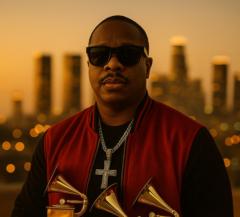
Multi-platinum producers Arkatech Beatz (Pun, Nas, Jadakiss, Prodigy, Gibbs, Killer Mike) teaching creators to win in today’s music industry.

Active 8h ago
Joined Aug 23, 2025
Atlanta, GA
Powered by