Activity
Mon
Wed
Fri
Sun
Jul
Aug
Sep
Oct
Nov
Dec
Jan
Feb
Mar
Apr
May
Jun
What is this?
Less
More
Owned by Rena
As creative dynamic heartfelt visionaries We the Messengers of the 21Century vow to inspire Compassion Love & Unity in a diversely connected world.
Adults learning intimacy, communication, consent, boundaries, pleasure, and healthy relationships through honest conversation.
Memberships
Bipolar Business Owners
44 members • Free
Embrace Your Inner Weirdo
72 members • Free
Oasis Builders
139 members • Free
4 contributions to Oasis Builders
🔥
May 29 •
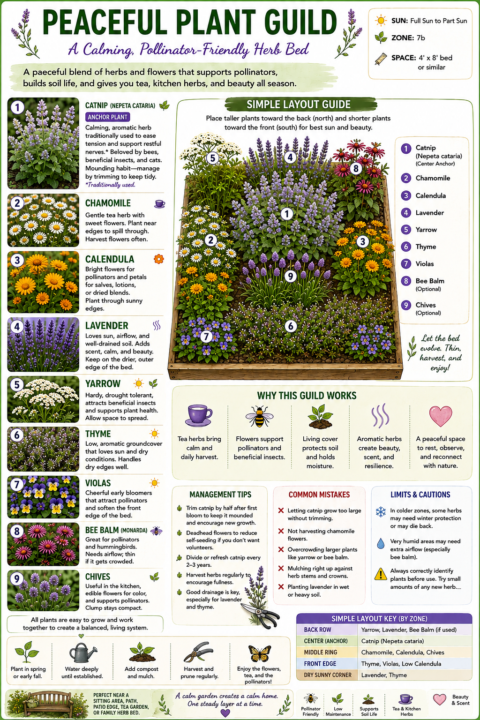
Peaceful Herb Guild
Only plant one catnip plant and keep it trimmed to fill the anchor spot. Leave enough room behind it between the lavendar so it can flop over keeping the planting neat over time.

6 likes • May 29
OMG!!! Look at THAT!!! That is GORGEOUS!!!💐
🔥
May 27 •
Older Herbal Maps and the Bigger Picture
Constitution is the larger pattern, and different herbal traditions use different maps to help us read that pattern. Doshas are one map from Ayurveda. They use Vata, Pitta, and Kapha to describe patterns such as dryness, heat, heaviness, movement, intensity, dampness, and stability. There are also older humoral ways of observing people and nature. Instead of focusing on the old temperament names, we can explain the patterns more simply. Some people tend toward heat and intensity. Others tend toward moisture, warmth, and fullness. Some tend toward coldness, dryness, and inwardness. Others tend toward coldness, dampness, and heaviness. Traditional Chinese Medicine gives another deep map. It looks at balance through warmth and cold, dryness and dampness, excess and deficiency, movement and stagnation, fluids, energy, blood, and the way body systems work together. All of these maps are trying to help us slow down and observe. Constitution as the larger pattern. Body-system observation to help us notice what is happening in daily life. Tissue stateto help us see what condition the tissues are showing. Herbal energetics to help us match the qualities of the herb to the person. Older traditions remind us that balance does not look the same for everyone. For family herbalism, this keeps us humble. We are not trying to become doctors overnight, and we are not replacing medical care. Herbs can interact with medications, some herbs are not safe during pregnancy or certain health conditions, and serious symptoms need proper medical guidance. The goal is not to memorize every map at once. The goal is to observe better, choose herbs with more care, and learn how to work with the body instead of forcing it.
1 like • May 28
@Jim Flach I would love that! There is so much to learn about living in harmony with the land and within ourselves.
2 likes • May 28
@Robyn Kielsa it’s another community we are in together that I help facilitate. You’re welcome to join us! We are forming a movement toward 🌎✌🏽🕊🎶 and harmony with the rhythms of our planet.
🔥
May 27 •
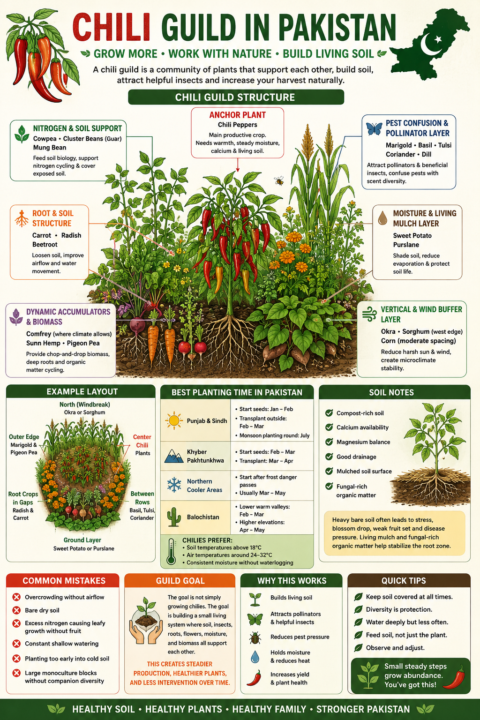
Chili Guild
This is made for warmer climates although the concept would work anywhere warm. @Mohammad Irtaza Tafheem @Oliver Wing
2 likes • May 28
@Carla Giddeons 🤩 Thanks! Organic tomatoes are my favorite nightshade plant. I like my peppers fat and stuffed! @Jim Flach can Bell peppers be an anchor crop?
2 likes • May 28
@Jim Flach I would LOVE to see a graphic of what a Peaceful Guild would look like! 🥰
🔥
May 25 •
Memorial Day
Today we pause with gratitude for the men and women who gave their lives and service to our country. Memorial Day is not just a long weekend. It is a day to remember the cost carried by families, and communities, to promote freedom throughout the world. At Oasis Builders, we talk about home, family, land, and building steady lives. Days like this remind us that much of what we are able to build rests on sacrifices we should never forget. With respect and gratitude, we remember.
3 likes • May 26
My grandfather would never call himself a hero. He killed people; old people, young people. And it was not for a righteous cause, or was it? He was in the Korean war. My other grandfather was in the Vietnam war. He told my dad to defect. Had he not, I would not be here. It’s not easy fighting in wars and the person you’re staring at down the barrel of a gun looks like your brother. I mean, really looks like your brother. I do believe in memorials and I also believe in world peace. After what my grandfathers have seen, they believe in world peace too. In the end, we must realize we are all one.
1-4 of 4
@rena-nicole-4034
Your Story, seen through the lens of a Hero's Journey, reflected back so you can see the path guiding you toward Peaceful Liberation! 🌎✌🏽🕊🎶💗🖖🏽
Online now
Joined May 25, 2026
INFJ
95436