Activity
Mon
Wed
Fri
Sun
Dec
Jan
Feb
Mar
Apr
May
Jun
Jul
Aug
Sep
Oct
Nov
What is this?
Less
More
Owned by Rasheed
Forget retirement. Decide how you want to live, start living NOW and pay for it as you go. Create Multiple Profit Centers & Fun Projects that pay.
I Don't Know P.L.O.
32
Free
4 contributions to Oasis Builders
15d •
How One Decomposer’s Work Supports Another
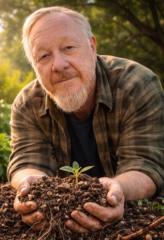
A fallen leaf may remain recognizable even after it softens, develops holes, and begins breaking into smaller pieces. Those changes can involve several kinds of activity, each changing what other organisms can use. Last week, we explored why the compost community changes. This week, let’s follow how the work connects. Bacteria and fungi break down organic compounds, obtaining resources for their own growth. Their activity changes the material itself as a leaf gradually becomes a different food source from the one that first entered the pile. Where conditions suit them, shredders such as millipedes and sowbugs consume decaying plant material and break it into smaller pieces exposing additional surfaces for microbial activity. Microorganisms change the food available to larger organisms, while those larger organisms change the surfaces available to microorganisms. The microorganisms also become food. Protozoa and some nematodes graze on them, moving resources through the food web. Worms consume decomposed material and associated microorganisms, then redistribute material through their movement and castings. Droppings and dead organisms provide further resources for decomposition. These relationships help explain why a list of organisms tells us only part of the story. We also need to understand what they consume, what they change, and how those changes affect other members of the community. The connections vary with the system. A hot pile’s center does not support the same larger organisms as a cooler leaf pile or worm bin. We do not need every group present everywhere for decomposition to continue. Next time you notice a leaf softening and breaking apart, consider how several kinds of activity may be contributing. Microorganisms can soften the tissue, shredders can expose more surface, and other organisms can feed on the microbes growing there with each activity changing what is available to others. We can observe some of these changes, while much of the work remains unseen. Those observations help us understand decomposition, but they cannot tell us whether compost is mature or free of pathogens. As we learn these relationships, we can better understand why supporting suitable conditions matters more than trying to assemble a particular collection of organisms.
Poll
2 members have voted
🔥
4 likes • 15d
I always say nothing goes to waste in the universe. Even the s*** gets recycled
🔥
2 likes • 15d
@Jim Flach Nature is more resilient and creative than we give it credit.
🔥
Oct 6 •
How To Pay For Living Your Life Without "Working"?
Service can be such a misunderstood word for people who want to do work that matters. Most of them are not out there trying to serve you. They are doing what they love, doing it well, and you happen to benefit. That is what I call service through the act of living. When you live the life you actually want to live, you cannot help but create value for other people. It spills over. And that value is what ends up paying for the life. I lived and traveled for nearly ten years in a van that I turned into a livable space. I called it my Mobile Domicile. People always asked: "How can you afford to travel all the time?" I gave away balloon animals. I did not sell them. I gave them away, and people gave away money, on their own. And just to be transparent, I was not on a mission. I was not out there doing "service." I was living the life I wanted, and the living of it happened to put a smile on somebody's face. Over the years that voluntary income added up to more than half a million dollars. Most of us were taught it the other way around. You serve somebody else's purpose, and you get paid. Then, if you plan it well, or get lucky, you get to live someday. What if you flip the script and start by looking at what you already do just by being you, that other people value? It is probably closer than you think! That's how you create a Self-Sustaining Life.
🔥
1 like • Oct 8
@Phillip Greenwood That's way to Be
Oct 4 •
Before Biodynamics Had a Name
In June 1924, a group of farmers gathered on an estate at Koberwitz, in what was then Germany and is now Poland. They had come to hear Rudolf Steiner speak about agriculture. Steiner was not primarily known as a farmer. He was a philosopher, writer, lecturer, and the founder of anthroposophy. His work had already moved into education, medicine, the arts, and other parts of human life. Agriculture came near the end of his life. From June 7 through June 16, 1924, Steiner gave eight lectures that later became known as the Agriculture Course. Those lectures eventually helped give rise to what we now call biodynamic agriculture. Before we get into what he actually taught, I think it is worth understanding the question underneath the course. Steiner was looking at a farm as more than a collection of separate problems. Soil, plants, animals, manure, food, weather, landscape, and the people caring for the land were relationships within a larger whole. That way of looking at a farm is one reason I think this is worth exploring through Roots Through Time. It does not mean that everything Steiner proposed should be accepted as scientific fact. Some of his agricultural ideas grew from observation. Others came directly from his anthroposophical worldview, including ideas about spiritual and cosmic influences that modern science does not establish in the same way. We can keep those things separate without dismissing the historical value of the questions he was asking. Over the next several Roots Through Time posts, I would like to work through these lectures slowly. We can look at what Steiner actually said, what farmers and biodynamic practitioners later did with those ideas, and what modern soil biology, ecology, agronomy, and observation can tell us today. More than a century later, one of the questions behind that gathering at Koberwitz is still useful. What changes when we stop looking at the pieces of a farm or garden separately and begin looking at the relationships among them?
🔥
5 likes • Oct 4
@Jim Flach >> What changes when we stop looking at the pieces of a farm or garden separately and begin looking at the relationships among them? << Same applies to any business and to life in general.
🔥
4 likes • Oct 4
@Phillip Greenwood Exactly! And that is not limited to agriculture only, is my point
Oct 2 •
Hey Wanderer
I want to welcome Casey from Hey Wanderer to the Oasis Builders family. I met Casey during the Master Gardener training I completed this Spring. Casey and Savannah are a few years into building an off-grid homestead from the ground up, learning firsthand about land, water, shelter, gardens, animals, infrastructure, and all the decisions that come with trying to build a working system. That kind of lived experience brings a wealth of information to our community. I love watching another piece of property develop from the beginning to a new Oasis. We talk a lot about observing before we act at Oasis Builders. A new property gives us the chance to look at the land, water movement, soil, existing plants, sun, wind, access, and family needs before deciding what belongs where. This is where a piece of land begins becoming a connected system rather than simply a collection of projects. If you get a chance, stop over at Hey Wanderer on YouTube and see what Casey and Savannah have been up to. Hit subscribe while you are there. I think there could be some good conversations between our communities as their next adventures unfold. https://www.youtube.com/@HEYWANDERER Casey, glad to have you here. I am looking forward to seeing what you are considering for your property next. And as aways a question, what is the first thing you would want to observe before making plans for a new piece of property?
🔥
1 like • Oct 3
Hey @Casey Rebekah Welcome! They call me Uncle
1-4 of 4
🔥
@rasheed-hooda-8821
Helping men and women in transition build the life they want to live and find a way to pay for it without stressing about money. https://ssllskool.com
Active 19m ago
Joined Sep 30, 2026
INFP
Houston TX