Activity
Mon
Wed
Fri
Sun
Oct
Nov
Dec
Jan
Feb
Mar
Apr
May
Jun
Jul
Aug
Sep
What is this?
Less
More
ST3
1.6k members • Free
16 contributions to ST3
Aug 9 •
🚨🚨 THE CRAZY SUMMER SALE IS HERE 🚨🚨
I HAVE OFFICIALLY LOST CONTROL OF THE SKOOL. For less than 24 HOURS, we are throwing open the ENTIRE Skool classroom. 🔥 CEU COURSES 🔥 CERTIFICATION COURSES 🔥 PRIVATE COURSES 🔥 LAW ENFORCEMENT STREAM COURSES 🔥 THE STUFF YOU’VE BEEN EYEBALLING FOR MONTHS YES. IT ALL COUNTS. And there are NO LIMITS on how many courses you can grab. 💥 BUY 1 COURSE: 30% OFF 💥 BUY 2 COURSES: 40% OFF 💥 BUY 3 OR MORE: 50% OFF YOUR ENTIRE ORDER YES. HALF. OFF. And before someone asks… “But that course says PRIVATE.” DON’T CARE. “But that one is in the law enforcement stream. DON’T CARE. “But that’s a certification course.” DON’T. CARE. FOR THIS SALE, THE VAULT IS OPEN. If you can see it in the Skool classroom and you want to take it, SEND IT TO US. NO LIMITS. Want 3 courses? Fine. Want 7? Go wild. Want to spend tonight building yourself an entire professional education library at HALF PRICE? THIS IS YOUR NIGHT. 🚨 HOW TO GET THE SALE 🚨 Log into your Skool classroom. Look through EVERYTHING available. Make a list of the courses you want to take, including courses showing as private or in the law enforcement stream. Email your list to: 📧 [email protected] We will calculate your CRAZY SUMMER SALE discount and send you an invoice based on your selections. You have 2 YEARS tot take the courses you choose so you can stock up courses at this outrageous discount and hold them until you need to use them too! Once your invoice is paid, we’ll get you access. ⏰ BUT HERE’S THE CATCH: THE CRAZY SUMMER SALE ENDS MONDAY, AUGUST 10 AT EXACTLY 5:00 PM EASTERN. Not 5:07. Not “I meant to email you.” Not “I had it in my cart.” Your course request needs to be in before the deadline. This is our FLASH SALE OF THE YEAR. CEUs. Certifications. Private courses. Specialty education THE WHOLE SKOOL JUST GOT PUT ON SALE. 🔥 UP TO 50% OFF 🔥 NO COURSE LIMIT 🔥 LESS THAN 24 HOURS 🔥 ONE ABSOLUTELY RIDICULOUS SUMMER SALE GO LOOK THROUGH THE CLASSROOM.


0 likes • Aug 13
I have compiled the courses I want and they are fantastic. Thanks for this opportunity. There's no end to learning.
Jul 15 •
HAPPY ANNIVERSARY TO YOUUUUU CACCF !!!!!!!!
4 COURSES FOR $41 TO CELEBRATE THE RIGHT WAY!!!! 🎉 CACCF Turns 41 TODAY… And We’re Celebrating With You! For 41 years, CACCF has been dedicated to supporting addiction professionals through certification, education, innovation, and professional growth. Now it’s your turn to celebrate too. As part of our 41st Anniversary Celebration, we’re bringing you one of our biggest learning opportunities yet: 🎓 Choose Any 4 Courses for Only $41! That’s right. Select any four courses from our featured anniversary collection for just $41 and continue building the knowledge and skills that support your practice. Whether you are looking to explore emerging trends, strengthen your clinical approach, or expand your understanding of complex client needs, this is the perfect opportunity to invest in your professional growth. These prices will never be available again. Build Your Own 4-Course Bundle Choose from topics including: Addiction & Clinical Practice - Addiction and Autoimmune Disorders: Clinical Overlaps - Addiction and Divorce in Family Systems - Cognitive Reframing Tools for Shame and Self Blame - Dark Side of Marijuana Use - Epigenetics of Trauma and Substance Use - Somatic Experiencing for Addiction Counselors Specialized Populations & Emerging Issues - Addiction in Domestic Violence Shelters - Addiction in Rural Farming Communities - Addiction in Rural Appalachia: A Case Study Approach - Single Parents in Recovery Journeys - Step Parenting and Addiction Recovery Complications - Energy Drink Dependence in Adolescents - Kratom Use and Treatment Considerations Current Trends & Professional Practice - Blue Collar Work Cultures and Addiction Norms - Designer Drugs and Legal Highs - Digital Identity and Persona Addiction - Digital Recovery Communities: Supports and Risks - Gambling and Substance Use in Casino Employees - Supervisory Practices to Identify and Intervene Early - The Role of Schools in Substance Use Prevention - Workplace Relapse Triggers in Recovery Clients

0 likes • Aug 5
@Crystal Smalldon I missed this package, is there still opportunity to get the Anniversary deal?
0 likes • Aug 6
@Sarah Admin , email sent. Thanks.
Jul 11 •
🚨 22 New Courses Released Today! 🚨
Our course library just got even bigger. Today we've released 22 brand new training courses covering emerging issues, specialized populations, clinical interventions, workplace considerations, and prevention strategies. New courses include: 1. Addiction and Autoimmune Disorders: Clinical Overlaps 2. Addiction and Divorce in Family Systems 3. Addiction in Domestic Violence Shelters 4. Addiction in Rural Appalachia: A Case Study Approach 5. Addiction in Rural Farming Communities 6. Blue Collar Work Cultures and Addiction Norms 7. Cognitive Reframing Tools for Shame and Self Blame 8. Dark Side of Marijuana Use 9. Designer Drugs and Legal Highs 10. Digital Identity and Persona Addiction 11. Digital Recovery Communities: Supports and Risks 12. Energy Drink Dependence in Adolescents 13. Epigenetics of Trauma and Substance Use 14. Gambling and Substance Use in Casino Employees 15. Kratom Use and Treatment Considerations 16. Single Parents in Recovery Journeys 17. Somatic Experiencing for Addiction Counselors 18. Somatic Symptom Disorders and Substance Use 19. Step Parenting and Addiction Recovery Complications 20. Supervisory Practices to Identify and Intervene Early 21. The Role of Schools in Substance Use Prevention 22. Workplace Relapse Triggers in Recovery Clients Getting started is easy. Simply log into your Skool classroom, browse the course library in the classroom, select the course you want, and complete your purchase right there. Your course is unlocked instantly, so you can begin learning immediately with no waiting. Courses start at just $15! Thank you to everyone who continues to support our mission of raising the standard and access of addiction education. We have many more courses already in development, so keep an eye out for future releases. Which course are you jumping into first?

0 likes • Aug 5
Excellent!
Jun 30 •
2 children found dead in Ottawa home in murder-suicide: police
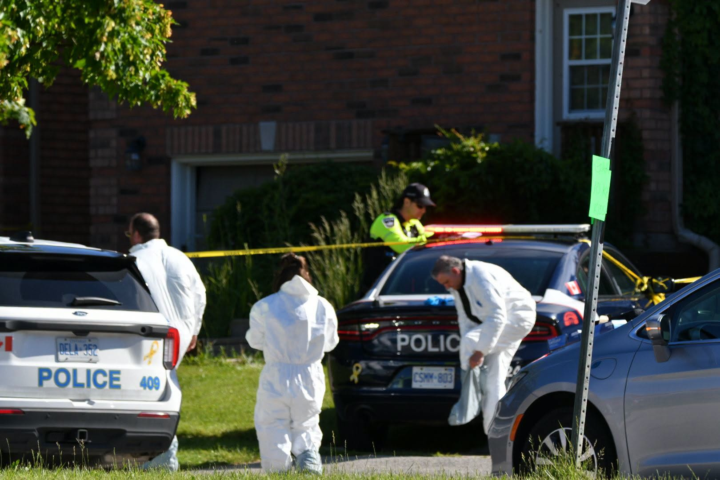
Is this domestic violence? It doesn’t have to be intimate partner violence. Children are victims too. Two children are dead in a double murder-suicide, according to the Ottawa Police Service. Police say officers conducted a wellness check at a home on Mandevilla Crescent in Ottawa’s Findlay Creek neighbourhood at approximately 10 a.m. “Tragically, two boys, aged 7 and 10, were found deceased,” police said. “The investigation is ongoing and complex.” Several Ottawa police officers were at a series of townhomes on Mandevilla Crescent Monday afternoon and police tape blocked off several homes. Police say Ontario Provincial Police are holding two scenes across eastern Ontario that are believed to be connected to the investigation: a business fire in Iroquois, Ont. Monday morning and a vehicle fire at a carpool lot off Highway 417 in Kemptville. “A deceased adult male, the children’s father, was located in the vehicle fire,” police said. “Investigators continue to assess the connections between these incidents and do not believe there is any ongoing threat to the public.” Police are asking for anyone with information to contact the Ottawa Police Service’s Homicide Unit at 613-236-1222, ext. 5943

0 likes • Aug 5
As someone initially trained as a private security professional, I smell a rat here. The truth will be out definitely after putting the pieces together hopefully
Jun 25 •
Intimate Partner Violence Death - Barrie Ontario
Investigators confirm deaths involving intimate partner violence (Update) June 25, 2026: The Barrie Police Major Crime/Homicide Unit has determined the deaths of a 46-year-old man and a 45-year-old woman, who resided at a north-end residence, were the result of intimate partner violence. On June 20, 2026, police were called to a home in the area of St. Vincent Street and Osprey Ridge Road for a well-being check and located the deceased individuals. The woman’s death has been deemed a homicide, while the man is believed to have died from a self-inflicted gunshot wound. The firearm involved in the incident was recovered from the scene. There are no outstanding suspects, and no charges are expected. Barrie Police will not be releasing the names of those involved, or any further details, out of respect for the family. —– Published on: Jun 22, 2026 The Barrie Police Major Crime Unit continues to investigate the deaths of a man and a woman located inside a residence. The deceased are a 45-year-old man and a 44-year-old woman, both from Barrie. At this time, police are not seeking any suspects. Police have cleared the area located near St. Vincent Street and Osprey Ridge Road. —– Published on: Jun 20, 2026 On Saturday, June 20, 2026, Barrie Police officers conducting a well-being check located a deceased man and woman inside a residence in the area of St. Vincent Street and Osprey Ridge Road. The victims are believed to be known to each other, and the incident appears isolated. There will be a police presence in the area as the investigation continues. More information will be provided as the investigation allows.
0 likes • Aug 4
This is so sad. Hopefully kids they had together if married or common law partners, and if they had kids, are not involved as they will be more at the receiving end depending on their age (s)
1-10 of 16

@precious-aibangbee-5234
Addiction Psychotherapist, Trauma-informed Practitioner, Counselor,
Active 9d ago
Joined Apr 6, 2026
Powered by