Activity
Mon
Wed
Fri
Sun
Apr
May
Jun
Jul
Aug
Sep
Oct
Nov
Dec
Jan
Feb
Mar
What is this?
Less
More
Owned by Patricia
The Nia Academy for Careers and Literacy - Presents - "Write Cursive NOW!"
Memberships
Funding Blueprint Live
1k members • Free
Speak and Grow Rich Bootcamp
409 members • Free
DWH
7 members • Free
The Divine Alignment Hub T-DAH
23 members • Free
Skoolers
188.9k members • Free
Speak Your Way To Cash
3.1k members • Free
[Closed] GovCon Nov 2025
408 members • Free
Paid Ad Secrets
18.6k members • Free
Grant Mastery Community
12.4k members • Free
2 contributions to Speak Your Way To Cash

Dec '24 •
🎉 WELCOME TO SPEAK YOUR WAY TO CASH®: Your Path to Corporate Contract Success! READ THIS POST IN FULL! 🚀
You’ve just joined the #1 community for experts who want to land five- and six-figure corporate contracts and scale their businesses strategically. Here at SPEAK Your Way To Cash®, we’ve built a reputation for excellence: we’re the 14th fastest-growing privately held company in Georgia and ranked 370th in the U.S. We don’t just teach sales—we create transformations. I’m Ashley Kirkwood, founder and CEO of SPEAK Your Way To Cash®. I left a $300,000 partner-track attorney job to build my own law firm and SPEAK Your Way To Cash®! Since then, I’ve personally closed five- and six-figure contracts with corporations and helped countless others do the same. If you’re here, it’s because you’re ready to take action and build a thriving business by selling your expertise at the highest level. This community isn’t just a group—it’s a movement of experts ready to unlock their full potential. We’re here to share strategies, celebrate wins, and challenge each other to scale bigger and faster than ever before. 𝐘𝐎𝐔𝐑 𝐅𝐈𝐑𝐒𝐓 𝐒𝐓𝐄𝐏𝐒 𝐓𝐎 𝐒𝐔𝐂𝐂𝐄𝐒𝐒 𝐈𝐍 𝐓𝐇𝐈𝐒 𝐂𝐎𝐌𝐌𝐔𝐍𝐈𝐓𝐘: To unlock the best this community has to offer, complete these three steps in the next 7 days (and within 30 days, you must reach Level 2 to stay active—this is a space for action-takers): 1️⃣ Introduce yourself: Drop your introduction below! Share who you are, what you do, and what your goals are. 2️⃣ Engage with 5 other members: Comment, ask questions, or show support. Building connections is key. 3️⃣ Make a post: Share a quick win, a challenge, or a question to spark conversation. 𝐖𝐇𝐘 𝐓𝐇𝐈𝐒 𝐌𝐀𝐓𝐓𝐄𝐑𝐒: This isn’t a spectator sport. The most successful members are the ones who show up, connect, and contribute. This community thrives when YOU show up boldly. 🔥 𝐂𝐎𝐌𝐌𝐔𝐍𝐈𝐓𝐘 𝐆𝐔𝐈𝐃𝐄𝐋𝐈𝐍𝐄𝐒 𝐅𝐎𝐑 𝐒𝐔𝐂𝐂𝐄𝐒𝐒: • 𝐍𝐨 𝐬𝐞𝐥𝐥𝐢𝐧𝐠: Keep the focus on collaboration, not self-promotion. • 𝐁𝐞 𝐫𝐞𝐬𝐩𝐞𝐜𝐭𝐟𝐮𝐥: We’re here to build each other up. • 𝐄𝐧𝐠𝐚𝐠𝐞 𝐚𝐜𝐭𝐢𝐯𝐞𝐥𝐲: This is a space for doers—not passive scrollers. When you’ve completed your first steps, keep the momentum going by:

3 likes • Feb 8
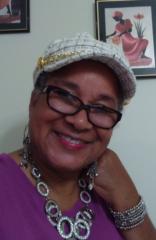
Hi Everyone, I am Founder of the Nia Academy for Careers and Literacy. I am a retired reading specialist and international speaker who guides youth to explore careers and find personalized evidence for skills and mentorship as they plan strong career moves. We teach literacy (reading & writing) skills including cursive script and signatures - previously ignored in schools for 25+ years. Many students find vastly improved learning and decision-making abilities when they learn and use our programs. I am looking to expand outreach to community organizations. Together we must strengthen our vulnerable youth - equipping them with conversations, skills and abilities to get past old assumptions and enforcement changes specifically designed to affect our quality of life. I call on my industry experiences in aviation, broadcasting and classroom training to challenge participants to create and achieve their own personal high lights and realities. Fun fact : I proudly called myself a True Living Airhead, can you guess why?
Feb 1 •
What would you do if it were you?
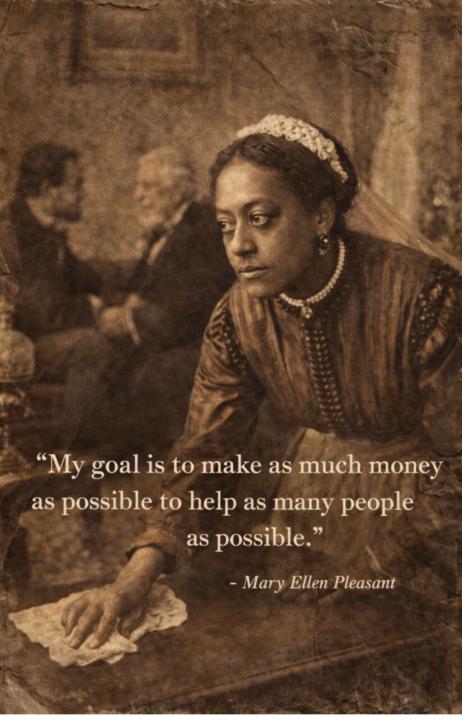
Imagine making $4 a month. You can’t vote - and, if you’re married, you can’t have a bank account, can’t own land independently, and can’t legally control your wages or sign contracts like a man. Now imagine deciding you’re going to build wealth anyway. 𝐖𝐞𝐥𝐜𝐨𝐦𝐞 𝐭𝐨 𝐃𝐚𝐲 𝟏 𝐨𝐟 𝐃𝐄𝐋𝐄𝐓𝐄𝐃 𝐇𝐈𝐒𝐓𝐎𝐑𝐘 — 𝟐𝟖 𝐁𝐥𝐚𝐜𝐤 𝐰𝐨𝐦𝐞𝐧 𝐦𝐢𝐥𝐥𝐢𝐨𝐧𝐚𝐢𝐫𝐞𝐬 𝐭𝐡𝐞𝐲 𝐩𝐫𝐚𝐲𝐞𝐝 𝐲𝐨𝐮’𝐝 𝐧𝐞𝐯𝐞𝐫 𝐡𝐞𝐚𝐫 𝐚𝐛𝐨𝐮𝐭. Today’s feature is Mary Ellen Pleasant — one of the first Black women millionaires (some argue the first Black millionaire, period). She listed her occupation as “capitalist” on the 1890 census. She moved from domestic labor (making $4-8 a month) into a Nantucket store as a clerk, learned pricing, credit, and customer psychology, then later ran boardinghouses, laundries, and kitchens for wealthy White men in San Francisco—using those rooms as intelligence centers to track her White clients investmnets into stocks, mines, railroads, banks, and land. Then she invested. Quietly. Often through her White business partner, Thomas Bell, whose name was used on legal documents and investments to bypass racist gatekeeping that barred Black women from owning property, accessing credit, or entering major financial deals in her own name. By the 1870s, she controlled roughly $30 million — about $860 million today. But she left us a lesson: have your paperwork in order. When her business partner Bell died, his wife contested Pleasant’s claims to property and business interests, and won. But before all that, Pleasant helped fund the abolitionist movement! So yes—we should learn from her brilliance. And we should learn from her losses too. Here are the lessons: 1) Treat every room like a lab. Pull the transcripts from your last 10 sales calls. Use their objections and worries as this week’s content topics. Keep names/details anonymous. Then rewrite your sales page using the exact words they used. Speak to the heart of your customers. 2) Use strategic partnerships, but keep your name on the paper. In corporate, we had sponsors, but who is your sponsor in entrepreneurship?Reach out to directors and C-suite leaders from your old jobs. Tell them what you do now and ask for 1–2 warm introductions. Say you loved working there and can support them (or similar companies) as a consultant—and you’ll reciprocate with your network.
0 likes • Feb 3
Black
1-2 of 2
@patricia-franklin-5687
Educator & Founder @The Nia Academy for Careers and Literacy - We help our clients develop the flavors of life into a well prepared menu for success!
Active 4h ago
Joined Dec 15, 2025
Powered by