Activity
Mon
Wed
Fri
Sun
Sep
Oct
Nov
Dec
Jan
Feb
Mar
Apr
May
Jun
Jul
Aug
What is this?
Less
More
#1 Community Builders Lab
494 members • Free
Copy Dominance
573 members • Free
Copywriting University
574 members • Free
4D Copywriting Community
65.1k members • Free
The Art of Poetry
405 members • Free
Lessons in Self Publishing
448 members • Free
P2P Author Business Harbor
112 members • Free
16 contributions to Lessons in Self Publishing

Jul 24 •
One conversation can change your entire journey.
When I began building my online business, I believed success came from figuring everything out on my own. I spent countless hours learning, making mistakes, and second-guessing every decision. Looking back, I wasn't lacking effort; I was lacking the right guidance. Everything started to change when I learned from someone who had already achieved the results I wanted. That guidance saved me from unnecessary mistakes, gave me a clearer direction, and helped me make better decisions with confidence. I think self-publishing is very similar. Writing the book is only one part of the journey. Publishing, positioning, marketing, and reaching the right readers all come with their own challenges. The good news is that no one has to figure it all out alone. That's one of the reasons I joined Lessons in Self Publishing. This community is full of people with different experiences, and one shared lesson can save someone else weeks or even months of frustration. So I'd love to hear from everyone here: Where are you in your self-publishing journey? What's the biggest challenge you're facing right now? If you could get guidance in one area, writing, publishing, marketing, or getting reviews- what would it be? Don't keep your struggles to yourself. Sharing them might be the first step toward finding the answer you're looking for, and your experience could help another author move forward. Let's learn from each other. What's the one thing you need help with today?
0 likes • 19d
@Adeline Carter Absolutely. For me, the biggest thing is giving readers a reason to stay connected between books not constantly selling, but sharing something genuine: behind-the-scenes moments, conversations about stories, or little insights that make them feel part of the journey. That relationship is what turns a reader into someone who follows your work long-term. I’d be happy to keep exchanging ideas here in the community as well. What have you found keeps readers coming back consistently personal interaction, exclusive content, or simply the promise of what you’ll write next?
0 likes • 18d
@Adeline Carter Absolutely, and thank you for letting me know. I’ll reach out there so we can continue the conversation without taking up the Skool thread. I’ve enjoyed exchanging perspectives with you so far, especially around reader relationships and the long-term side of building an author career. I’m looking forward to hearing more about what you’re working on. When you get a chance, what are you currently writing?

Jul 21 •
What’s Your Editing Process?
After you finish your first draft, what steps do you take before formatting? Self editing, beta readers, developmental editing (paid), copy/line/grammatical editing (paid), then proof reading (paid)?
0 likes • 20d
@Writer Larry A. I couldn't agree more. Developmental editing is where a manuscript often finds its true identity. It's the stage where the strongest stories emerge not because the prose changes, but because the emotional arc, structure, and purpose become unmistakably clear. I've learned that readers may not notice great developmental editing, but they almost always feel its absence. When the foundation is solid, every other stage serves to elevate the story rather than repair it. I'm curious, have you ever worked on a manuscript where developmental editing completely changed the direction of the book for the better?
0 likes • 19d
@Writer Larry A. Exactly. That last point is something every serious writer eventually learns: the first draft deserves respect, but it doesn't deserve immunity. I've had moments where letting go of a scene, character choice, or direction I was attached to made the story considerably stronger. The goal isn't to preserve every decision; it's to uncover the version of the story that works best. And I love your phrase, "make it feel inevitable." That's really the mark of strong revision. What’s the hardest thing for you to let go of during a major revision a scene, a character, or an idea you originally loved?
Jan 14 •
All writers & all genres welcome!
What genre is your current manuscript? Have you published before or will this be your first?

0 likes • 25d
@Adeline Carter yes, and so sorry for the late reply
0 likes • 25d
@Adeline Carter I appreciate that. If my latest manuscript has reinforced one lesson, it's that readers connect most deeply with emotional honesty. You can refine the prose endlessly, but if the characters don't feel authentic, the story won't linger with readers. Every new book reminds me that storytelling isn't about saying more it's about saying the right things with clarity and heart. I'm curious, has your most recent project challenged something you thought you'd already mastered as a writer?

Jul 28 •
The One Small Thing
I recently asked a handful of readers what makes them leave a 5 star review versus just quietly finishing a book and moving on. The answer had nothing to do with plot or writing quality. It came down to one small thing most authors never think to do. Anyone want to guess what it is before I share?
0 likes • 30d
@Adeline Carter That's okay by me
1 like • 30d
@Adam Erhart That makes perfect sense, and I think it's a distinction many authors overlook. Readers are often happy to leave a review they just need a genuine invitation at the right moment. A thoughtful author note doesn't feel like a sales tactic; it feels like the natural continuation of the conversation the book has already started. I've found that when readers feel appreciated rather than persuaded, they're much more likely to engage, recommend the book, and become long-term supporters. Have you noticed whether a simple author note inside the book is more effective than a follow-up email, or do they work best together?
Jun 9 •
If you aren’t using social media to market…
how are you planning on getting sales? Are you going to be doing more in person sales through vendor events? Do you have a giant email list you’ve built over the years that you will be taping into? Let us know other ways you can market your book besides social media. (But also, I’m a strong believer that you definitely SHOULD be using it 😁)
0 likes • Jul 22
Social media is powerful, but it’s definitely not the only route to readers. In-person events, email lists, podcasts, newsletters, libraries, partnerships, and strong word-of-mouth can all build momentum. The real question is where your ideal readers already spend their time. Marketing works best when authors meet readers there rather than trying to be everywhere at once. What has been your most effective way to connect with readers outside social media?
0 likes • Jul 28
I’ve definitely found that one genuine connection can create a ripple effect. Readers are often drawn to recommendations that come from people they trust, and those personal conversations can sometimes be more meaningful than simply trying to reach as many people as possible. I think the key is focusing on building real relationships rather than just chasing numbers. When readers feel connected to the author, the story, or the message behind the work, they’re much more likely to share it naturally with others. I’m curious about your experience as well have you noticed certain spaces or conversations where readers seem more open to connecting with your work?
1-10 of 16
@odavid-fortune-7073
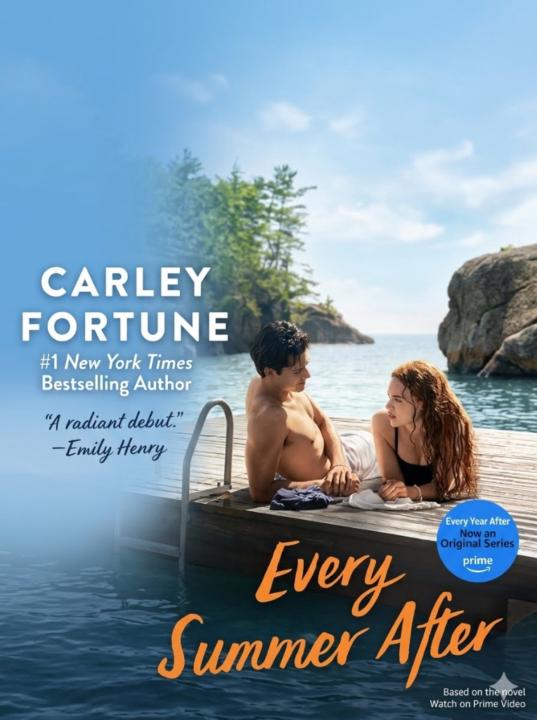
EVERY SUMMER AFTER, ONE GOLDEN SUMMER, MEET ME AT THE LAKE, and THIS SUMMER WILL BE DIFFERENT.
Active 3d ago
Joined Jul 8, 2026
Toronto