Activity
Mon
Wed
Fri
Sun
Aug
Sep
Oct
Nov
Dec
Jan
Feb
Mar
Apr
May
Jun
What is this?
Less
More
Memberships
Hoop Flow
45 members • $7/month
10 contributions to Hoop Flow
Feb 6 •
Basketball Season is Long
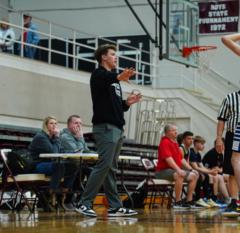
I recently heard Idaho head basketball coach Alex Pribble talk about something he calls “NBT” — No Basketball Talk. During practice, he intentionally builds in moments to talk with his players about anything but basketball. I love that approach. A season is long. Practices can become repetitive. Relationships can quietly slip into being transactional. I tried this with a group of my middle school players one season, and it was refreshing. We talked about what was going on in their lives, what they were into outside of basketball, what they were excited about. You could feel the shift. Walls came down. Trust went up. If you coach, consider building in intentional “no basketball talk” time. The season is long. The relationships are what last.
0
0
Feb 5 •
Books for coaches
Anyone have any good books they have read over the years that you feel helped give you a new perspective/way of doing things? I’ve read Coach K’s The Gold Standard, Dan Hurley’s Never Stop, and am starting on Coach K’s leading with the heart. Just looking for some more ways to expand my coaching knowledge and I feel that reading is an undervalued way of doing so.
0 likes • Feb 6
“You win in the locker room first” by Jon Gordon and Mike Smith is one of the most impact books I have read about leadership/coaching. It is not basketball specific but a ton of great principles to implement w/ your team. Very easy book to read also!
Feb 2 •
Start With Defense
Most coaches I’ve been around can talk offense all day, but not nearly enough time is spent on defense. The reality is this: a large portion of your offensive success can be built by playing great defense—especially when you teach your team how to run in transition and create clear triggers. The beauty of defense is how much ownership you have over it. Your defensive philosophy can be shaped to match how you want to play on offense. The principles you emphasize on that end should directly feed into what you want to become as a team. Here’s an example of what I like to run. Defensively, our focus is pressure. We want to speed the offense up, force them to make decisions, and play reactionary basketball. With this style, I’m comfortable knowing we’ll get beat at times and give up an easy basket. The tradeoff is worth it. Aggressive defense leads to a higher turnover rate, and those turnovers turn into fast-break opportunities for us. Because of that, we dedicate practice time to playing with an advantage on offense—specifically scoring in 2-on-1 situations and making quick reads. Our structure is built from the ground up: defense → transition offense → secondary break → half-court offense → set plays. I love talking defense, and there’s a lot more we can dive into. If you’re interested in defensive concepts and how they connect to offense, let me know.
Jan 22 •
180 Shooting
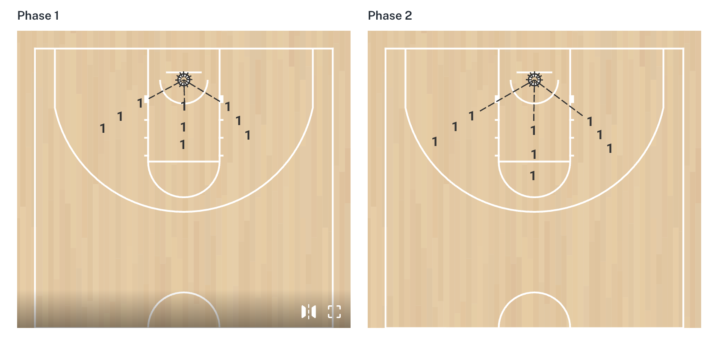
If you want an easy way to get a lot of shots up in practice "180 shooting" is the drill for you. - Put 5 minutes on the clock and you have 3 locations set up (your choice as coach) then your team needs to make 20 shots as a team then they rotate to the next spot. Slowly they back up so by the end of the 5 minutes they are either at the 3 point line or near it - Your players are counting out makes and goal is to get to 180 (varsity teams) - I personally love to use this at the beginning to get a lot of shots up to start and get our players warmed up. Split your team into multiple hoops for more reps for each player. Hold your players accountable for not making the goal you set for them. If they do not get it then whatever your punishment is.
Jan 20 •
Teaching Decision Making
Hello, Coaches we can agree we want our players to be better decision makers. Most often I see great drills that force players into situations where they gotta make decisions. However, when you get in the game your players still struggle. Something to keep in mind when you are working on this skill is to put your players in situations that they will experience within your offense: - what are actions/triggers that happen in your offense - Condition players to train what they will more than likely experience - Define roles with your players. Having role expectations will help your players know what they are supposed to do to do - Rep this in SSG in if/then scenarios Hopefully this can be a helpful reminder for you guys if your players are struggling with decision making
0
0
1-10 of 10
@nolan-krueger-6387
Youth basketball coach/ strive to make athletes all around better with focus development on & off the court
Active 130d ago
Joined Jan 10, 2026