Activity
Mon
Wed
Fri
Sun
Feb
Mar
Apr
May
Jun
Jul
Aug
Sep
Oct
Nov
Dec
Jan
What is this?
Less
More
Owned by Nisana
Vet-led community for backyard poultry keepers. Dr. Nisana, DVM, provides expert guidance on flock health, disease prevention, nutrition, & wellness.
Memberships
Full Hands, Full Hearts
40 members • Free
Heritage Havens
14 members • Free
Homesteading lounge
30 members • Free
City Girl Garden Farm 803
30 members • Free
Rowdy Rooster
81 members • Free
Wholeheartedly Home
28 members • Free
The Farmyard
224 members • Free
Food Forest Homesteading Life
38 members • Free
H1
Homesteading 101
26 members • Free
6 contributions to The Healthy Coop Collective

2d •
First Course Topic Feedback
Happy Friday everyone! I’m doing a Feedback Friday where I ask for some specific feedback. I’ve had a couple of members throw out some topics and I plan to do all of them, but I’d like to see which one everyone is interested in me doing first as a full on course in the classroom. Please choose a topic below or add one if there is another you’d like me to consider doing! Thank you for your feedback!
Poll
4 members have voted
0 likes • 17h
@Mary King thank you! I’ll add that to the list 😊

🔥
3d •
Question about natural treatment for "bird mites"
I was just chatting with my oldest daughter (who lives in Australia with her husband and our two grand-littles), and they have a pigeon that started hanging around over the past couple days. It appears to perhaps be a homing pigeon (she said it has a band but they couldn't really read anything on it), so it is quite friendly, and they are trying to find its owners. They're talking with a local bird organization that is helping with this. In the meantime, they have noticed that it has mites and were wondering about the best way to treat them. Those of you with poultry who have treated for mites before, what have you used that worked? Especially something natural that would be easily obtainable anywhere? They don't have easy access to farm stores where they live. I realize this isn't "poultry", but I would assume treatment would be similar?

1 like • 3d
Hey Michelle! Yes, treating mites on pigeons is pretty much the same as with chickens - those little pests don't discriminate! For something natural and easy to find, food-grade diatomaceous earth is probably your best bet. They can get it at hardware stores or even order it online. Just dust it on the bird (gently, and try not to create a cloud they breathe in) and you can also sprinkle it where the pigeon is hanging out. It basically dries out the mites by scratching up their little exoskeletons. Works great but needs to be reapplied. If they can find poultry dust with pyrethrins (comes from chrysanthemums, so it's plant-based), that's another good option. Most pet stores carry something like this, I bet even in Australia. The big thing though - and this is where people often miss the mark - is they've got to clean up wherever that pigeon is roosting. Mites live in the environment too, not just on the bird. So changing out any bedding material and cleaning the area is just as important as treating the bird itself. Otherwise those mites just hop right back on. Oh, and whatever they use, they'll want to treat again in about a week to catch any eggs that hatched after the first treatment. Good luck to your daughter and those sweet grandbabies helping this little traveler! 🕊️
1 like • 3d
I’ll look at putting a course together on mites and different treatment options.
3d •
Winter Treats for Your Flock: Let's Share What Works! 🐔
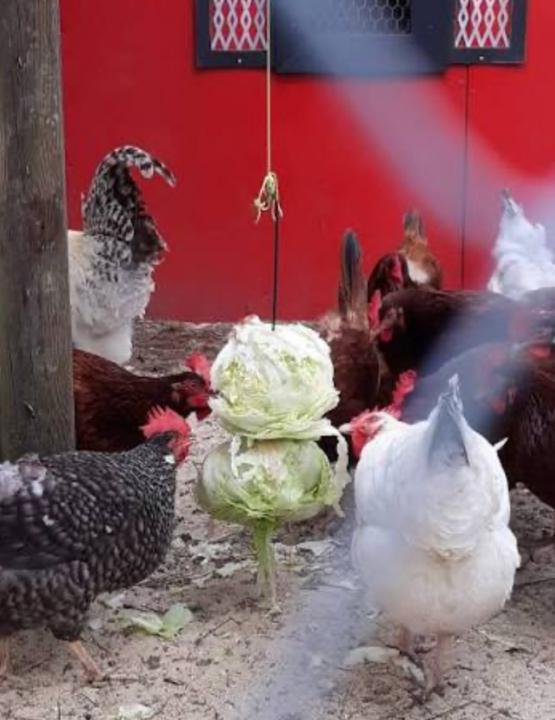
Happy Introduction Week at The Healthy Coop Collective! Today's topic is one of my favorites because it combines science with creativity - keeping our flocks happy and healthy during the cold winter months. 🌡️ Why Winter Treats Matter (The Science Part) Winter presents unique challenges for our flocks: 🥶Increased caloric needs - chickens burn more energy staying warm 🥶Reduced foraging opportunities - frozen ground limits natural behaviors 🥶Behavioral enrichment becomes critical - boredom can lead to pecking and other welfare issues 🥶Mental stimulation - keeps birds active and engaged during shorter days ✅ What Makes a GOOD Winter Treat? 🐓Provide extra calories/energy for cold weather 🐓Encourage natural foraging behaviors 🐓Keep birds active and mentally stimulated 🐓Make up no more than 10% of daily diet (to maintain balanced nutrition) 🐓Be safe and digestible 🚫 Quick Safety Reminder Before we dive into favorites, remember these foods are TOXIC to chickens: 🤢Avocado (skin and pit) 🤢Chocolate 🤢Raw or dried beans 🤢Green potatoes or tomatoes 🤢Onions and garlic in large amounts 🤢Moldy or spoiled foods 🤢Salty or sugary processed foods 🎯 My Winter Treat Ideas: High-Energy Options: 🐣Scratch grains - feeding in late afternoon to provide overnight energy 🐣Whole corn - metabolizes slowly, creating warmth overnight 🐣Black oil sunflower seeds - high fat and protein Activity-Based Enrichment: 🐔Cabbage/lettuce hanging - encourages jumping and pecking 🐔Sprouted grains - provides fresh greens when pasture is unavailable 🐔Treat blocks - compressed seeds and grains that take time to consume 🐔Warm oatmeal - warm (not hot) foods on very cold mornings 🤔 Now Here's Where I Need YOUR Expertise! I want to hear about YOUR experiences because real-world knowledge: 1. What's your flock's FAVORITE winter treat? (The one that makes them come running every time!) 2. Do you have a special "recipe" or way of presenting treats? (Hanging feeders? Frozen blocks? Warm mashes?) 3. Have you noticed any treats that seem to keep them busier longer? (Winter days are long - what keeps them entertained?)
0
0
6d •
Welcome to The Healthy Coop Collective! 🐔
Hi everyone! I'm Dr. Nisana, and I'm thrilled to launch this community dedicated to helping you raise healthier, happier backyard flocks. A bit about me: I'm a Doctor of Veterinary Medicine specializing in avian and poultry health through my practice, Covenantal Wings Veterinary Services. My background includes working in commercial poultry, and now I focus on bringing that professional veterinary expertise to backyard poultry keepers like you. I live on an 80-acre homestead in Oklahoma with my husband and daughter. What to expect here: I created The Healthy Coop Collective because I saw too many backyard keepers struggling with conflicting information online and limited access to poultry-savvy veterinarians. This community bridges that gap. Here's what's coming: ✅ Daily Engagement - Tips, discussions, case studies, and community support to keep your knowledge growing ✅ In the Premium plan: Weekly Educational Resources - In-depth guides, protocols, and tools on disease prevention, nutrition, biosecurity, and wellness management ✅ In the VIP plan: One Private 1-on-1 Veterinary Video Consultation Per Month - Personalized flock health guidance from me directly This is a space for learning, asking questions without judgment, and building confidence in your ability to care for your birds. Whether you're brand new to poultry or have years of experience, you belong here. Let's get started! Drop a comment below and tell me: - What type of poultry do you keep? - What's your biggest flock health challenge right now? - What topics do you most want to learn about? I can't wait to get to know you and your flocks. Here's to healthier coops and thriving birds! 🌿 —Dr. Nisana
1 like • 4d
@Casey Balkcom I know some people putt a baby monitor with video and sound for their incubators when they get to the last couple of days. That is very exciting! Thank you for sharing😊
1 like • 4d
@Casey Balkcom let me know if you try it out😊
4d •
🦅 Predator-Proofing Your Flock
Welcome to The Healthy Coop Collective! Today we're tackling one of the most critical aspects of backyard flock management: predator prevention. Let's dive in! 🔬 The Science Behind Predator Pressure According to USDA and university extension research, predation is the leading cause of chicken mortality in backyard flocks. Understanding predator behavior is the first step in effective prevention. 🎯 Key Predator-Proofing Principles: 1. Hardware Cloth Over Chicken Wire: University extension services consistently recommend ½" or ¼" hardware cloth instead of chicken wire. Why? Chicken wire keeps chickens IN but doesn't keep predators OUT. Raccoons can tear through it, and weasels can squeeze through the openings. Hardware cloth provides a physical barrier that most predators cannot breach. 2. The "Dig Defense" Method: It is recommended to bury fencing 12-18 inches deep and bend it outward in an "L" shape. This prevents digging predators (foxes, dogs, coyotes) from tunneling under. Alternative: Lay hardware cloth on the ground extending 12-24 inches out from the coop perimeter and cover with dirt or gravel. 3. Overhead Protection: Hawks and owls are aerial predators that hunt during different times. I recommend covering runs with hardware cloth, netting, or wire to prevent aerial attacks. Even free-range flocks benefit from overhead cover in the form of trees, shrubs, or shade structures. 4. Secure Latching Systems: Here's a critical fact from wildlife research: Raccoons can open simple latches, hooks, and even some "complex" closures. Use carabiner clips, two-step latches, or padlocks on all doors and access points. Raccoons are incredibly dexterous and persistent. 5. Eliminate Gaps: If you can fit three fingers through an opening, a predator can exploit it. Weasels can fit through openings as small as 1 inch. Check your coop thoroughly for gaps at corners, where walls meet floors, around doors and windows, and where hardware cloth is attached. 📊 Predator Identification Guide
1
0
1-6 of 6

@nisana-miller-8945
Bible believing wife to Shawn Miller, mom to Miriam, Owner of Praising Pastures and Covenantal Wings Veterinary Services
Active 3m ago
Joined Jan 12, 2026