Activity
Mon
Wed
Fri
Sun
Oct
Nov
Dec
Jan
Feb
Mar
Apr
May
Jun
Jul
Aug
Sep
What is this?
Less
More
10 contributions to IMA Institute Of Martial Arts
Apr 10 •
Aligning Contradictions Between Instructors
Apologies for the confusion today! I ran the webinar today at 1pm instead of 12pm! My mistake...here is the recording!


1 like • Apr 14
Excellent Sahyunim
Mar 26 •
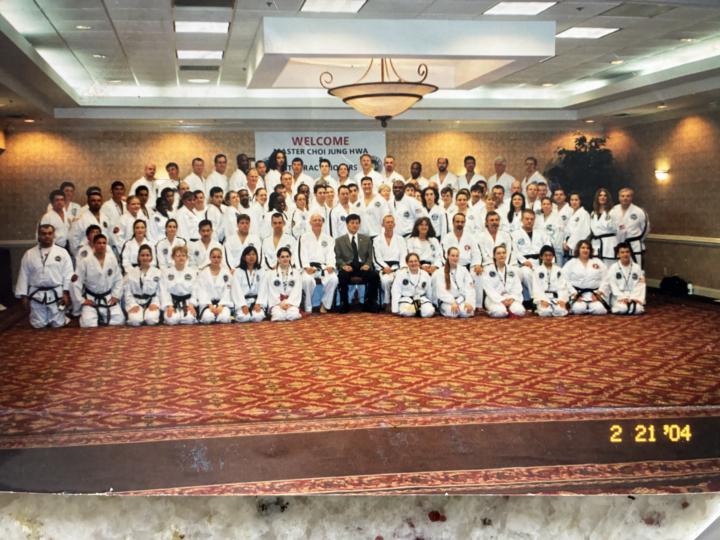
With Master Choi Jung Hwa
Miss these days. Intense and working directly with Sahyunim Choi. My Instructor (mother) training side by side. My Brother George Boley sincerely a class act.
1 like • Mar 27
@Chris Reid comasahamnida Sahyunim. I plan to reconnect and bring him back into the fold indeed. I will be on contact with him soon. Taekwon
Mar 12 •
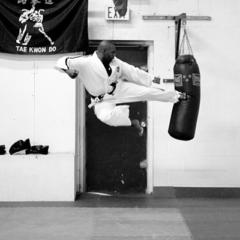
Legitimacy & Experience Combined with Tenure
General Choi was such a visionary man! it’s profound how Taekwon-Do in all of its essence can be overshadowed by the egomaniac and their desire to be recognized without putting in the work ethic. Food for thought; a 3rd Dan is the equivalent to a medical doctorate in knowledge and time when a practitioner follows General Choi’s teachings and body of work. Scientific Principles, Anatomy, Biology, and Philosophy! All we have to do is immerse ourselves in Taekwon-Do study and practice under a quality Instructor! 🤔🤯
1 like • Mar 13
Conasahamnida Sir and excellent points.

3 likes • Mar 12
Taekwon Sahyunim! At one of Master Choi last seminar he explained that Twigi was defined as you expressed (to clear an obstacle in a singular movement vertically (height) or a singular movement to close the distance horizontally. Master Choi spoke about this extensively outlining the movements in yul Gok and Toi Gye. There is NO account of a Jump kick or Jump hand technique in the encyclopedia. Twio (over head) often confused with Twigi. Twio defined as a tumbling movement where the practitioner attacks the opponent while flying over or through an OBSTACLE! By definition jumping (Twigi) is a movement designed to dodge a low/pressing attack or cover a protected distance in 1 motion. It is my opinion the chambering action of leaving the ground triggers the idea that it is a “jump” technique. When we begin to execute the various attacks and defenses it becomes clear how they differentiate. Mid Air, dodging, overhead, flying, double, triple etc. If the purpose behind these techniques aren’t clear it easily becomes convoluted! Willing this helps and any corrections are happily accepted. Taekwon
2 likes • Mar 13
@Troy El Bey Taekwon Sahyunim. The fundamental movement Twigi (jumping) terminology has only 2 purposes by the Generals definition in the encyclopedia. 1. To cover a protracted distance *in a single motion! Without gathering 2.To evade a low swinging attack (sword, pole, bat etc) ITF encyclopedia Vol IV pg 314. In its definition any attack or defense performed after the “Twigi” is separate from the action and technique of jumping. If someone (forbid) swung a baseball bat at my legs. The action of me evading the attack by jumping (Twigi) is separate from the counter attack I choose to execute after the initial jump performed in a single motion and landed. In volumes 3 and 4 all of our Hand and foot Technique are defined. There is not a single account where General Choi defined hand or foot technique as Twigi. You will see Twimyo (flying) Twio Nono (overhead) Twio Dolmyo (mid air) Twimyo Soogi (flying hand techniques etc. please correct me if I am incorrect b.u.t you will NOT see Twigi ap cha busigi, or Twigi sonkal taerigi etc. The movement of Twigi is a separate technique and falls into the category Bang Eau Gi (defensive techniques with the feet) including dodging, foot shifting, stepping, sliding, turning, body dropping , and foot lifting. Twimyo is the over arching umbrella of attacking techniques while in the air and subdivided into mid air, overhead, etc. The confusion may be that we are leaving the ground in a jumping motion to execute the above mentioned techniques. That should not be confused with the actual technique of jumping (Twigi) defined by General Choi Willing this makes sense Taekwon Sabum N Fernandez
Mar 3 •
Show Us The World!
Share a pic of you somewhere interesting! Even if it's just you without doing a martial art movement!
4 likes • Mar 5
San Juan PR!
2 likes • Mar 5
@Chris Reid the waves kept me humble. Reverse hooking kick (bandage dollyo Goro chagi) taken by Boo Sabumnim Naseem Fernandez! Great visit to our Island.
1-10 of 10
Active 2h ago
Joined Feb 1, 2026
Buffalo NY
Powered by