Activity
Mon
Wed
Fri
Sun
Jun
Jul
Aug
Sep
Oct
Nov
Dec
Jan
Feb
Mar
Apr
May
What is this?
Less
More
Memberships
Liberty Politics Discussion
4.5k members • Free
11 contributions to Liberty Politics Discussion

Jan 3 •
A Concise Primer: Why Atheism is Illogical
Put this together; I think it captures the main points decently.
2 likes • Jan 4
@Tom Fearnley listened to this. I think the arguments against the argument from design fall into the fallacy mentioned at the beginning of my little primer. If one says fine tuning (or complexity, not the same) COULD have been derived from... Yes, it COULD have. A monkey CAN throw a bunch of crumbs and lo and behold they fall into the image of a perfectly formed face. It COULD be that there are transcendent monkeys in the sky. It COULD be this, it COULD be that. This misapprehends the proper parameters of the discussion.
2 likes • Jan 5
@Dani Spivak Thanks for the thoughtful reply! I appreciate the engagement even if it is "annoying" to you! Here are some responses to your response: 1. You’re right that beliefs can be framed in Bayesian terms—priors updated by evidence. But this does not eliminate rational norms; it presupposes them. If priors are unconstrained, Bayesianism collapses into relativism. Your “Stan the demon” example actually illustrates this. You concede that radically skeptical theories can always be constructed but dismiss them because they are explanatorily parasitic and computationally inefficient. Fine—but then atheism is not epistemically privileged, only pragmatically preferred. At that point, it's no longer correct to say atheism is more rational, only more convenient. Also, if unfalsifiable but coherent theories are admissible in principle, then God is not disqualified merely for being unfalsifiable. Your epistemology cannot rule God out; it can only decline to consider Him. 2. “Atheism Is the Default Because It Makes Fewer Predictions”... this is a misuse of Occam’s Razor. Fewer predictions do not make a theory better; they merely make it harder to falsify. A theory that explains nothing cannot lose—but it also cannot win. By this standard, radical skepticism would be the best worldview of all. Science does not prefer theories that explain less, but theories that explain more with fewer ad hoc assumptions. Atheism avoids error by refusing to explain fundamental features of reality—existence, order, normativity, reason—rather than accounting for them. That is not a strength. 3. The anthropic principle is a selection effect, not a causal explanation. It says we can only observe life-permitting conditions, not why the constants fall into an unimaginably narrow life-permitting range in the first place. Appealing to the anthropic principle without an underlying mechanism is like explaining a lottery win by saying “I couldn’t have noticed losing tickets.” True, but irrelevant. The further claim that a benevolent God would have made a radically different universe does not address fine-tuning at all. Fine-tuning concerns parameter sensitivity, not optimal comfort or maximal convenience. Complaints about entropy, hunger, cosmic scale, or interstellar travel are versions of the problem of evil—not refutations of design. They assume God’s goals without argument.

Jan 1 •
How to help people see the blind spots of their worldview?
The brain needs proof that the new paradigm works. Small steps👟: Don’t try to change everything at once. Conduct a small “experiment” that proves the new way is possible. Celebrating Success🎊: A small success in the new approach weakens the grip of the old paradigm. Thought 🌦: Breaking a paradigm is a painful process because it shakes our sense of security. It takes intellectual courage to admit that what we believed in is no longer relevant

3 likes • Jan 1
I tend to try to identify something on the deepest layer of a person's "hashqafa" (Weltanshaung) where there's room for negotiation. In line with the post, it's a valuable thing to do with oneself.
Jan 1 •
With the Destruction of the Wicked - Joy (Proverbs 11:10)
The fall of the Iranian regime makes me rather emotional. Here we have this evil, datardardly, oppressive regime that has been a fixture since I was a toddler. And it's crumbling in front of us. May God help the Iranians finish the job of overthrowing the Islamic occupiers. The courage of so many Iranians is inspiring.
Dec '25 •
Proportionality in War is a Stupid Doctrine 2
Body-count asymmetry is morally indeterminate. Higher civilian deaths on one side do not, by themselves, establish: - unjust intent, - disproportionate force, - or moral equivalence / non-equivalence. They often reflect variables like population density, defensive strategy, evacuation capacity, media access, or who is fighting from among civilians. Outcome-based morality doesn’t map onto causation. Moral responsibility in war—if it’s to mean anything—has to track choices under constraint, not raw outcomes abstracted from context. “More dead civilians” does not equal “more immoral” unless you smuggle in assumptions you haven’t defended: - that both sides had comparable alternatives, - that harm-minimization costs were symmetrical, - or that intent and foreseeability are irrelevant. Most public discourse quietly assumes all three and then treats the conclusion as self-evident. Structural inevitability forces a shift in moral vocabulary. If civilian harm cannot be reduced below a certain floor without abandoning the war aim entirely, then: - either the war itself is judged illegitimate as such, - or civilian harm must be assessed relative to necessity, alternatives, and responsibility for the structure of the battlefield—not as an absolute metric. What makes Gaza so morally destabilizing for modern observers is that it exposes a contradiction we’d rather not face: we want wars of annihilation against enemies we define as existential, while also wanting zero civilian blood guilt. History suggests you don’t get both. Ancient societies were brutally honest about this; early modern ones could occasionally finesse it; modern humanitarian language tries to deny it altogether. That denial produces moral claims that feel profound but dissolve under scrutiny—because they rely on numbers standing in for judgment. So it's not that civilian deaths “don’t matter.” It’s that they don’t mean what people insist they mean, absent a serious accounting of structure, strategy, and constraint. And once you take those seriously, a lot of confident moral posturing turns out to be empty.
0 likes • Jan 1
@Joseph Dabby who are you speaking to?! This was to argue against the morons who look at the body count of civilians in the Gaza war and say Israel evil.
0 likes • Jan 1
@Sue Boyde the whole thing is specious. Let's say in a hypothetical scenario that a bunch of someones is trying to kill my wife or daughter. I know that by pressing a button thirty mini-missiles in succession (thirty missions) will destroy them (let's say it's ten people) but possibly kill 50 people who live around them and likely 30. I'd do it. Most everyone would do it. And not because it's immoral.
Dec '25 •
Proportionality in War is a Stupid Doctrine
I've heard time and again that the Israeli response to October 7th was "disproportionate." Well, what exactly is the proper proportion? Here we have a little country that basically wants to be left alone to (depending on your demographic) study Torah or make technological advances or agricultural advances or whatever. That country is surrounded by people who want that country gone. Islam is an inextricable part of this, because jihad is central to Islam, and the presence of a country of people who should be dhimmis in the middle of dar al Islam is an inherent affront. Many of these people are located in a little strip of land (really, part of traditional Israel, namely the Western Negev). A group among them who openly espouse the destruction of that country and the murder of its inhabitants, make it their raison d'être, and work tirelessly towards that goal control the populace, most of whom are ideologically aligned with that group. Also happens to be that that group is thoroughly embedded in hospitals and other civilian-dense areas. After a particularly brutal attack by these people, who have been at it for decades, the country goes to war to destroy them. The soldiers of that country make efforts to not kill civilians but it's a VERY densely populated area and their enemy purposefully embeds itself among civilians because it knows the PR game in the West. War is rough. War leads to people dying. So, what's proportionate? One for one? Is two civilians for one fighter too much? Why? Are civilians who are ideologically aligned with the enemy not counted like those who are not? Let's make the ideologically aligned civilians count as half. Maybe a third. What's our calculus here? Why are we pretending that context doesn't matter? If someone is racing after my wife or my daughter to kill her, and the only way I can save her is to kill the guy and very possibly a hundred of his comrades, almost inevitably at least twenty of his comrades, I will, and I will sleep well at night. Israel isn't hunting down civilians, but war is war, and this war, because of Gaza and what it is, could not have turned out different in this respect. Honestly, I would be happier if Israel had far fewer algorithms in place to protect its enemies' civilians which put their own soldiers in harms way. Many Jewish soldiers have died unnecessarily in this way. More civilians in Gaza dying? War sucks. And almost everyone who condemns Israel for being disproportionate wouldn't be satisfied no matter how many such algorithms are in place and how few civilians get killed.
1-10 of 11
@misha-lindenberg-3127
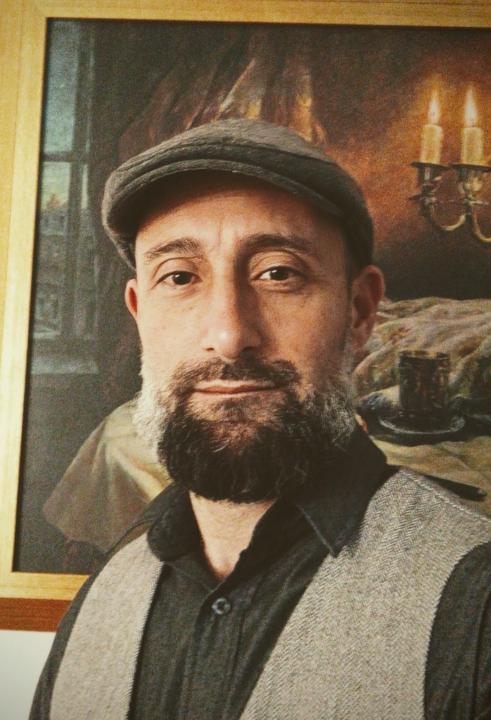
Accountant, scribe, rabbi, father, husband, from CA, lived in Israel for 20+ years, now in NJ. Iconoclastic tendencies within a search for truth
Active 122d ago
Joined Dec 25, 2025
Powered by