Activity
Mon
Wed
Fri
Sun
Jul
Aug
Sep
Oct
Nov
Dec
Jan
Feb
Mar
Apr
May
What is this?
Less
More
Owned by Misch
For Busy Men Who Want To Shred Fat, Build Muscle & Achieve Peak Performance Join the brotherhood. Learn the Blueprint. Live the Lifestyle.
Learn how to get fit and shape a peak physique 💪 with simple systems, discipline and accountability ☑️
Memberships
Free Skool Course
69.2k members • Free
Setterlun University™
4.4k members • $17/month
AI with Amber
580 members • $39/month
Community Builders
8.2k members • Free
Chateau Mystique
58 members • Free
Understanding Neville Goddard
95 members • Free
AI Automation Agency Hub
320k members • Free
⚡️ Lock in with Adam
1.4k members • Free
The AI Advantage
124.1k members • Free
3 contributions to Understanding Neville Goddard

18d •
The secret technique that unlocks your manifestation
There’s no secret method, magic affirmation, or one-time technique that suddenly changes your entire life overnight. Anyone selling manifestation that way is usually selling fantasy, not real transformation. Real manifestation work goes deeper than surface-level positivity. It requires honesty, self-awareness, discipline, and the willingness to look at the beliefs, assumptions, fears, and emotional patterns that have been shaping your reality for years. Neville Goddard never taught people to chase techniques. He taught that consciousness is the only reality. The techniques were never the power. You are the power. Techniques are only tools meant to help you move into a new state of being. A genuine coach doesn’t just throw temporary motivation at you or promise instant miracles. They help you untangle the stories, identities, and assumptions you’ve been living from so the change becomes natural and lasting. A lot of people are attracted to glamorous promises because they want relief fast, and that’s understandable. But lasting results come from depth, consistency, and genuine inner work. Don’t rush the process. Do the work properly. When the transformation is real within you, the results stop feeling forced because your entire state has changed.


2 likes • 18d
Well said - 'Don’t be anxious or concerned as to results. They will follow just as surely as day follows night.' from At Your Command 📖
22d •
I AM
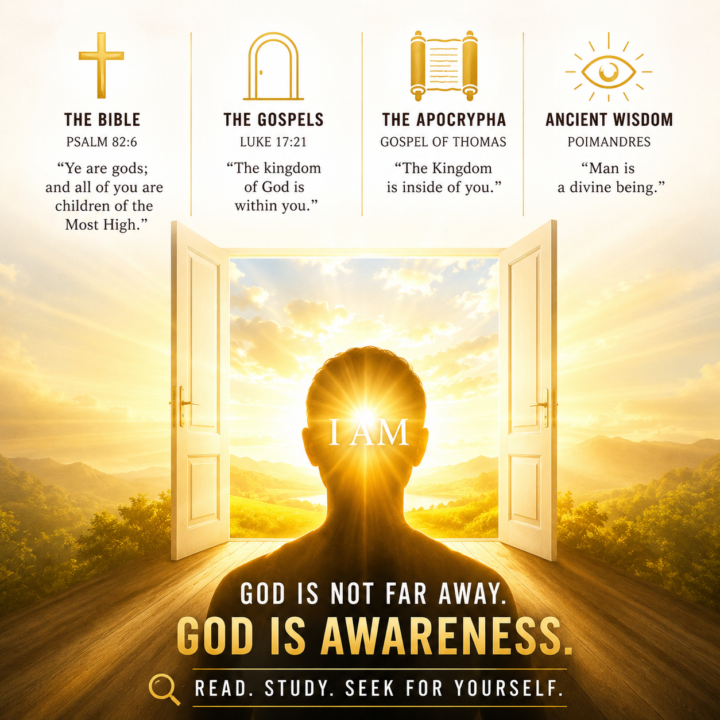
I keep seeing people ask: “Did Neville teach that we are God?” Neville’s answer was centered on consciousness, not the human ego. He taught that the divine presence people search for externally is actually the awareness within them — the “I AM.” His perspective was deeply rooted in scripture and mystical interpretation. One of the verses Neville referenced most was: «“I have said, Ye are gods; and all of you are children of the Most High.” (Psalm 82:6)» Jesus later repeats this verse in John 10:34 after being accused of blasphemy. Neville believed this was revealing man’s divine nature rather than promoting separation between God and humanity. Another foundational verse for Neville was: «“I AM THAT I AM.” (Exodus 3:14)» He taught that “I AM” is the name of God and that every person uses this divine identity constantly through awareness itself. This is why Neville often said: «“Your own wonderful human imagination is God.”» He was not speaking about personality, status, or self-importance. He was referring to the creative power of consciousness. This same idea appears in writings outside the Bible canon. In the Gospel of Thomas, Jesus says: «“The Kingdom is inside of you.”» And also: «“When you know yourselves… you will realize that it is you who are the sons of the living Father.”» Neville interpreted these teachings psychologically. To him, scripture described states of consciousness and inner transformation. The Gospel of Philip contains another statement that aligns closely with Neville’s view: «“Truth did not come into the world naked, but in symbols and images.”» This mirrors Neville’s teaching that the Bible is written in symbolic language and must be understood inwardly. Ancient Hermetic texts also carry similar ideas. In Poimandres, humanity is described as divine in nature and connected to the mind of God. People should also remember that Neville did not arrive at these conclusions casually. He spent years studying scripture, Hebrew symbolism, mysticism, Kabbalah, and esoteric teachings before forming his interpretation of the Bible.
1 like • 21d
Be still and know that I AM God. [Psalm 46:10] - mentioned twice in the Power of Awareness 📖 in chapters Consciousness & Essentials. With many mentions of this empowering perspective / way of being Also Neville clearly stated it in the final words in Feeling Is The Secret 📖 'Instead of believing in God or in Jesus - believe you are God or you are Jesus. "He that believeth on Me, the works that I do shall he do also" [John 14:12] should be "He that believes as I believe the works that I do shall he do also". Jesus found it not strange to do the works of God, because He believed Himself to be God. "I and My Father are one" [John 10:30]. It is natural to do the works of the one you believe yourself to be. So live in the feeling of being the one you want to be and that you shall be. When a man believes in the value of the advice given him and applies it, he establishes within himself the reality of success.'
Apr 26 •
The opportunity to let the old self die.
An ex-friend I hadn’t spoken to in a long time reached out to me in a really difficult moment. Truthfully, I had every “logical” reason to say no. The old version of me probably would have. Out of hurt, pride, or the need to protect myself. But this time, something was different. I didn’t react from memory. I didn’t let the past decide for me. I simply showed up and helped—just as I would for a stranger. No story attached, no emotional charge, no need to make it mean anything. And in that moment, I realised something powerful: I wasn’t the same person anymore. I didn’t feel used. I didn’t feel taken advantage of. Because those feelings belong to an identity I no longer occupy. The version of me who needed validation, who kept score, who reacted from old wounds—that version is no longer in control. This is what real inner work looks like. Not just affirmations, not just visualising—but becoming. Neville Goddard said, “You must be born again.” And he didn’t mean physically. He meant psychologically. He meant dying to the old state of consciousness and rising into a new one. And here’s the truth most people miss: You don’t prove your new self when everything is easy. You prove it in the moments where you could have gone back—but you don’t. That’s when you know. That’s when the shift is real. I didn’t help her because of who she was. I helped because of who I am.

1 like • 25d
Embo-died. 'When you lose yourself in the feeling of being it, the quality will embody itself in your world.' -Neville: At Your Command 📖
1-3 of 3
@misch-parsotham-2197
I help time-bound professional men shred 7-10kgs of body fat in 12wks without giving up their favourite foods
Active 14h ago
Joined Mar 6, 2026