Activity
Mon
Wed
Fri
Sun
Jul
Aug
Sep
Oct
Nov
Dec
Jan
Feb
Mar
Apr
May
Jun
What is this?
Less
More
Owned by Michael
Let's build AI-powered side hustles and businesses together! We help veterans, first responders, and their families achieve financial freedom
A community for physics teachers to get help and support each other.
Memberships
Royalty Hero
915 members • $300/month
Claude for Coaches
850 members • $47
Claude Code Club
5.7k members • $9/month
Skooly: Tools for Skool
259 members • $9/month
Founders Forge
18 members • $850/month
Jester
68 members • Free
Semper Execute
100 members • Free
RC3 Leadership Lab
193 members • $5/month
📚The Skool Bookshop
132 members • Free
20 contributions to 📚The Skool Bookshop

🔥
16d •
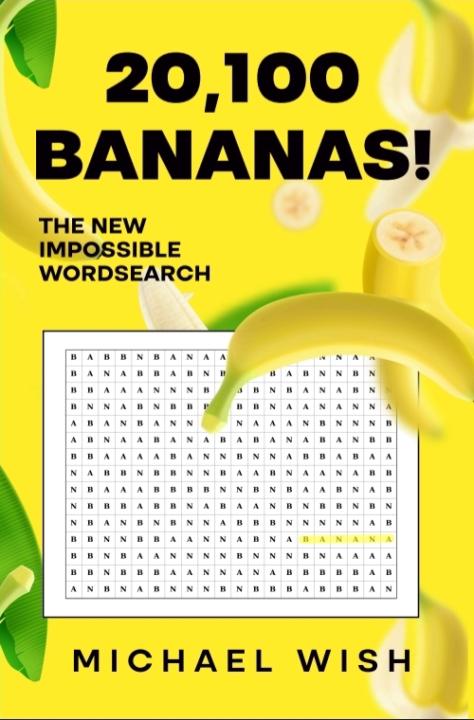
Over 20,000 Bananas 🍌🍌🍌!!
HEADLINE: Word searches are everywhere. None of them are like this. TITLE: 20,100 Bananas: The Ultimate Wordsearch Challenge AUTHOR: by Mike Wish ASIN: B0FJG2W6K2 WHY I WROTE THIS BOOK and ABOUT THE BOOK: Word search puzzles are all the same! So I took on the challenge of writing a tough, but unique weird search book. The concept is simple. One word: BANANA. But Puzzle #1 hides 1 of them. Puzzle #200 hides 200. The grid fills with B's, A's, and N's until finding anything feels impossible. It's absolutely bananas! Race a friend. Time yourself. Use it to settle the argument about who gets the last oreo. PRICE & BUY LINK: Available on Amazon: https://www.amazon.com/dp/B0FJG2W6K2 $9.99 ENGAGEMENT QUESTION: Can you handle the challenge!?
🔥
1 like • 15d
@Rachael Bermingham AMAZING!!
🔥
1 like • 15d
@Rob Cole thanks Rob!
🔥
21d •
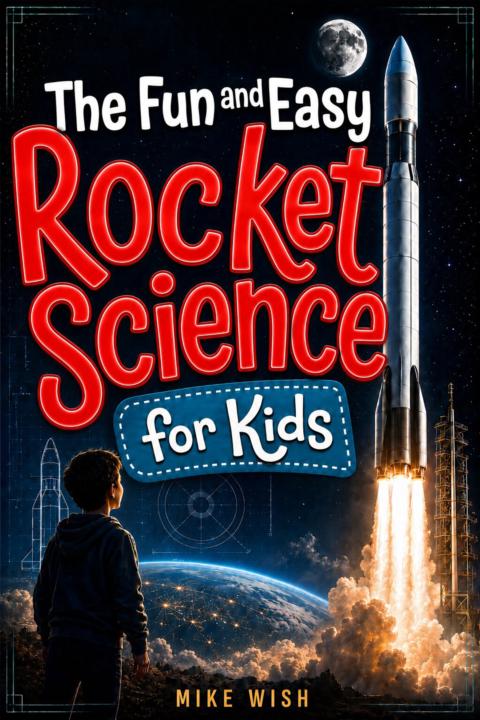
Rocket Science for Kids "Launch"
HEADLINE: Rockets are all the rage again. Now your kid can understand why they actually work. TITLE: Rocket Science for Kids AUTHOR: by Mike Wish ASIN: B0H36TPBYN WHY I WROTE THIS BOOK: When I was a kid, watching a rocket launch on television felt like magic. Fire, noise, something impossibly heavy lifting off the ground. I was completely hooked. But nobody ever explained the actual physics behind it. Just spectacle, no substance. I'm a physicist. I taught at the United States Naval Academy. And I've spent years believing one thing: if you truly understand something, you can explain it to a child. Not a dumbed-down version. The real thing. That's what this book is. It doesn't skip the hard ideas, and it doesn't talk down to kids who are smart enough to handle them. It starts where the science actually starts, with Newton's three laws, and works all the way through orbital mechanics, propulsion, guidance systems, and what it will actually take to reach Mars. Every step of the way, you get the real reasoning, not a hand-wave and a pretty picture. ABOUT THE BOOK: Most people think rockets work by pushing against the air. They're wrong. Rocket Science for Kids takes readers ages 8-12 (and their parents) through the real physics behind one of the most extraordinary things humans have ever built. Starting with Newton's Laws and the counterintuitive reason rockets work in the vacuum of space, through Tsiolkovsky's brutal rocket equation, Goddard's liquid-fueled engines, orbital mechanics, guidance systems, the Space Race, and SpaceX's reusable rockets, the book follows the actual history of rocketry the way it was solved: one stubborn problem at a time. No hand-waving. No skipping the hard parts. Just honest explanations, real analogies, and the science behind the technology your family sees in every launch broadcast, weather forecast, and GPS direction. By the end, your kid will understand why astronauts float in space (they're falling, not weightless), why rockets are mostly fuel, and why landing a rocket upright on a drone ship is one of the hardest things engineers have ever pulled off. And you'll have the vocabulary to talk about all of it together.
🔥
1 like • 20d
@Rob Cole thank you Rob!
22d •
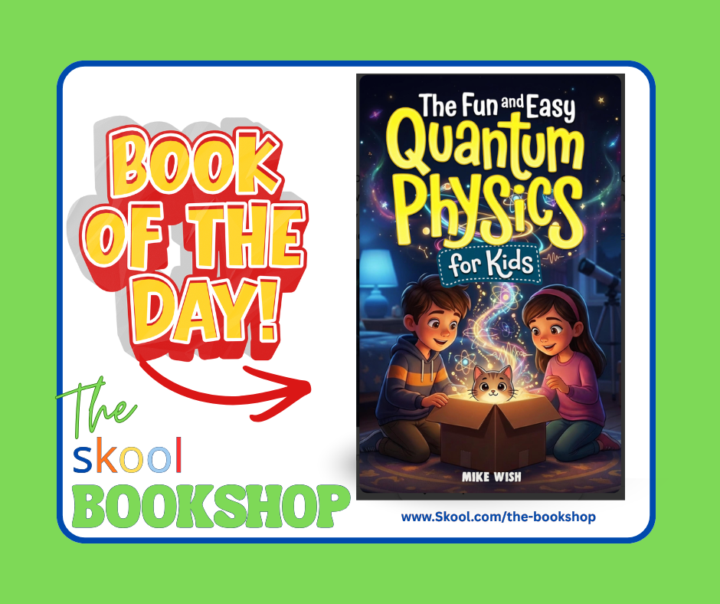
🔥BOOK OF THE DAY! One for little Einstein's...
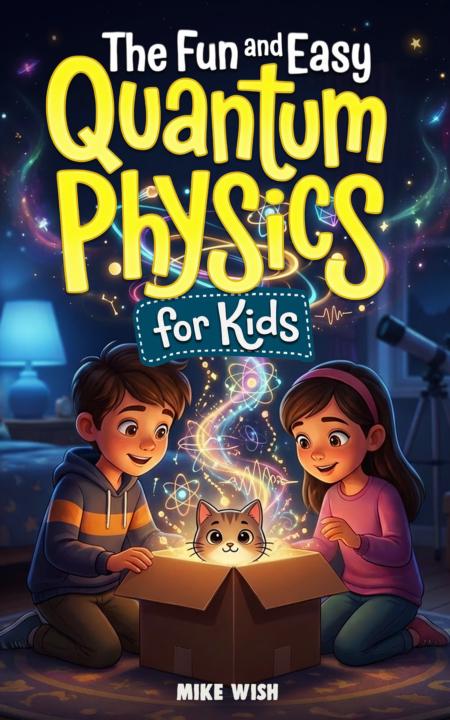
QUANTUM PHYSICS FOR KIDS by @Michael Wish The quantum world has always been real. Now your kid can understand it. ABOUT THE BOOK: The world looks smooth and predictable. But underneath everything you can see, there's a hidden layer where the rules are completely different. Quantum Physics for Kids takes readers ages 8-12 (and their parents) inside that world. Starting with Max Planck's reluctant discovery that energy comes in tiny steps, through Einstein's proof that light is made of packets, Bohr's model of the atom, de Broglie's wild idea that particles have wavelengths, Schrödinger's equation, and Heisenberg's uncertainty principle, the book follows the actual historical arc of quantum mechanics the way it was discovered. No hand-waving. No skipping the hard parts. Just clear explanations, honest analogies, and the real science behind the technologies your family uses every day, including LEDs, lasers, solar panels, and quantum computers. By the end, your kid will understand ideas that confuse most adults. And you'll have the vocabulary to talk about them together. ➡️ Buy it here ⬅️
🔥
1 like • 21d
@Joel Harris awesome!
🔥
1 like • 21d
@Rob Cole Thank you!
🔥
23d •
❗❗Quantum Physics for Kids❗❗
HEADLINE: The quantum world has always been real. Now your kid can understand it. TITLE: Quantum Physics for Kids AUTHOR: by Mike Wish WHY I WROTE THIS BOOK: When I was a kid, I picked up A Brief History of Time and felt two things at once: completely fascinated and completely lost. I kept wishing someone had written the book that didn't skip the real ideas but still explained them in a way a ten-year-old could actually follow. I'm a physicist. I taught at the United States Naval Academy. And I've spent years believing one thing: if you truly understand something, you can explain it to a child. Not a dumbed-down version. The real thing. That's what this book is. It doesn't talk down to kids, and it doesn't leave parents behind either. It starts where the science actually started, with the strange clues that confused even the best physicists alive, and it walks through every discovery the same way those scientists made them: one honest idea at a time. ABOUT THE BOOK: The world looks smooth and predictable. But underneath everything you can see, there's a hidden layer where the rules are completely different. Quantum Physics for Kids takes readers ages 8-12 (and their parents) inside that world. Starting with Max Planck's reluctant discovery that energy comes in tiny steps, through Einstein's proof that light is made of packets, Bohr's model of the atom, de Broglie's wild idea that particles have wavelengths, Schrödinger's equation, and Heisenberg's uncertainty principle, the book follows the actual historical arc of quantum mechanics the way it was discovered. No hand-waving. No skipping the hard parts. Just clear explanations, honest analogies, and the real science behind the technologies your family uses every day, including LEDs, lasers, solar panels, and quantum computers. By the end, your kid will understand ideas that confuse most adults. And you'll have the vocabulary to talk about them together. 7. PRICE & BUY LINK: Available on Amazon. https://www.amazon.com/dp/B0GGHTWZX5
🔥
0 likes • 22d
@Rob Cole thank you!
🔥
1 like • 22d
@Rachael Bermingham I hope so!!!
🔥
28d •
Upgraded to Premium
@Rachael Bermingham runs a great community here and after being in the community awhile, I decided it was time to upgrade!

🔥
1 like • 27d
@Rachael Bermingham you're crushing it! Pumped to be a part of it
1-10 of 20

🔥
@mikewish
Entrepreneur, coach, physics teacher, author, AI Ops, community builder, Marine, husband, and father.
Active 9m ago
Joined Mar 29, 2026
Annapolis, MD
Powered by