Activity
Mon
Wed
Fri
Sun
Jun
Jul
Aug
Sep
Oct
Nov
Dec
Jan
Feb
Mar
Apr
May
What is this?
Less
More
Memberships
NoeAI FREE
388 members • Free
MMWA — AI School
1k members • $7/month
AI Automation Club
6.8k members • Free
Applied AI Academy
3.4k members • Free
Elite 1% Freelancing Network
979 members • Free
Voice AI Academy
1k members • Free
No Code Pakistan
1k members • Free
AI Realism Starter Hub
19k members • Free
Imperium Academy™
63.5k members • Free
16 contributions to Make $1k-$10k in 30 days

20d •
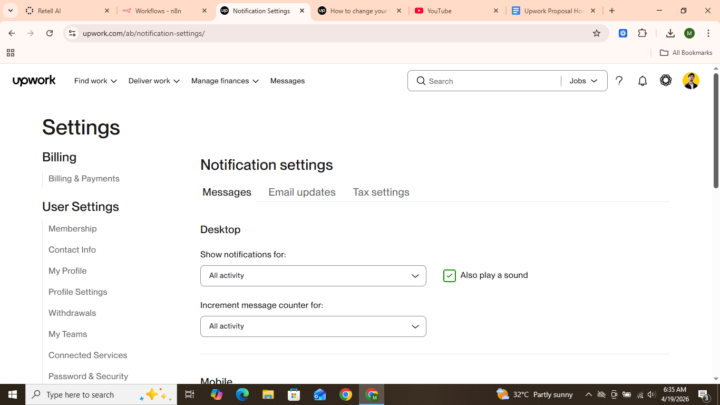
NEED HELP REGARDING UPWORK JOB ALERTS NOTIFICATIONS
My all upwork settings are correct on laptop and mobile, watched YT videos too regarding this but still not able to getting email or message of notfications job alrert neither on laptop nor on on my mobile Its so frustrating, if anyone knows how to fix this kindly let me know
0
0
21d •
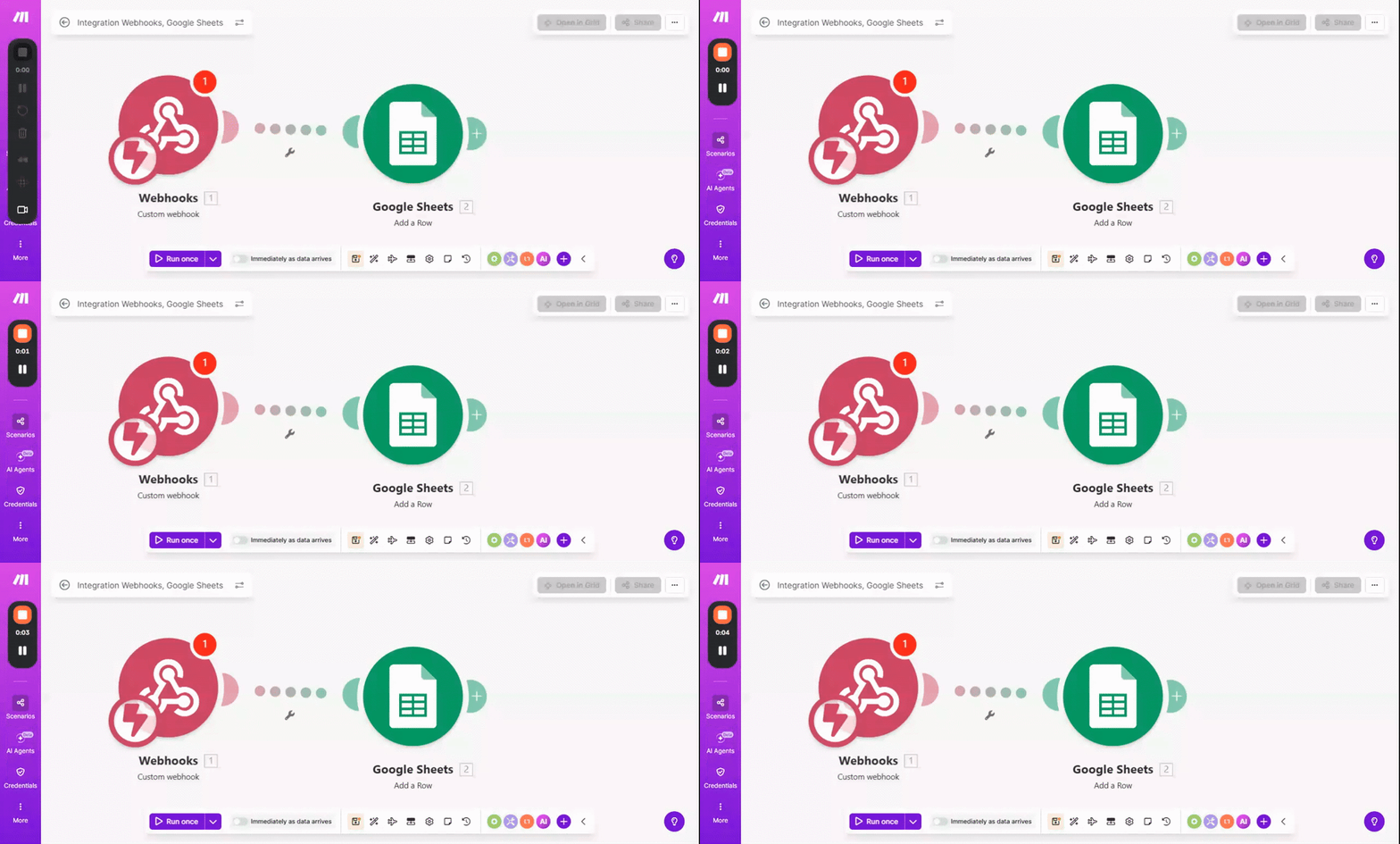
ANY AUTOMATION GUY...NEED LITTLE HELP
https://www.loom.com/share/312ab15db18141e7ac6632f3cb7f5b5f HOW TO DELETE PARTICULAR NODE IN MAKE.COM
1
0

Apr 3 •
Creative Writing
Ma creative writing sikhna chata hu kya achi skill ha koi bhai ya sister ya kar raha ha please mujha advice da
1 like • Apr 3
You can join digiskils free creative writting course to learn basics
Mar 6 •
BASIC STRUCTURE OF AI AGENTS
AI agents can seem complicated, but the core structure is actually simple once you break it down. In this Loom video, I explain the basic architecture of an AI agent using a simple diagram so it’s easier to understand how everything connects. https://www.loom.com/share/0233129ce126411ab2a402419db762a6https://www.loom.com/share/0233129ce126411ab2a402419db762a6 An AI agent mainly consists of five key components: 1. LLM (Large Language Model) This is the brain of the agent. It processes different types of inputs like text, images, video, and audio to generate responses. 2. Instructions Instructions guide the behavior of the agent. They define how the agent should respond to users and help reduce hallucinations. 3. Tools Tools allow agents to perform real actions such as interacting with external platforms, sending data, or connecting with services like CRMs and cloud apps. Without tools, agents can only generate responses but cannot execute tasks. 4. Memory Memory helps the agent remember previous interactions and context, making conversations more natural and useful. 5. Knowledge Base This contains the information the agent should know, such as business documents, PDFs, or internal data. All of these components connect together through APIs to create a fully functional AI agent capable of automation and intelligent responses. In the Loom video, I walk through the diagram step by step to make the concept easier to understand. Would love to hear your thoughts or how you’re structuring your AI agents.
0 likes • Mar 6
@Rizwan Ahmed glad you like it
Mar 5 •
Built My 1st Multi-Agent AI Voice Assisnt Using Elevenlabs 🤖
Today I built my first AI Voice Agent using ElevenLabs, and instead of one assistant doing everything, I designed 3 AI agents that work together simultaneously like a small team. The system works like this: 1️⃣ Bella (Main Agent) Bella acts as the primary assistant and handles general customer questions or tech-related queries. 2️⃣ Product Specialist Agent This agent explains the products available in the store and provides detailed information to customers. 3️⃣ Stock Specialist Agent This agent checks and informs customers about the current product availability and stock status. So if a customer asks something general, Bella answers. If they ask about products, the product agent takes over. If they ask about availability, the stock agent responds. It’s basically multiple AI agents collaborating together to simulate a real customer support team. Curious to hear your thoughts : What do you think about this setup? How would you improve this kind of AI voice system for a business?

0 likes • Mar 6
@Najam Khan JAZAKALLAH Brother the work flow is entirely made in eleven labs agentic and as far time is concern it took around 30-45 mins
1-10 of 16

Active 3h ago
Joined Sep 1, 2025