Activity
Mon
Wed
Fri
Sun
May
Jun
Jul
Aug
Sep
Oct
Nov
Dec
Jan
Feb
Mar
Apr
What is this?
Less
More
Memberships
Festival & Space Maker Network
323 members • $36/year
6 contributions to Festival & Space Maker Network
16d •
My failure could be your win!
I can no longer make it to Salty Hearts ☹️ so I have a campsite to sell… Teach me in your ways secure exchange!
Jan 28 •
From Liquid Space Disco Music: The Psychology of the Dancefloor by Shelby Lancaster
Love this!... The Psychology of the Dancefloor by Shelby Lancaster Lets talk about that moment on the dancefloor when the lights hit just right, the bass is bumping into your heartbeat, and you’re smiling at a room full of humans that don’t feel so much like strangers. It’s one of the few places where connection isn’t forced. It’s not just moving around to loud beep bop music, we’re syncing energy. Everyone exhaling at the same time, pulling us out of our heads and into the present moment. It’s why a stranger can give you a smile and that somehow feels deeper than most conversations. Music breaks down the walls we walk around with every day, and the dance floor becomes this weird, beautiful space where you are allowed to be exactly who you are. And that’s honestly what I love most about our scene. It’s never just about the lineups or which genres are trending… It's about us showing up for each other without even realizing we’re doing it. It’s the energy we create together that makes these nights so memorable, and it’s the connection that keeps the culture alive after the lights turn on and we stumble back into reality. So if there’s one thing I want to remind you, it's that we keep showing up for each other. Keep dancing like you belong, because you do! Keep supporting the local artists, the crews, the spaces, and the people who make these moments possible. Every time we step onto a dancefloor, we’re helping build something bigger than ourselves. - Shelby Lancaster
2 likes • Jan 29
For me it’s a quasi-religious experience… like I am tapping into a greater energy, vibe, and consciousness. Can’t wait to do it again! 🙌
Jan 7 •
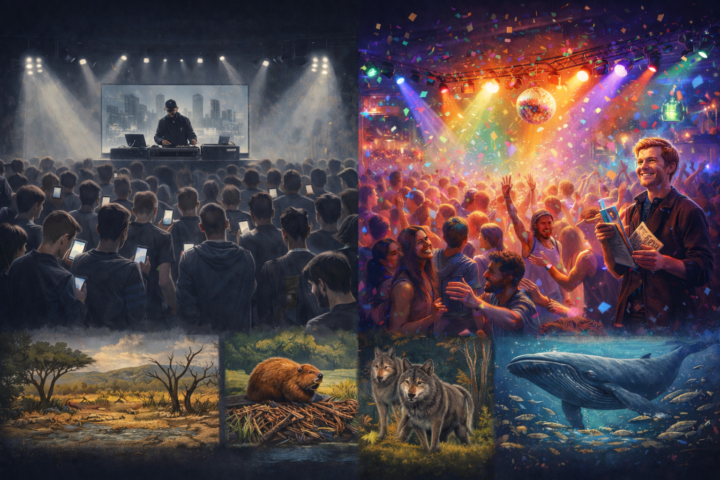
Keystone Creatures: The Work You Don’t Notice Until It’s Gone
Some people may not realize what a keystone creature actually does in an ecosystem. And in many cases, it isn’t intuitive at all. A keystone species isn’t always the biggest, loudest, or most obvious presence. Often, its impact is indirect—shaping systems quietly, over time. You don’t notice the work while it’s happening. You only notice when it stops. In ecology, removing a keystone species doesn’t just reduce diversity—it destabilizes the entire system. - Elephants in Africa don’t just roam the land. They open forests, create migration corridors, dig water access, and prevent landscapes from tipping into imbalance. Entire habitats depend on their movement. - Beavers in Canada don’t just build dams. They regulate water flow, reduce erosion, prevent wildfire spread, recharge aquifers, and create wetlands that support dozens of species. One beaver can reshape a watershed. - Blue whales don’t just move through the ocean. They fertilize phytoplankton—the base of the marine food chain and a major driver of carbon sequestration. Fewer whales means weaker oceans. These species don’t dominate ecosystems. They enable them. Remove the keystone, and the system doesn’t adapt. It degrades. It collapses. Keystone Promoters: Why Small Crews Keep Music Culture Alive Underground nightlife doesn’t survive because of stadium tours, corporate mergers, or dynamic pricing algorithms; it survives because of the wolves, whales, and elephants of the music ecosystem—small promoters. We’re the ones who take the risks nobody else will. We book the weird nights, the risky lineups, the new kid who hasn’t “proven” their market yet. We build the trails that everyone else walks later. Corporate giants extract value. Small promoters circulate it. We aren’t naming names here—you already know which venues went exclusive, which festivals turned into billboards, and which ticket buttons make you want to throw your phone in the ocean. Use your imagination. It won’t be far off. A healthy nightlife ecosystem needs diversity: small rooms, small crews, small festivals. They’re the nutrient flow. The breeding ground. The spaces where culture grows before it’s profitable.
0 likes • Jan 8
That’s a non-religious AMEN from me, dawg!
Jan 1 •
Wow!
At the moment I am at a loss for words and full of love. Over the next few days I'll be reaching out to new members and folks on here. For now, just a bit of rest is needed. With love and thanks

1 like • Jan 1
So Fun! Thanks everybody!
Dec '25 •
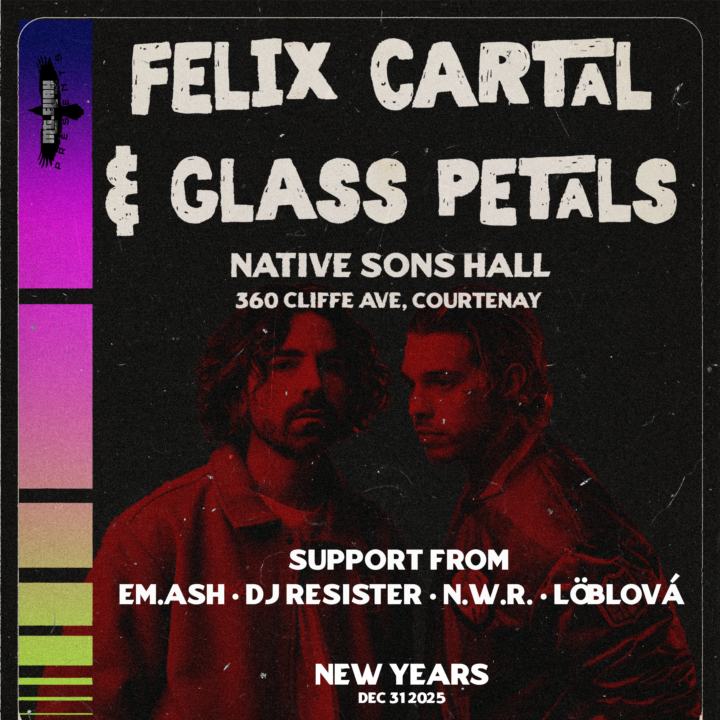
NEW YEAR’S EVE AT NATIVE SONS HALL FELIX CARTAL • GLASS PETALS
Mt. Eliah & Long Shot Events Present: With support from: Em.Ash, Re-Sister, N.W.R, Löblová Ring in 2026 with a full-scale dance experience right in the heart of Courtenay. We’re taking over the iconic Native Sons Hall—this beautiful log heritage building—and transforming it into a festival-level dance environment for one massive New Year’s celebration. Expect a night built with intention: World-class production (sound, lights, staging, custom décor) A warm, intimate, high-energy environment designed for connection A full bar and lounge zones Finger foods available for purchase A curated music journey from open to close Doors open early, we go late, and the night is crafted so you can settle in for the full ride—no hopping between venues, no distractions, just a seamless New Year’s experience.
1 like • Dec '25
Super stoked for this!
1-6 of 6