Activity
Mon
Wed
Fri
Sun
Jul
Aug
Sep
Oct
Nov
Dec
Jan
Feb
Mar
Apr
May
What is this?
Less
More
Memberships
Sirius Garden Games
107 members • Free
Home Grower Hangout gbb101
25 members • Free
3 contributions to Home Grower Hangout gbb101

Dec '25 •
Silica
Cannabis Fact of the Day Silica is one of those inputs that never gets the headline, yet it quietly rewires how a cannabis plant behaves. It’s not a nutrient in the classic sense like nitrogen or potassium. Think of silica as a systems engineer. It doesn’t build the plant, it teaches the plant how to hold itself together under pressure. Once absorbed, silica is deposited into cell walls as amorphous silica gel, reinforcing tissues from the inside out. This thickening of the cell wall changes how cells stretch, divide, and signal. Stronger walls don’t just mean sturdier stems; they alter hormonal traffic. Auxins, the hormones responsible for apical dominance and directional growth, move more predictably through reinforced tissues. That’s why silica-fed plants often show tighter internodes and more disciplined structure without being chemically “stunted.” Silica also has a quiet but important relationship with gibberellins. Gibberellins push elongation and rapid growth, sometimes too much if nitrogen is high. Silica tempers that response. It doesn’t shut gibberellins down; it keeps them from running wild. The result is growth that’s fast but controlled, thick instead of leggy, intentional instead of floppy. Where silica really shines is stress signaling. When a plant experiences heat, drought, salinity, or pest pressure, it releases stress hormones like abscisic acid and jasmonates. Silica reduces how loudly those alarms ring. By physically reinforcing cells and improving water-use efficiency, silica lowers perceived stress, meaning the plant doesn’t divert as much energy into survival mode. More energy stays allocated to growth, root expansion, and later, secondary metabolites. Ethylene is another hormone silica indirectly keeps in check. Ethylene spikes during stress and senescence, accelerating aging and leaf drop. Silica-treated plants often show delayed senescence because stress-induced ethylene production is reduced. Leaves stay greener longer, photosynthesis stays online, and the plant doesn’t panic when conditions swing.


0 likes • Dec '25
Silica is so important


1 like • Nov '25
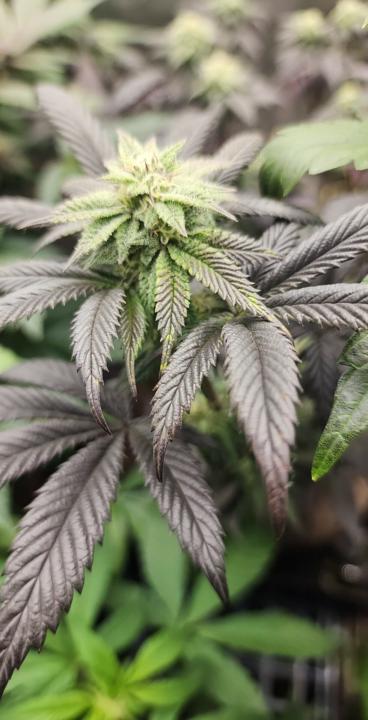
Looks sooo good in there
1-3 of 3

Active 105d ago
Joined Nov 9, 2025