Activity
Mon
Wed
Fri
Sun
Oct
Nov
Dec
Jan
Feb
Mar
Apr
May
Jun
Jul
Aug
Sep
What is this?
Less
More
The Beekeeper
30
Free
The Mind Full Teacher
52
$7/m
Social Skills for Kids
85
Free
Build It
25
Free
AI-Curious Educators
14
Free
Retirement 4 Teachers
2.9k
Free
The Free Man
447
Free
The Productive Property
48
Free
EducatorAI
449
Free
1 contribution to The Beekeeper

Dec '25 •
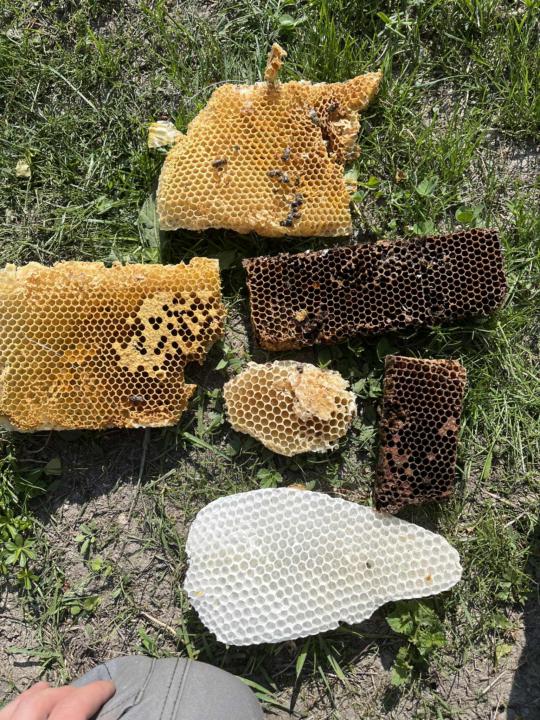
Why I replace my wax every year
The comb that bees use for brood becomes darker with every passing year. This happens because beeswax gradually accumulates residues from honey, pollen, propolis and, most importantly, cocoon remnants left behind by developing brood. Over time, each cell carries the history of everything that has happened in that colony. Like all living organisms, honey bees are affected by diseases. These include viruses, bacteria, and fungi. Some of these pathogens the bees can manage themselves by removing sick brood and dead individuals. Others are far more persistent, remaining in the colony environment for a long time or ultimately leading to colony collapse. In nature, bees solve this problem through swarming. When a colony swarms, the bees leave with a substantial honey reserve, enough to establish a new colony from scratch. A swarming colony is therefore fully prepared to build an entirely new home using fresh wax. This new wax is produced from the honey they bring with them. Roughly four kilograms of honey are required to produce one kilogram of wax. By doing this, the bees continuously renew their comb. Fresh wax helps isolate and reduce the impact of many bee diseases. Even so, it is still recommended to feed a swarm with a 50/50 sugar syrup. This ensures that the carried honey that may contain a patogen is primarily used for wax production rather than stored as feed. Feeding stimulates wax production, and any excess stored in the cells will consist of sugar rather than unknown honey. It also creates an artificial nectar flow, encouraging the queen to start laying eggs quickly and consistently. Pathogens that may be present in old comb include: • European foulbroodcaused by Melissococcus plutonius • American foulbroodcaused by Paenibacillus larvae • Chalkbrooda fungal disease caused by Ascosphaera apis • Sacbrooda viral disease caused by Sacbrood virus (SBV) • Deformed Wing Virus (DWV) • Acute Bee Paralysis Virus (ABPV) • Chronic Bee Paralysis Virus (CBPV) My method for replacing wax is based on overwintering colonies on two brood boxes with frames, depending on frame size. With Farrar equipment, I use three boxes. The lower box consists of the old brood comb. The upper box contains frames from the past season’s honey harvest, which have been filled during winter feeding with sugar solution, or honey for those who choose to overwinter on honey.

2 likes • Dec '25
Very cool. Thank you. Makes sense as swarming isn't something I would want.
1-1 of 1

@matt-shea-7212
Health and PE teacher and dad who values wellness, movement, connection, and sustainable habits for life.
Active 196d ago
Joined Dec 13, 2025
INFJ
CT