Activity
Mon
Wed
Fri
Sun
Jan
Feb
Mar
Apr
May
Jun
Jul
Aug
Sep
Oct
Nov
Dec
What is this?
Less
More
Owned by Mathew
Experiential learning, games, and simulations. Exclusively for educators and trainers to level up student engagement and personal career success.
Quickly gain the skills of an entrepreneur and confidence of a business leader — by playing realistic simulations and games (or design your own).
Memberships
OfferLab
9.5k members • Free
The Game of Skool
160 members • Free
Tiny Games Club
45 members • Free
BATCAVE TRAINING
104 members • Free
Restaurant Owners
812 members • Free
Synthesizer
33.2k members • Free
Kourse (Free)
114.8k members • Free
What Is Skool?
873 members • Free
Facilitator Club (Free)
9.6k members • Free
52 contributions to The Game of Skool

5d •
What “Cab Driver Goals” Teach Us About Designing Engagement
Ever notice how players stay stuck when the game doesn’t tell them where they’re going? Turns out… we do the same in real life. In the latest episode of the Professor Game Podcast, Glen Lubbert shared a powerful idea: 🚕 Your brain is a cab driver. If you don’t give it a destination, it just stays parked. It hit me hard because it applies directly to how we design experiences, communities, and products. Clear goals = clearer paths = more motivated players. So let’s turn this into a practical discussion for our community: 👉 What’s one goal in your current project or product that feels too fuzzy… and how could you turn it into a “clear destination” for your users? It can be big or small, the point is to sharpen it together. Drop your thoughts below. I’ll be replying to every comment and helping refine ideas so they become more actionable (and more gamifiable). Let’s level this up together!

1 like • 5d
I was just watching a video to find out what I'm supposed to do in Red Dead Redemption as I couldn't figure it out from the game itself (after the startup segment has completed). I used to design my own business simulations to be more open ended, but recently I have been designing more directed experiences.
1 like • 5d
@Rob Alvarez yes both ... finding that perfect balance and flexibility for personal choice.
22d •
8 Years of Professor Game!
Hey hey! 💜 We just hit a huge milestone: 8 years and 420 episodes of the Professor Game Podcast! 🥳 From recording in a hospital room to becoming the #1 gamification podcast in the world, this journey has been powered by one thing above all: consistency. Your support, feedback, and energy have made this community what it is today: curious, creative, and unstoppable. 🙌 I’d love to hear from you 👇 ➡️ What’s one lesson you’ve taken from the podcast or this community that’s helped you level up your own engagement strategy? Let’s keep playing, learning, and growing together. 💪
2 likes • 22d
Congrats on the grind!
Oct 20 •
Leveling Up: My Next Move
Hey friends — here’s the big update I teased 👀 After years of teaching, using, and admiring the Octalysis Framework… I’ve officially joined The Octalysis Group as Head of Engagement Strategy in Europe! 🙌 This wasn’t a quick decision. It came after deep conversations, time with the full team, and realizing just how aligned we are in purpose and mission. The retreat in Dubai sealed the deal. But don’t worry — Professor Game stays independent. The podcast continues, free as ever, and focused on what it’s always been about: making gamification practical, ethical, and effective. I’m beyond excited — and super grateful to have this community here to share it with. 🙏 If you want to talk about how this might apply to what you’re building, just DM me “CHAT.” Let’s gooo 🚀
1 like • Oct 20
Best wishes for this new chapter 🐎

Sep 20 •
Games in a classroom
I read something in a team meeting this week (at the elementary school I teach in) presented by our administrators talking about games/competition in the classroom causing stress and anxiety in students. I’m curious of people’s thoughts on the negative side effects of gamification in the classroom…..
1 like • Sep 24
Competition is a tool in the toolbox that educators can use at the right place and time. It is true that some people are not equipped for certain types of competitions, while others thrive on them. Extra care should be taken with younger children. There are many variations of competition — for example, a group of students can work together to compete against an imaginary foe, like an asteroid headed for Earth. But students individually competing against each other can risk creating negative social pressure — or it can create a lot of positive energy — it depends. Some years ago I recorded the attached video about competition.
Sep 21 •
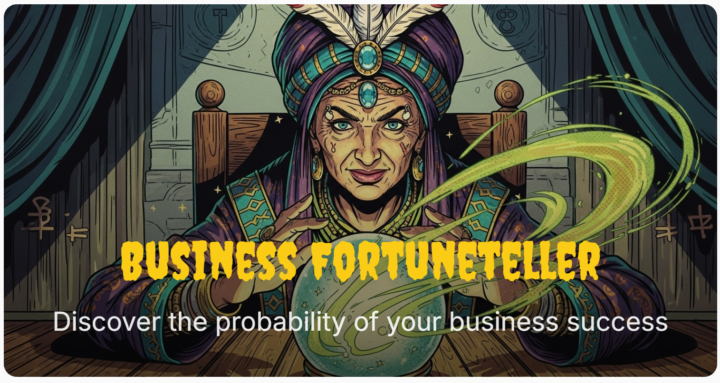
Will your Skool be succesful? Ask the Fortuneteller.
I see lots of Skoolers (myself included) crossing fingers, reading tea leaves, and refreshing dashboards… all to figure out if we’re on the road to success. Success is tricky (and sometimes feels like magic). ✨ So I built the Business Fortuneteller — your crystal ball for checking if you’re on track… and where you might be missing a step. 🎲 Give it a spin to get your Success Probability Score. Maybe even drop your results below. PLAY — https://mediaspark-fortuneteller.replit.app/
1 like • Sep 21
@Shelia Clark That's nice of you to say!
1-10 of 52

@mathewgeorghiou
I create games & simulations that help you gain business skills & confidence super fast. Bio— entrepreneur, engineer, inventor, writer— Georghiou.com
Active 5h ago
Joined Nov 19, 2024
INTJ
Canada
Powered by