Activity
Mon
Wed
Fri
Sun
Oct
Nov
Dec
Jan
Feb
Mar
Apr
May
Jun
Jul
Aug
Sep
What is this?
Less
More
Chlorine Dioxide Testimonies
629 members • Free
Cancer Warriors
554 members • Free
Cancer Warriors Vault
44 members • Free
Ozone For Life
386 members • Free
91 contributions to Cancer Warriors

Aug 7 •
Great news
Hi Team, I got some fabulous news. PET scan and Natera blood work both says cancer is gone. Plan going forward is to keep getting Jemperli Immunotherapy every 6 weeks for the rest of my life. I am also continuing with Febendazole and Ivermectin,

2 likes • 27d
Great news! Thanks for sharing Wayne

Jul 2 •
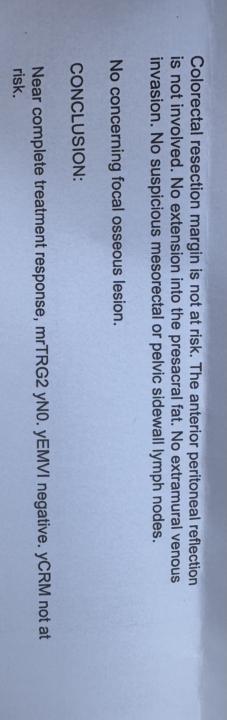
MRI results - near complete response
Hi fellow warriors! ✨ Just a quick update on my journey. I took an integrative approach to my last protocol, combining radiation with fasting, HBOT, repurposed drugs, RLT, and a GKI-friendly meals. I’m happy to share that I’ve achieved a “near complete” treatment response. This result surprised my oncology team, especially since I opted out of standard “Total Neoadjuvant Therapy” (avoiding Oxaliplatin). Because there’s still some scar tissue and inflammation, I’ll need a sigmoidoscopy to see how much of Shrimpy Boy is actually left (if any). My radiation oncologist and I are hoping it’s actually inflammation of surrounding tissues. 🤞 Now I’m moving into a “watch and wait” phase, supported by my oncologist’s knowledge that radiation’s impact can continue to work on tumour cells for months, especially when supported by metabolic therapy. I’m staying patient and vigilant, hoping that this is either a full response or one that will become “complete” very soon. Part of me just wants to fast the shit out anything left, but with knowledge that autophagy can also be weaponised by cancer cells, I’ve decided against this. Best of all I’ve avoided the “near certain” side effects of pelvic radiation—no burns, no bowel issues, and my fertility is intact. I know this might not last forever and I’d be delusionally optimistic to not expect late-onset side side effects. I’m not sure how much longer I’ll stay away from antioxidants due to the “antioxidant paradox”, which ultimately led to my decision to pause some of my supplements and not take Vitamins C, A, E, and CoQ10 during the seven weeks of radiation. Because they act as free-radical scavengers, reintroducing them can risk lowering ROS within the cancer cells, inadvertently shielding Shrimpy Boy from continuous DNA damage over time. I acknowledge that not everyone agrees with pausing antioxidants and that the data remains highly conflicting. Ultimately, this was a decision made strictly for my own peace of mind, rather than an assertion of personal expertise (and is NOT medical advice).
1 like • Jul 8
Great News Lisa. Thanks for sharing
Jun 7 •
Norms reminder - dietary dogma
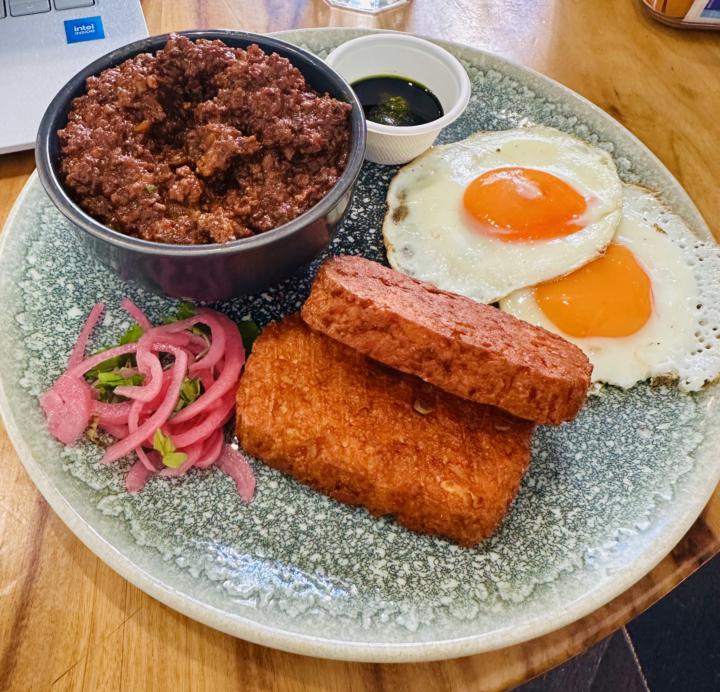
Hi everyone, I just wanted to remind everyone to keep our group norms in mind when expressing our views about dietary interventions. I’ve noticed there is a little bit of dietary dogma (likely unintentional) going on and some contentions being expressed in ways that are getting close to the line of giving medical advice. While most of us follow Prof. Seyfried’s low GKI approach as part of metabolic therapy, this is not a carnivore group. Prof. Seyfried himself doesn’t prescribe a specific diet, he just recommends we get into nutritional ketosis and “drive the GKI way down.” One of the reasons this group was created was that in the “Keto for Cancer” group (in which some of us initially connected mid-2024) people who were not carnivore were vilified. I was one of these people. I was asked by the creator of that group to post photos of my meals (general keto, vegetarian keto and carnivore) and I did this pretty regularly with the intention of being helpful and inclusive. Then, when the creator quickly shifted his dietary stance to meat-only (in order to repackage and sell his own diet plan that he previously lacked success in) things got ideological and nasty. This is the context leading up to when I was suddenly questioned for posting meals that included olives, avocado and other plant-based fats. I was told this was “probably why people like [me] end up with cancer.” Not only is such a comment insensitive, there is no medical or scientific evidence for it. As such, if I have ever in any way made anyone who has had success with a vegetarian or vegan ketogenic diet feel bad, I sincerely apologise for this. Whether someone is having success with a strict carnivore diet, “dirty” carnivore diet, animal-based diet, omnivore ketogenic diet, vegetarian ketogenic diet, Mediterranean diet, calorie restricted diet, or even a vegan diet, it is not our place to give unsolicited dietary advice. With positive intent, we can certainly reference studies and draw on our own lived experience. I am a qualified nutritionist and have tried different ketogenic diets, but I only share my lived experience - I do not profess to know which diet is most universally applicable in the context of cancer management. There is no data to irrefutably support this yet. So, when I talk about my concerns about the extent to which my overconsumption of animal protein impact growth signals IGF-1 and mTOR - which are upregulated in my own cancer cells - this is about MY situation only. My intention is not to fear-monger and it is absolutely fine to disagree with this. But it is not appropriate to give unsolicited medical advice to other warriors in favour of the dietary approach that aligns with your current views. It is also against our group norms to take my lived experience (or anyone’s lived experience) and use it as a false pretext for attacking my views and taking them out of context.
2 likes • Jun 8
I agree. I believe there is more than single way to healing and same diet may not be appropriate for everyone.
Apr 23 •
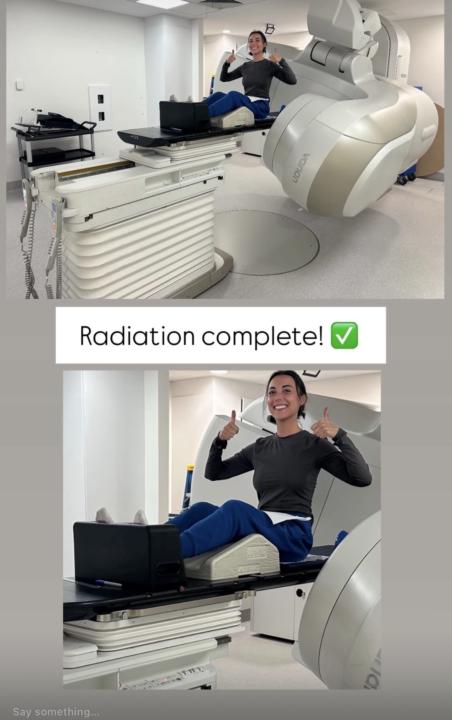
Update - completion of radiation
Hello warrior fam! 👋 Sorry I’ve been quiet for the last few months. The loss of fellow warriors in this group (and also in my community on Insta) has profoundly impacted me and lead to deep reflection about the unfairness and inequitable outcomes of cancer and mortality. I felt like any update I post would seem trivial and unhelpful during this difficult time for many of you. Although I REALLY didn’t want to, I ended up accepting some standard of care and integrating radiation into my latest intense protocol. The reason for this was financial stress, tumour growth for the first time in 2.5 years, and knowledge that my cancer cells have down-regulated Heat Shock Proteins (which in theory makes them more sensitive to radiation). I chose long-course, low dose radiation (25x1.8Gy) and integrated sensitisation strategies, such as daily HBOT, intermittent fasting and a few repurposed drugs prior. For recovery and minimising side effects I’ve been doing RLT, hydrogen therapy, CDS, while maintaining a high level of ketones as they have anti-inflammatory effects (especially β-OHB which reduces oxidative stress in healthy cells). Today was my final fraction. Initially I negotiated 15 due to fear of both the short and long term side effects, but as I’ve tolerated it so well I decided to have the full 25. I am very lucky to have been referred to a new radiation oncologist who has been open to personalising the treatment and genuinely curious about the potential of HBOT, fasting and the ketogenic diet. Radiation to the pelvis in women nearly always results in infertility and induces early menopause. General side effects also include proctitis, incontinence, rectal inflammation and pain, fibrosis, etc. I’m very shocked to report I am yet to experience any side effects, with the exception of the two days I decided not to fast, didn’t do HBOT, and drank coffee and ate a typical western breakfast. I had to know for sure that the adjunctive modalities I’ve implemented have been truly effective and not placebo, so this is why I experimented with what a “typical” patient (ignorant about the impact of GKI) would likely eat. On those two days (and two days after) I had extreme fatigue and a little irritation in the rectal mucosa. As a result of this, I did a 3 day consecutive fast to try to stop the progression of the side effects and lo and behold… they went away! Unfortunately, prolonged fasting wasn’t / isn’t possible as weight loss impacts the accuracy of the markings and measurements needed for precision radiation (and I certainly don’t want ionising gamma rays blasting non-tumorous rectal mucosa and causing a secondary cancer through oncogenesis of healthy epithelial cells).
2 likes • Jun 2
@Michael Wright There is no one approach that fits all. Most people in this group at least tried similar protocol that you suggest above. If someone trying other things it is because the results were not as expected.

May 18 •
this B12 supplement has 2 forms of vitamin B12 adequate for our 2 metabolic pathways
Most B12 supplements do not provide a form of vitamin B12 that can be used by both of our 2 metabolic pathways which require B12. Many people buy B12 are not getting a benefit because they are not buying the proper form of B12. There are cyano-cobalamin, methyl-cobalamin, Adenosyl-cobalamin etc. The below-linked B12 supplement has 2 forms of vitamin B12 adequate to supply our 2 separate metabolic pathways. Why Not Natural brand Vitamin B12 5000 mcg Supplement with Methyl-cobalamin, Adenosyl-cobalamin and Hydroxy B12 Complex. The human body cannot convert between the 2. There is a B12 form that the human body can use for both metabolic pathways, but I do not remember which it is as methylcobalamin, Adenosylcobalamin are adequate. I'll look for the Youtube video that explains this in more detail and link it here if I find it. https://www.amazon.com/dp/B0CBHQP6WR?ref_=ppx_hzsearch_conn_dt_b_fed_asin_title_1 Found these videos while searching for what I think is the best B12 detailed overview video on Youtube. https://www.youtube.com/watch?v=TpSp1f2f-us This video suggests different forms for different goals and needs, including a story about a vegan mother permanently damaging her baby by taking a low cost multi-vitamin with only 1 type of B12. https://www.youtube.com/watch?v=31i2TEkhHwE A few more that caught my eye while searching. https://www.youtube.com/watch?v=PK7TGO02Kjw I have failed to find the B12 video that I watched and thought was best in this context. Some say that supplementing B12 is not advisable for those with cancer according to scholarly articles, but the scholarl;y article is not referenced and I have not encountered any. I write this here after reading a scholarly article that tangentially demonstrated an association between better cancer outcomes and adequate B12. The B12 association demonstrates less correlation with better cancer fighting and outcomes than 120 ng/ml vitamin 1,25 hydroxy D3, but a significant correlation. Keep in mind that hundreds if not thousands of scholarly articles regarding cancer topics tangentially indicated higher than average levels of 1,25 hydroxy D3 are statistically corelated with better cancer outcomes. This is all we seem to get for cancer fighting molecules that cannot generate high profit margins. Our governments are supposed to do these studies for profit big pharma will not do, but our governments do not fund these either.
1 like • May 21
I heard that B12 in any form can reduce cancer treatment efficiency. Worth to research the subject before starting supplementation.
0 likes • Jun 2
@Michael Wright I heard that high level of D3 is beneficial but totally different story re B12. I came across information that elevated levels of B12 are correlated with worse outcomes of treatment.
1-10 of 91