Activity
Mon
Wed
Fri
Sun
Oct
Nov
Dec
Jan
Feb
Mar
Apr
May
Jun
Jul
Aug
Sep
What is this?
Less
More
Ironclad Immunity Community
20 members • Free
Astral Projection Starter
6.4k members • $7/month
Cancer Warriors Vault
44 members • Free
Cancer Warriors
555 members • Free
43 contributions to Cancer Warriors

Aug 7 •
Great news
Hi Team, I got some fabulous news. PET scan and Natera blood work both says cancer is gone. Plan going forward is to keep getting Jemperli Immunotherapy every 6 weeks for the rest of my life. I am also continuing with Febendazole and Ivermectin,
2 likes • Aug 7
Wonderful news!!
Apr '25 •
Find Other Warriors With Your Cancer Type
To help everyone connect more easily with others on a similar journey, please comment below with: 1. Your Cancer Type (e.g., Cervical Adenocarcinoma, Triple-Negative Breast Cancer, Glioblastoma, etc.) 2. (Optional) Stage/Grade (e.g., Stage 3, Grade 2). Example: “My mum: Cervical Adenocarcinoma, Stage 4.” This way, members can find and connect with others who truly understand the specifics of their situation. Feel free to browse the comments and reach out to those you relate to!
6 likes • Apr '25
My daughter, Brain Cancer - Astrocytoma, Grade 3
1 like • Aug 4
My 30 year old daughter, Mallory - Brain Cancer, Grade 3 Astrocyoma
Sep '24 •
Start Here 👋
This group exists so no one has to walk this path alone. Share as much or as little as you feel comfortable: - Your diagnosis or a loved one’s journey - What brought you here - Questions you’re exploring - Therapies or strategies you’re researching - Or even a photo — faces help turn stories into connection Every share matters. It helps others feel less isolated and strengthens the collective wisdom of the group. 📌 Post Categories — How to Share To keep the community organised and easy to navigate, please choose the category that best fits your posts: 📢 Announcements: Official updates from the Admin team. 👋 Introductions: Say hello and share as much (or as little) as you’re comfortable with about your journey. ❓Questions: Questions and thoughtful answers from the community. 💬 General Discussion: Open conversation on cancer, healing, mindset, and community-related topics. 💡Research & Protocols: Research, studies, resources, protocols, and learning materials. 📝 Journeys & Experiences: Personal stories, protocols being explored, progress updates and testimonials. ❤️ Community Lounge: Anything that doesn’t clearly fit another category. If you’re unsure, don’t worry — just choose your best guess. The goal is sharing, learning, and supporting each other, not perfection.
2 likes • May 27
She’s doing ok thx. Still working hard on pushing her cancer back. As you know it takes a lot of discipline and perseverance to maintain a healthy and strategic protocol and to keep a positive perspective. Always looking ahead to try to simplify it some and do better.
2 likes • May 29
@Bernardo Henriques thank you Bernardo. You’re a godsend. 🙏🏻 ♥️

Mar '25 •
Analysis of Red Light Therapy for Brain Cancer, Especially with Methylene Blue and Photobiomodulation
Red light therapy (RLT), particularly in the form of photobiomodulation (PBM), has gained attention as a potential adjunctive treatment for neurological diseases and cancer, including brain cancer. The combination of red light (or near-infrared light, NIR) with methylene blue (MB) is an emerging therapeutic strategy aimed at enhancing mitochondrial function, reducing oxidative stress, and potentially promoting cancer cell apoptosis. Below is a critical evaluation of this approach. 1. Mechanism of Action A. Red Light Therapy (Photobiomodulation) Photobiomodulation (PBM) involves the use of red (600–700 nm) or near-infrared (NIR, 800–1100 nm) light to stimulate mitochondrial function and cellular metabolism. Its primary mechanisms include: - Cytochrome c Oxidase (Complex IV Activation): PBM enhances ATP production by stimulating cytochrome c oxidase (CCO) in the mitochondrial electron transport chain. - Reduction of Oxidative Stress: PBM can reduce reactive oxygen species (ROS), modulate inflammatory cytokines, and protect healthy cells from oxidative damage. - Neuroprotection & Cellular Repair: PBM has been studied for neurodegenerative diseases like Parkinson’s and Alzheimer’s, suggesting potential neuroprotective benefits in brain cancer. B. Methylene Blue (MB) in Cancer Therapy Methylene blue is a redox agent that can act as an alternative electron carrier in the mitochondrial electron transport chain, enhancing cellular respiration. Its effects include: - Enhancing Mitochondrial Function: MB donates electrons to Complex I and III, bypassing mitochondrial dysfunction often seen in cancer cells. - Selective Cytotoxicity in Cancer Cells: MB may increase oxidative stress selectively in cancer cells, leading to apoptosis while protecting healthy cells. - Photosensitization: MB absorbs red/NIR light, allowing it to act as a photosensitizer, generating singlet oxygen and free radicals that can induce cancer cell death. 2. Evidence for Red Light Therapy in Brain Cancer
1 like • May 8
good to know thx

Apr 23 •
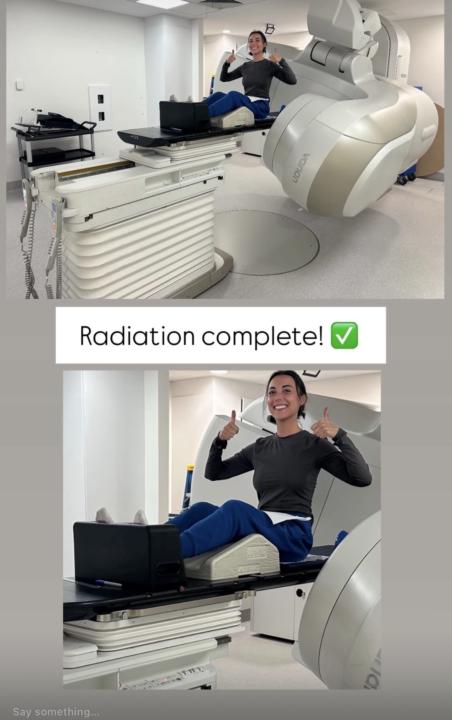
Update - completion of radiation
Hello warrior fam! 👋 Sorry I’ve been quiet for the last few months. The loss of fellow warriors in this group (and also in my community on Insta) has profoundly impacted me and lead to deep reflection about the unfairness and inequitable outcomes of cancer and mortality. I felt like any update I post would seem trivial and unhelpful during this difficult time for many of you. Although I REALLY didn’t want to, I ended up accepting some standard of care and integrating radiation into my latest intense protocol. The reason for this was financial stress, tumour growth for the first time in 2.5 years, and knowledge that my cancer cells have down-regulated Heat Shock Proteins (which in theory makes them more sensitive to radiation). I chose long-course, low dose radiation (25x1.8Gy) and integrated sensitisation strategies, such as daily HBOT, intermittent fasting and a few repurposed drugs prior. For recovery and minimising side effects I’ve been doing RLT, hydrogen therapy, CDS, while maintaining a high level of ketones as they have anti-inflammatory effects (especially β-OHB which reduces oxidative stress in healthy cells). Today was my final fraction. Initially I negotiated 15 due to fear of both the short and long term side effects, but as I’ve tolerated it so well I decided to have the full 25. I am very lucky to have been referred to a new radiation oncologist who has been open to personalising the treatment and genuinely curious about the potential of HBOT, fasting and the ketogenic diet. Radiation to the pelvis in women nearly always results in infertility and induces early menopause. General side effects also include proctitis, incontinence, rectal inflammation and pain, fibrosis, etc. I’m very shocked to report I am yet to experience any side effects, with the exception of the two days I decided not to fast, didn’t do HBOT, and drank coffee and ate a typical western breakfast. I had to know for sure that the adjunctive modalities I’ve implemented have been truly effective and not placebo, so this is why I experimented with what a “typical” patient (ignorant about the impact of GKI) would likely eat. On those two days (and two days after) I had extreme fatigue and a little irritation in the rectal mucosa. As a result of this, I did a 3 day consecutive fast to try to stop the progression of the side effects and lo and behold… they went away! Unfortunately, prolonged fasting wasn’t / isn’t possible as weight loss impacts the accuracy of the markings and measurements needed for precision radiation (and I certainly don’t want ionising gamma rays blasting non-tumorous rectal mucosa and causing a secondary cancer through oncogenesis of healthy epithelial cells).
2 likes • Apr 27
@Lisa Drake thank you so much! You’ve sure done alot. I hope everything works for you. You are truly inspirational.
0 likes • Apr 28
@Lisa Drake where did you get the RGCC test done ? I am in Canada. Thx
1-10 of 43
@lori-chamberlain-1336
Mother of my 29 year old daughter who was diagnosed 2 years ago with brain cancer - tumour: Astrocytoma Grade 3.
Active 11h ago
Joined Jan 29, 2025
Port Stanley, ON, Canada
Powered by