Activity
Mon
Wed
Fri
Sun
May
Jun
Jul
Aug
Sep
Oct
Nov
Dec
Jan
Feb
Mar
What is this?
Less
More
Memberships
The School of Bits
48 members • Free
Publish & Profit Challenge
4.1k members • Free
22 contributions to The School of Bits

16h •
4/3 Market Update: Key Events to Watch For This Year
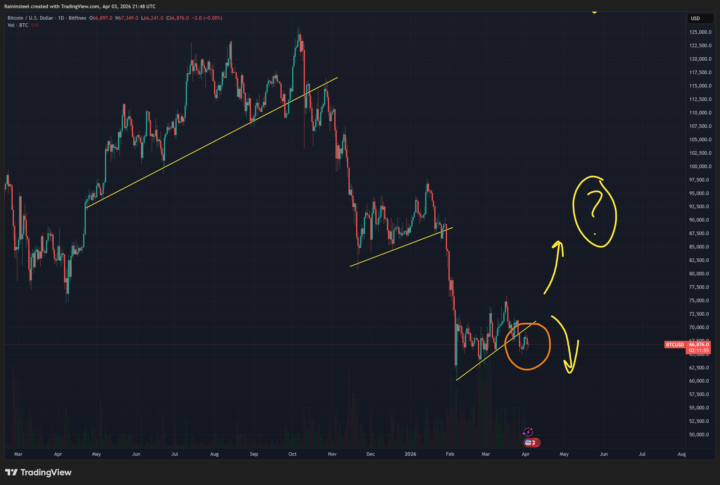
Okay so here's my take about where things actually stand right now into the year and what most people are completely missing. As we saw, BTC dropped below the area we discussed last week but does it go lower? What about the rest of the year? If it doesn't then what are we waiting on? When does the market turn? So let me give you my honest read, because the picture is more complex than "wait for the Fed to cut." Here's kind of what's going on beneath the surface: Let me start with this....the blue collar labor crisis in the US is becoming a bigger macro catalyst than people give it credit for. - 50,000 plumbers short by 2027. - 500,000 construction workers shortage today. - 193,000 nursing vacancies every single year through 2032. - 800,000 electricians needed by 2030 Electrician employment alone is growing twice as fast as any other occupation and nearly 30% of union electricians are about to retire on top of that. So my point is: - We have a ⬇️ workforce as baby boomers retire - We have have a ⬆️ demand for more workers - We have an ⬆️ ongoing AI race with China - We have ⬆️ costs to get people into these jobs (largely university taught - not trades/skills population) - We have ⬇️ money available due to high borrowing costs/interest rates What I'm saying is - you can't re-shore manufacturing, build out AI infrastructure, and wire a robust energy grid with a workforce that doesn't exist. The demand is locked in. The supply can't respond fast enough. That is a spending mandate whether anyone in Washington wants to admit it or not. But another thing - the ISM ----- ISM (Institute for Supply Management) Manufacturing PMI is a monthly survey of the people actually placing orders, managing supply chains, and making hiring decisions etc etc etc...It's one of the most closely watched leading economic indicators on Wall Street because it reflects real business conditions before they show up in GDP or jobs reports -------------------- okay continue

0 likes • 2h
Fascinating. Could you dive deeper into the difference between demand pull and cost push inflation? I feel like that difference is an important nuance even though they both lead to higher prices. Also, is there a way for new Fed Chair Warsh to increase liquidity without officially lowering rates? My understanding is that he is prioritizing an increase in private sector lending for better liquidity distribution and not wanting to contribute to inflation directly.
24h •
April Is Financial Literacy Month. There's One Thing They Still Won't Teach You.
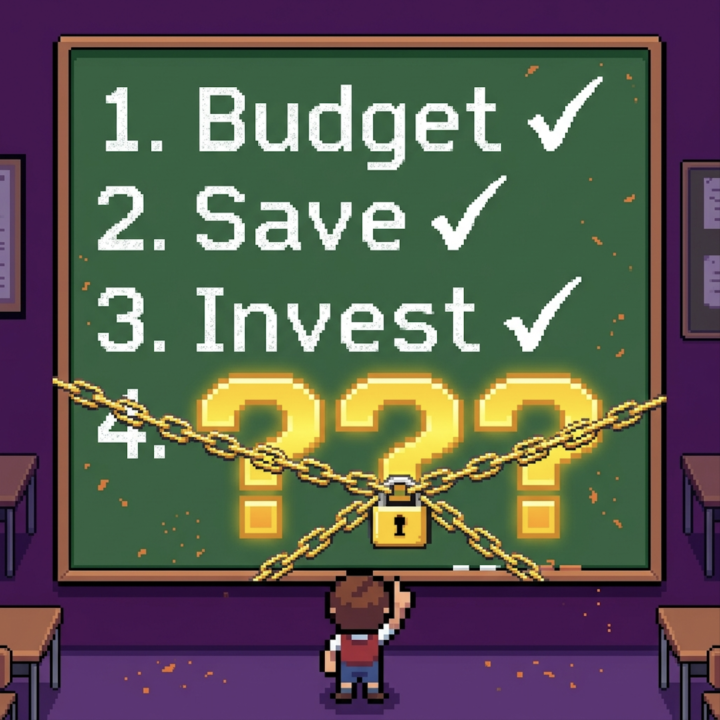
April is officially Financial Literacy Month. Schools, banks, and government programs will spend the next 30 days teaching people how to budget, save, and avoid credit card debt. Ok maybe not public schools. All solid advice. Genuinely useful. And also incomplete in a way that matters. Here's what traditional financial literacy covers: - Make a budget and stick to it - Build an emergency fund (3-6 months) - Pay off high-interest debt first - Start investing early (compound interest) - Don't spend more than you earn Good rules. If you follow them, you'll be ahead of most people. So why are millions of people doing all of this and still falling behind? The part they leave out: Financial literacy programs teach you how to play the game. They never teach you how the game is built. Your grandparents bought a house on a single income. Your parents needed two. You might need two incomes and a side hustle. This isn't because people got lazier or dumber. For some people that's true lol. But for most people, something deeper is going on. Since 2020 alone, weekly household grocery spending has climbed 25-30% depending on whose data you look at. By 2028 we're on schedule to be spending a TRILLION dollars on groceries alone! The official CPI says food inflation over that same period was closer to 20%. Both numbers are real. The gap between them is where frustration lives. The dollar buys less every year. That's a structural feature of how modern money works (more dollars created = each one worth less). Every financial literacy program teaches you to save dollars. Almost none of them teach you why those saved dollars keep shrinking. ----- This is why we built The School of Bits ----- Budgeting matters. Saving matters. But understanding why your budget keeps breaking even when you follow the rules? That's the piece worth adding. Hard assets (things with fixed or limited supply) behave differently than cash in an inflationary environment: - Gold.
1
0
3d •
Quantum Computers vs Crypto: Here's Why I'm Not Losing Sleep
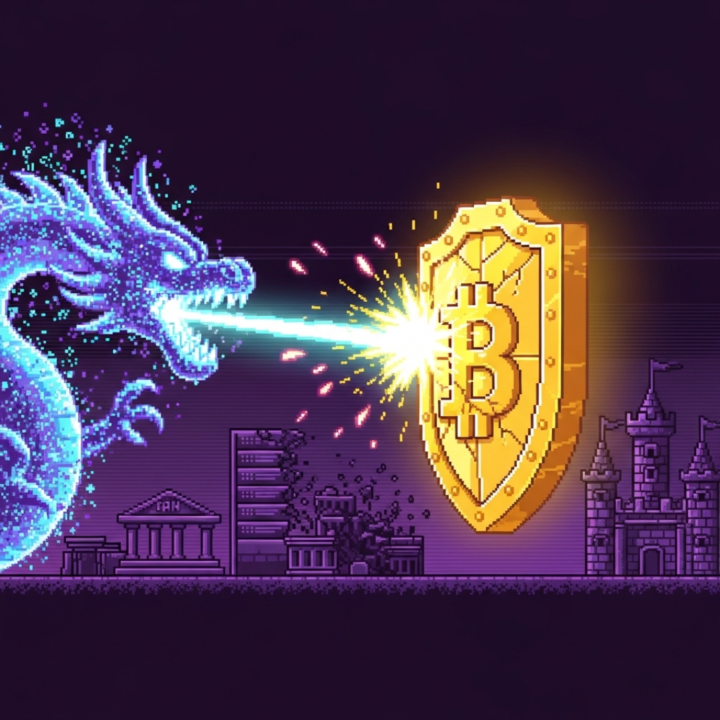
Google is pushing to migrate all its systems to quantum-proof cryptography by 2029. Their researchers just published a paper saying a quantum computer could crack a Bitcoin private key in about nine minutes. Headlines are doing what headlines do. Chyrons and articles saying: "Bitcoin is doomed." "Crypto is cooked." So let's talk about what's actually going on. The assumption is that quantum computers will break Bitcoin's encryption, proving it was always fragile hype and brittle code. Here's what that misses. The same cryptography that secures Bitcoin also secures your bank, your medical records, stock exchanges, military systems, and every website you've ever logged into. If quantum is threatening to break Bitcoin, it really breaks everything else more violently. So why is the headline never "your bank is doomed"? Because Bitcoin makes a better scary story. Here's the part I find interesting. Google can set a 2029 deadline because it's one company. One CEO, one security team, one update pushed from the top. It may be fast and cutting edge, but it's also a one decision-maker, one attack surface, one off switch. It's what we called "centralized." Bitcoin doesn't have a CEO. It has thousands of developers already working on this. A proposal called BIP-360 introduces quantum-resistant address types. Adam Back, a cryptographer cited in the original Bitcoin whitepaper has proposed hash-based signatures as an alternative. A working implementation hit a Bitcoin testnet this month. Ethereum, the second largest crypto ecosystem has a post quantum roadmap to become resistant to quantum attacks by 2029. The network upgrades because the open source communities build the fixes together for their own good. They are incentivized to fix the problem because they have real skin in the game. By owning these tokens, they are actual owners of the networks themselves. It's sorta slower by design. But it's also how you build something without a single point of failure.
5d •
If Wages Go Up…Why Are Regular Folks Still Broke??
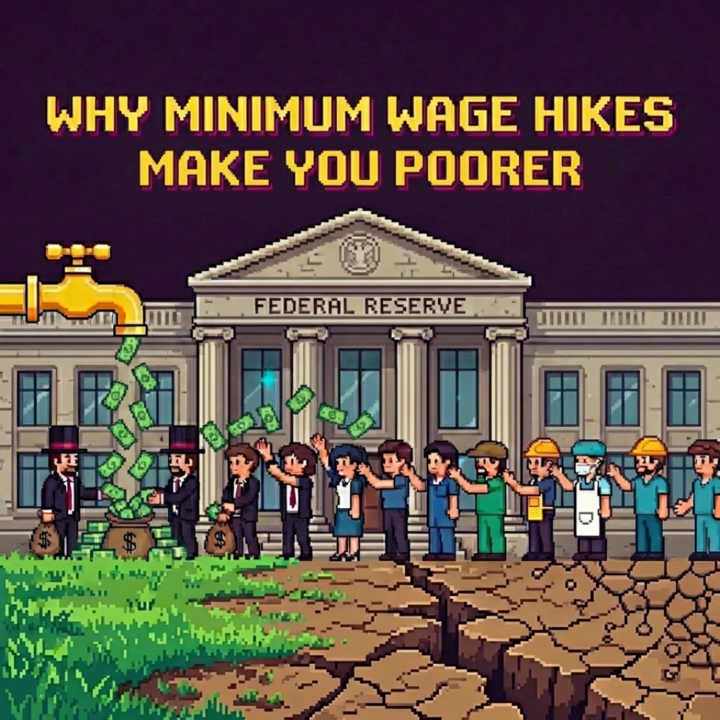
My buddy asked me a simple question when I was a teen that I only figured out the answer to a few years ago. And it's this answer that led me to finally understand why bitcoin is a REAL life raft that millions are hanging on to for survival in chaotic times. "If minimum wage goes up and prices go up too, isn't that just a wash?" At the time, I didn't have a good answer. This innocent sounding question sounded logical. But it's wrong. Political policy and slogans that advocate for "fair" inflation is NOT fair at all. It's not even neutral. In fact, it has the OPPOSITE effect from what is intended. The reason is something most people were never taught. It's called the Cantillon Effect, coined by the 18th century author and economist Richard Cantillon. It helps explain why the rich get richer, the poor get poorer and why Bitcoin continues to be the best performing asset in human history. New Money Doesn't Hit Everyone at the Same Time When money is printed by the central bank, pushed through stimulus, or created through low interest rates for "populist political policy," it flows through a line. Sadly, it doesn't show up in everyone's wallet at the same time. Where you stand in that line decides whether the new money helps you or robs you. - First in line → Banks and institutions. (They get fresh money before prices move. They buy assets at yesterday's prices) - Middle of the line → Corporations and investors. (Prices are starting to rise, but they have capital to adjust adjust) - Dead last → Workers, hourly earners, savers (By the time wages go up,if they actually do go up, prices already moved. The "raise" basically buys less than the old wage did. This is why groceries feel insane compared to when you were young even though you make way more dollars today) In total, the result is a giant Wealth Transfer. It is NOT neutral. It does NOT fight corporate greed. It gives politicians more slogans to campaign on, it gives corporate more wealth and it leaves regular folks like us further and further behind. This is the Cantillon Effect.
7d •
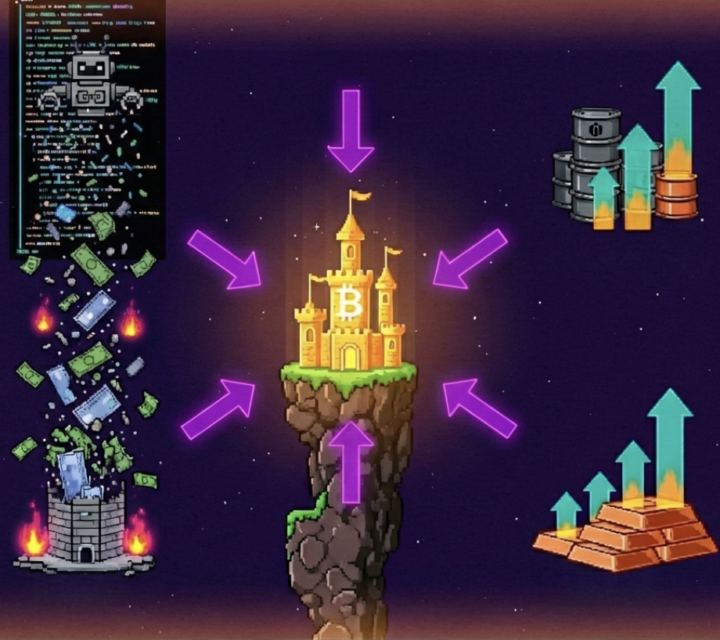
Three Forces Are Colliding Right Now…All Pointing to Bitcoin.
Most people think the biggest risk to their money is a stock market crash. It's not. Something stranger is already underway. Right now, three historically unique things are happening at the same time, and very few folks are ACTUALLY connecting the dots. Credit is cracking. Private credit markets are breaking down. Years of loose lending, rising defaults, and overleveraged funds are catching up all at once. The system needs massive liquidity injections just to keep the lights on…and when that money gets printed, everything you hold in dollars gets diluted. Again. Commodities are screaming scarcity. Oil spiked from $2.80 to $3.92 at the pump in weeks. Silver is up 60%. Copper up 20%. DRAM prices up 500%. This is 1970s-style inflation pressure that is driven by real-world bottlenecks and geopolitics and not simply internet speculation. AI is quietly destroying software valuations. The same tech stocks everyone piled into over the last decade? AI is deflating their pricing power. Why pay tens of thousands per year for a software service tool you can claude code in a weekend. Agentic tools are replacing work that used to require ENTIRE engineering teams. Growth stocks are losing the "growth" label in real time. This means money printing doesn’t necessarily mean number go up for these vulnerable SAAS stocks. So what happens when scarcity drives commodities up, AI pushes tech down, and the credit system keeps bleeding? People start looking for a structurally predictable escape hatch. Here's what's telling: since the Iran conflict kicked off, gold is actually down around 8–9%. Bitcoin? Up 5–6%. Middle East sovereign wealth funds are buying up more Bitcoin ETFs and less gold. And when you think about it, that makes sense. If you're in a region where conflict can escalate overnight, gold has a problem. It's heavy. It's hard to move across borders. It can be seized at checkpoints. Try carrying $500K in gold bars through an airport or across a border crossing in a crisis. Now imagine holding that same value on a phone, protected by a 12-word seed phrase that exists only in your head. No weight. No border friction. No one even knows you have it.
1-10 of 22

@lemuel-reber-2102
I am a medical student with the cutest daughter in the world and I am passionate about the digital revolution empowering billions of people.
Active 2h ago
Joined Oct 17, 2025
Powered by