Activity
Mon
Wed
Fri
Sun
Oct
Nov
Dec
Jan
Feb
Mar
Apr
May
Jun
Jul
Aug
Sep
What is this?
Less
More
Owned by Lawrence
Hollywood craft meets creative AI. Learn how to generate studio-quality content, secure clients, and get paid. From someone who's actually made films.
Film Editing, Post-Production. In-depth training to become a professional feature film & television assistant editor, the 1st step to full editor!
STUDIO: Film & Video Editing
157 members • $59/month
NextGen AI
58.1k members • Free
AI Automation Vault
37.8k members • Free
PublicAI
4.8k members • Free
Claude Code Club
8.3k members • $9/month
AI with Apex - Learn AI w/ Max
378 members • $9/month
Victorable - Make Money Online
1.2k members • Free
Ai Director's Cut
215 members • $15/month
Essential Cinematic Skool
1k members • Free
155 contributions to AIography

7d •
It's Up
The catch-up issue is live. Three weeks in one place. What's in it: Adobe put five AI video models on the Premiere timeline. You draw a range on a track, describe what belongs there, and fill it. The model picker sits next to the credit cost. After Effects got an assistant that builds real expression rigs you can still open and edit. OpenAI switches Sora off on September 24. Thirteen days. The replacement column on their own deprecation page is empty on every row. If you have work sitting in a Sora account, go export it. Gemini Omni 1.1 traded spectacle for control. Scene extension to forty seconds, and you can now specify the first and last frame of a shot. Danny Boyle disclosed using AI in Ink. Katzenberg is reportedly building a company to make the tools. Two names you know, moving from opposite ends of the business. And a habit worth stealing: log the exact model name and version with every generated shot. Runway killed two models in July with no grace period. Made in Runway is worthless in two years. gen4_aleph is worth something. The Sora one is the only thing with a clock on it. Everything else keeps. What did you lose three weeks of? Tell me what I missed.
5
0
Jul 22 •
The Week AI Stopped Being a Question
Something quietly tipped over this week, and today's newsletter is all about it. For a couple of years now, the AI-in-film conversation has mostly been an argument. Is it real? Is it cheating? Is it going to stick? This week the argument got a tiebreaker, and it came from about the most credible voice there is. George Lucas said AI is the future of the medium. His actual words: "Artificial intelligence means it's much easier for us to make movies," and "There's nothing you can do about it. That's progress; it's the future." That's the person who built the modern blockbuster telling you the door is open. And it's not just talk from the sidelines. The same week, the biggest streamer on earth put a number on it. In its quarterly letter to shareholders, Netflix said creative partners used generative AI across roughly 300 titles this year, mostly in post-production. Not a demo. Not a pilot program. Three hundred titles, on the record, to Wall Street. Put those two together and the shape of the week is hard to miss. The most famous names and the biggest money landed on the same side, out loud, at the same time. In today's full newsletter, I walk through what that actually means for working creators, plus the honest other half: a director who shipped a 135-minute AI feature almost by himself, Christopher Nolan calling the whole thing a trap from the other side of the same week, and a couple of new tools you can actually put to work. It's a five-minute read, and it's built to help you decide what to use and what to keep your hands on. Read the whole thing here: https://aiography.beehiiv.com/p/george-lucas-says-ai-is-the-future-of-movies Here's the thing I keep landing on. When a tool goes from "maybe" to "here to stay," the interesting question stops being whether you use it. It becomes what you refuse to hand over. The tools are settling. Your judgment is the part that still can't be automated, and this week made that clearer, not less.
0 likes • 8d
@Anthony Steinhart, you handed over your full tool list and a complete prompt, and then I got buried in a producer's cut for a month and went quiet. Sorry about that. It was generous, and it is exactly the kind of thing that makes this room worth being in. I would like to give you a proper guest spot. Walk through your setup and that Seedance workflow in your own words. Interested? If so, I will follow up, and we will find a date.
1 like • 8d
@Neal Wiser, sorry for the slow reply. I do not track his sending schedule so I cannot give you a firm date. If you signed up and it has gone quiet, that is usually its own answer. If one lands I will mention it here.
25d •
How AI Filmmaking Is Redefining Brand Advertising
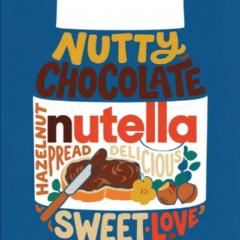
A quick craving turns into an action-movie showdown — until Instamart delivers right on time. This AI-generated cinematic short blends sci-fi VFX with a beach sunset showdown between a man and a skull-faced armored warrior, all resolved by 10-minute delivery.
1 like • 8d
Good piece. The brand side is going to move faster than the film side because the approval chain is shorter and nobody is arguing about art. Thanks for keeping this room going while I was heads down. 🙏
23d •
Tested AI Tsunami VFX — How Realistic Can AI Create a Massive Disaster
I created multiple AI-generated tsunami VFX shots to test the limits of AI video generation. This was purely a visual AI/VFX experiment — I wanted to see how well AI could create a massive tsunami hitting realistic city environments.
2 likes • 8d
Late to this and it deserved better. The lens flares and the atmosphere are what sell it. Won asked the right question about run-to-run consistency, which is the whole game with this stuff right now. Thanks for posting the actual test instead of only the good frame. 😉
Jun 16 •
Caught Between the AI Hype and the Backlash? 🤔
If you've felt whiplash this month, you're not imagining it. One week a festival puts a fully AI-made film in its lineup. The next, a craft guild publicly tears into a legendary director for promoting an AI tool. And now the Directors Guild has a tentative deal that writes AI rules into the contract. The signals point in every direction at once. Here's the thing I want you to hear, because nobody seems to be saying it plainly. The split isn't tech people versus artists. It runs straight through the working pros. People doing the exact same job are landing on opposite sides. The colorist feels it at a different moment than the location scout. Both reactions are completely rational. What I've noticed across a long career of these turns is that the divide tracks one thing: exposure. Whoever's paid work the tool can already touch feels it first and feels it hardest. That's not fear talking. That's people doing math about their own livelihood, and they're not wrong to. So if you're standing in the middle of this, confused about which side you're supposed to be on, here's my honest read. You don't have to pick a tribe. The belief-system version of this argument is a trap. The useful version is a much smaller, calmer question. Try this: Make two short lists. On the left are the parts of your work the tool can genuinely touch today. On the right are the parts it can't. Be honest, not hopeful, on both sides. Then get fluent in the things on the left before the decision gets made for you, and stop losing sleep over the things on the right. The people who do worst in a turn like this treat it as a fight to win. The people who do best treat it as a skill to learn. You don't have to love it or hate it. You have to know exactly where it lands in your work and act from there. Where do you land right now, and which part of your job made you land there? I read every reply. (Founding Members: this week I'm breaking down the single hardest technical problem in AI video right now, keeping a character looking the same from shot to shot, and the workflow tricks that actually help today.)
1 like • Jun 27
@Alec Graf Alec, sorry for the slow reply on this, but it's a sharp read and don't sell yourself short on the "I've never worked in the Industry" part. Sometimes not being steeped in how it's "always been done" is exactly what lets you see the thing the lifers can't. You're onto something real. On the model itself: I've always thought the Silicon Valley approach to equity could work beautifully for film and TV. Everyone invests, even if all they're putting in is their time and their craft, and everyone takes a proportionate share of what comes back. A true collective of specialists, each owning a piece. It's almost never been done this way down here in Hollywood, where the money and the credit tend to flow in one direction. But there's no law of physics stopping it. It just has to start somewhere outside the traditional system, which is exactly where you're looking. Now, to your actual question about producers. Don't count them out. The good ones genuinely earn their keep, and it's the part outsiders rarely see. A real producer opens the doors the artists can't, makes the deal, finds the money, and keeps the whole thing from falling apart at 2am. In your model, that "knock on the doors" person is arguably the most important hire, because making the film is only half the battle. The other half is distribution, and that's still the real gate. Anyone can post to YouTube. Getting seen, and getting paid, is the hard part. One caution, and I say it with love for this business: be sure you're partnering with people of integrity. There have always been producers in this town who'd take the shirt off your back and bill you for the laundry. In a collective built on trust and shared upside, one bad actor poisons the whole thing. Choose your circle carefully. Here's what makes me optimistic, and it ties right to your Gossip Goblin point. With AI in the toolkit, one artist can now cover several of those specialist chairs alone. That shrinks the team you need to make something cinematic, which makes your self-funded model far more realistic than it would've been even two years ago.
0 likes • 8d
@Veronica Buhagiar, this deserved an answer twenty-four days ago and did not get one. As I have been buried in a producer's cut that is on me, and I am sorry. The part I keep coming back to is your last line. You did not say you were afraid of losing the work. You said you would miss the company. I assisted for years before I cut anything. What I gave those editors was not organized footage. They could have gotten that anywhere. What I gave them was a second pair of eyes, someone to think out loud at, and someone who had not yet gone blind to the material. The organizing was the price of admission to the room. It was never the job. I have watched this role get hollowed out before. Going from film to Avid took an entire category of assistant work out in about three years. Splicing, coding, logging, hanging trims. The people who thought that work was the job had a hard time. The people who understood the room was the job kept working. I am not going to tell you the assistant editor position is safe, because I do not know that, and you would not believe me if I did. What I will tell you is that the thing you are afraid of losing is not a task. A second person who sees the material clearly is the last thing anyone should want to automate, and the editors worth working for already know that. Stay close to the ones who know it.
1-10 of 155
@lawrence-jordan-3607
Film & TV editor, web entrepreneur, creator of AIography.ai & mastertheworkflow.com. I've consulted Apple, Adobe, Avid & others on digital video apps.
Active 14h ago
Joined Sep 19, 2024
Southern California
Powered by