Activity
Mon
Wed
Fri
Sun
Nov
Dec
Jan
Feb
Mar
Apr
May
Jun
Jul
Aug
Sep
Oct
What is this?
Less
More
Local Service Growth Hub
174
Free
AI Agent Commanders
957
Free
Jack Vs. AI Workflows
20.8k
5.0
Free
Creator Academy
11.5k
Free
AI Automation Vault
40.8k
Free
AI Systems for Human Content
11.1k
Free
AI Video Automation Academy
287
$97/m
NextGen AI
63.2k
Free
4 contributions to Franchise Marketing Systems
Feb 26 •
Business coaches…
A) Have one/many already B) I’m providing the service myself while we are small C) Business what…? Your growth as a franchisor (units and royalty) is completely dependent on the profitability and happiness of your franchise owners. I made the mistake of building a passive support culture and it was a mountain of work to turn it into a proactive environment. Because of it, we attracted zees that wanted a Zor that was hands off and they never asked for help. They grew slower… Passive support may feel nice, since we all have lots to do, but it’s really the wrong way to build a franchise and will cause more problems as you grow. Be proactive, put resources in place as soon as you can, advertise that you are highly active in their business and you will attract individuals that want to participate in your support mechanisms. More work up front means more money, more free time, and a smoother journey in building YOUR business long run!
Feb 24 •
COGs for deals
in today’s market, avg cost per deal is 8-10K. How much are you spending on marketing per month? 8K / monthly spend = expected deal flow per month-ish
2
0
Feb 24 •
12 years as a Zor
I’m Kelsey, founder of Bloomin’ Blinds. 85 owners, 160 territories. Huge fan of FMS. Ask me anything! Always willing to help a Zor!

Jan 20 •
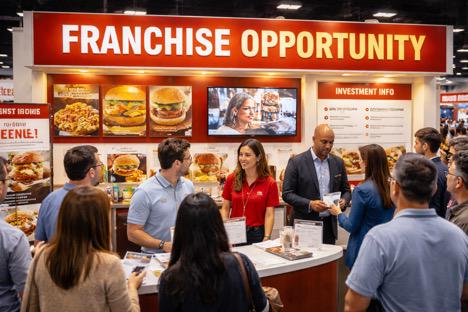
Franchising Your Business: How to Exhibit at a Franchise Tradeshow and Turn Booth Traffic Into Franchise Sales
For many emerging franchisors, franchise tradeshows feel like the most direct path to growth: put up a booth, talk to a lot of people, collect leads, and sell franchises. The reality is more nuanced. Franchise shows can absolutely become one of the strongest lead sources you’ll ever use—but only if you treat them like a structured sales channel, not a marketing outing. A franchise tradeshow gives you something digital marketing often can’t: a concentrated room of people who are actively exploring business ownership, comparing brands in real time, and open to scheduling a next step immediately. It’s a high-intent environment. But high intent doesn’t automatically produce high conversion. The franchisors that win at shows win because they show up with a clear offer, disciplined qualification, and a follow-up process that turns conversations into applications. This article breaks down the best ways to exhibit at a franchise tradeshow to sell your franchise—step-by-step—so you can build a repeatable tradeshow strategy as part of your franchise growth plan. 1) Start With the Right Mindset: A Tradeshow Is a Sales System, Not a Booth Many franchisors judge a show by how busy the booth felt. That’s not the right metric. A successful show produces: - qualified candidates - scheduled next steps - a clean and trackable pipeline - and an efficient cost per awarded franchise If your show plan doesn’t include measurable outcomes, you’ll fall into the most common trap: leaving with a stack of business cards and no consistent process to convert them. Your goal at the show is not “talk to everyone.”Your goal is: identify the right people and advance them to a defined next step. 2) Know Who You’re Targeting Before You Arrive The best booths feel magnetic, but they’re not generic. They are designed for a specific buyer profile. Before the show, define your ideal franchisee in clear terms: - owner-operator or semi-absentee? - single unit or multi-unit mindset? - target investment range - required liquidity and net worth - target markets (cities/states) - background (sales, management, construction, healthcare, home services, etc.) - daily involvement expectations
1 like • Feb 24
Shows are awesome as a Zor. It keeps you informed of what’s out there and provides an energy that’s infectious. I have gone to shows for over a decade and don’t miss them at all costs. I typically leave with a bag full of marketing ideas and a pocket full of new contacts. As a Zor, you are in two industries, yours and franchising as a whole. You need to invest in relationships with franchises, they are a great resource down the road!
1-4 of 4
@kelsey-stuart-9650
I love people, franchising, starting new things, constantly learning. I'm a franchise consultant (matchmaker) and business owner for 20+ years
Active 27d ago
Joined Feb 24, 2026
INFJ
Whitefish, MT