Activity
Mon
Wed
Fri
Sun
Apr
May
Jun
Jul
Aug
Sep
Oct
Nov
Dec
Jan
Feb
Mar
What is this?
Less
More
Owned by Jonathan
The largest AI SEO community on Skool. Free access to workflows, templates, and in-depth training. Learn AI SEO, GEO, AEO, and agentic automation.
Get exclusive access to our proprietary SaaS. Fully automate AI SEO: Topical maps, content, internal linking, images, refresh, and more.
Memberships
AI Automation Society
298.9k members • Free
The AI SEO Society (Free)
682 members • Free
Synthesizer Scaling
262 members • $1,700/month
185 contributions to AI SEO Academy

1h •
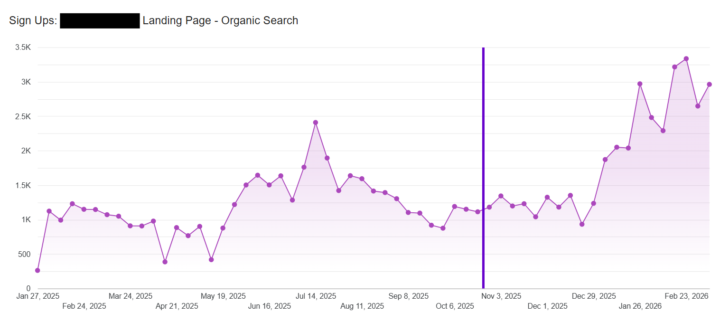
2x sign-ups for a SaaS in 90 days 🔥
I 2x'd sign-ups to a SaaS client's landing page. Purely from Organic traffic. In about 90 days. If you got one hour of my time, what would you want help with?
0
0
Apr '24 •
Start Here: How to not get banned + essential info
This growing community is for anyone who wants to learn how to leverage AI tools for Organic Growth on search engines and LLMs. First understand essential rules: If you try to sell or pitch anything you will be permanently banned without warning. Next, if you create vague shitposts that are still just indirectly selling what you sell, you'll also get banned. Finally, if you post or comment spammy things that are totally irrelevant to AI, SEO, marketing, Organic growth, digital marketing, etc (the whole focus of this group) - I'll also ban you without warning. Here's how the group works: 1. Classroom: Tools and guides are housed here. You'll unlock more courses as you level up! 2. Community posts: You can create new posts at any time. Ask questions, or share something cool. 3. Comments: Comment on existing posts and join in on the discussion. Next steps: 1. Create a post to Introduce yourself and tell us what you're up to, if you're up for it! 2. Browse through posts and videos. Comment and share your thoughts. 3. Try the tools out for yourself, learn new things, and do cool stuff. Remember: Spammy and salesy posts = ban. Sales pitch post = ban. DM sales pitch spamming = ban. Share: Invite friends, colleagues, and coworkers to join the group. Just send them a link to: https://www.skool.com/ai-seo Use this space to experiment, learn faster, and compound your results with AI. The more you contribute, the more valuable this community becomes.

0 likes • Jan 12
Thanks @Preslav Atanasov !
0 likes • 7h
@Yuki Nakamura Welcome!
Feb 9 •
Introducing The New AI SEO Engine
I've been quiet lately. I've been building! I built a SaaS that ties into Skool. If you're familiar with the AI SEO Engine, it's my premium Skool group for n8n content automation. I've rebuilt it as a standalone software. It's much easier to use, and allows you to start generating content right away. Sign up here: https://www.skool.com/ai-seo/about I built and automation that creates your account for you after signing up. What's new: Single project plan: $47/m Team plan: $97/m VIP plan (VIP + coaching): $247/m Weekly group calls (Unlimited usage - no stupid credits!) What you get: Automated config Automated backlogging Upload content Auto review and check for cannibalization - fix automatically if issues Write in-depth first draft Edit first draft to 2x the quality Generate 4 images per article with Nano Banana Map internal linking opportunities Refresh content Export content Everything happens in Google Drive. That's what real content teams use lol. (And it all by clicking buttons in dashboard) More details about the AI SEO Engine here
0 likes • Feb 18
@Paul Jacobelli I've never used those tools but it couldn't hurt to try it out and compare. This new version is designed to write main pages.
0 likes • 6d
@Klaas Koopman I'll DM you on this

8d •
Record ID error
Hey guys, I am trying to use the Topic Backlog Agent and keep getting duplicates and the same topics once I execute the workflow. How do you fix the issue: Your request is invalid or could not be processed by the service Record ID recp6ppcWbNQm1lDq belongs to table tblc8I5oFLOCapts0, but the field links to table tblFDyRF1Ow0n8G1c
0 likes • 6d
Double check your Airtable dropdowns, one of them is pointing to the wrong Airtable. I typically just re-click all of them. When you copy from a template, they will actually be set to my airtable even though they have the same name, so it can be deceiving.
Sep '23 •
Introduce Yourself Here
Add a comment here to say hi and tell us a little about yourself! (If you're up for it)

1 like • 9d
@Jordan Brown welcome!
0 likes • 9d
@Emily McMelon welcome!
1-10 of 185

Active 1h ago
Joined Sep 18, 2023
INTJ
Canada
Powered by