Activity
Mon
Wed
Fri
Sun
Aug
Sep
Oct
Nov
Dec
Jan
Feb
Mar
Apr
May
Jun
What is this?
Less
More
Memberships
12 contributions to The Watch Manual

Apr 5 •
Happy Easter, everyone!
What is the watch you're wearing today? Comment below! Mine is a Seiko Bell Matic 😊
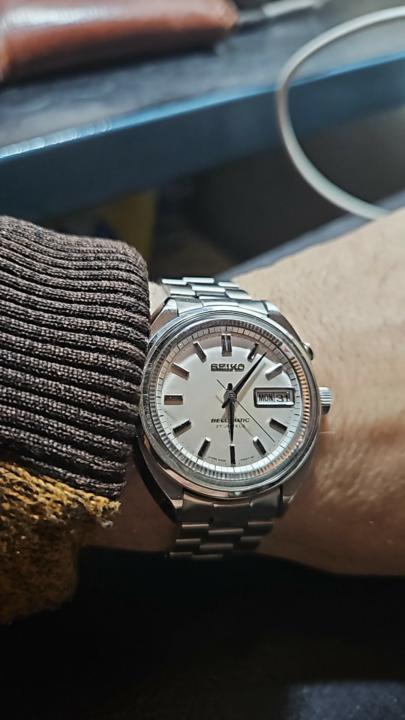
1 like • Apr 5
Marathon 41mm GSAR
1 like • Apr 6
@Franz Rivoira Sellita SW200-1
Mar 31 •
The Revenge of the Dress Watch
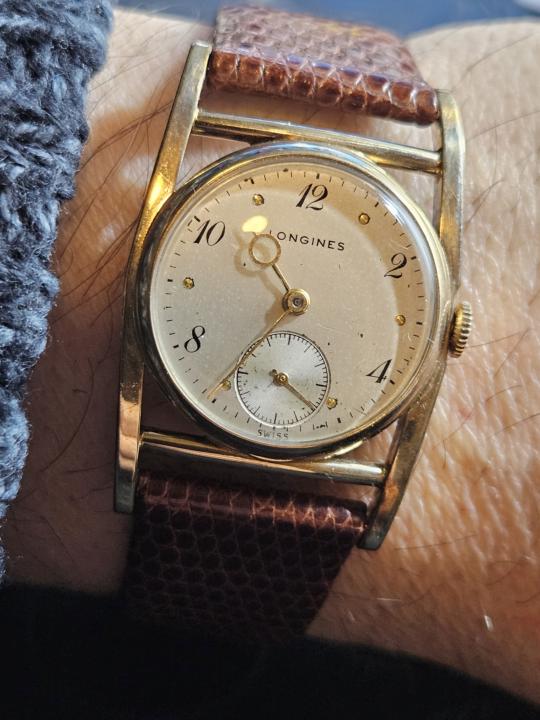
Let’s get one thing straight right out of the gate: for the past decades, we have witnessed an unprecedented aesthetic and cultural aberration in the world of watchmaking. We have tolerated the sight of 42mm - or bigger - steel frying pans, heavy as manhole covers, being violently shoved under the cuffs of bespoke tailored shirts. We have allowed marketing departments to convince us that a watch born to sit on a sailboat or in a racing paddock could somehow represent the non plus ultra of elegance under a tuxedo. But the hype party is finally coming to an end, and we are now witnessing the silent, inexorable revenge of the dress watch. This is exactly why the classic, traditional timepiece is aggressively making its way back onto the wrists of those who truly understand horology, and why you need to start seriously reconsidering your collection. The End of the Steel Uniform The steel sports watch with an integrated bracelet (you know exactly which Genta "Holy Grails" or crowned pieces I am referring to) has long ceased to be a statement piece - or something revolutionary. It has devolved into a mere declaration of wealth. It has become a literal price tag strapped to the wrist—the standard uniform for those desperate to scream to the world how much money they have spent, while remaining utterly ignorant of the micro-mechanical substance inside. The true connoisseur, nauseated by this vulgarity and by the ridiculous speculation driven by "flippers" (improvised grey-market dealers), is taking a step back. Or rather, a step up. They are returning to whispered, understated elegance. The Anatomy of a True Dress Watch Do not be fooled by brands trying to peddle chronographs that are a full centimeter thick as "elegant watches" just because they slapped an alligator strap on them. The rules defining a true dress watch are rigid, ruthless, and allow for absolutely zero compromises: - The Dimensions: The perfect diameter strictly sits between 34mm and 38mm. 39 mm is the threshold (and as you see, "threshold" has "three" in it). If it goes into the forties, it is not a dress watch; it is a flying saucer. The watch must disappear under the shirt cuff without drawing attention, only to reveal itself precisely when needed. - The Thickness: The thinner, the better. Sub-8 or 9 millimeters is mandatory. This is exactly where you separate a true Manufacture from a mere assembler. - The Complication (or the utter lack thereof): Time-only. At most, a small seconds sub-dial at 6 o'clock. No date window to butcher the perfect symmetry of the dial, no useless dial text, no glaring Super-LumiNova on the hands. Just pure, clean metal and absolute legibility. - The Materials: The case must be forged from precious metal (yellow, rose, or white gold, or platinum). The strap must be the highest quality leather. And it must feature a simple pin buckle (a deployant clasp adds completely useless, bulky thickness to the wrist).
1 like • Apr 1
I worked in an office for many years; always wearing a sport coat and tie every day. I had a need/use for a dress watch back in those days, but not any more. Society's expectations for what is appropriate for dress has changed significantly in the past decade or two. People just don't dress up like they used to. Go to a funeral and you hardly ever see anyone with a sport coat or suit; most are dressed casual. The closest thing I have to a "dress watch" is a Ball Engineer Ohio III, which comes in at 40 mm, which looks small on my 8" wrist...
Mar 30 •
On AI and Horology, again: why Experience is Fundamental
AI renders real experts useless? Not at all. An AI is a tool. And every tool as as good as how you use it. I believe it’s crucial to explain why an AI - without any knowledge of the field you are working on - is substantially worthless, and why it is often harmful to ask an AI for its opinion on an unknown watch if you lack the basic expertise to judge it yourself. This text was actually written starting from an AI's own response (but from a paid version, which offers a level of depth far superior to the free ones). You know when someone posts a photo of an old watch found in an attic and asks: "Hey, does anyone know what this is?"? When you ask an AI, it isn't "thinking" like a human expert; it is activating a fascinating process of building relationships between different pieces of information. Here’s what happens "under the hood" in three key steps: 1. Pattern Recognition (Computer Vision) The AI doesn't see "a watch"; it sees an infinite grid of numbers. Its first task is to identify patterns: - Geometry: Is the case round or "tonneau"? - Contrasts: Where does the steel end and the dial begin? - Tiny details: Symbols or inscriptions (logos, "Swiss Made," complications like a chronograph). 2. The Vector Space (The Game of Similarities) Once these data points are extracted, the AI transforms them into mathematical coordinates. Imagine an infinite library where every book is a watch. The AI examines the characteristics of your piece and "flies" toward the shelf where the most similar objects are located. If it has a diving design and a rotating bezel, it will instantly move to the "Diver" section, ignoring pocket watches. 3. Probability and Language This is where the "generative" part comes in. It doesn't look for an absolute truth in a rigid database; it calculates the most probable response. - Analysis: "It has lugs typical of the '70s, the brand font looks like a defunct French label..." - Synthesis: It puts the pieces together and provides a helpful-sounding response, explaining why it thinks it’s a certain model, even if it isn't 100% certain.

1 like • Mar 30
I've been chatting with an AI assistant on various topics. I have definitely noticed that it's style is to agree or support any concepts, ideas or ideologies that I express. If there is any difference, it is always brought up in a suggestive style... Interesting.
Mar 17 •
🛠️ Trust the Bench, Not the Logo: Why Independents Win the Vintage Game
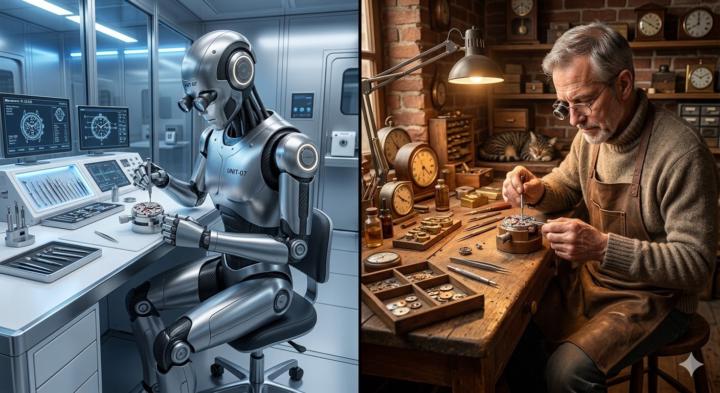
In our current 2026 market of "Selective Normalization," the line between a "commercial product" and a "historical artifact" has never been clearer. For the savvy collector, sending a vintage piece to an official brand service center isn't just a choice—it’s a risk. Here is why your local independent master watchmaker is your best ally in preserving Mechanical Dignity. 1. The "Factory Fresh" Trap: A Value Killer Official service centers (the Big Names in Geneva) have a corporate mandate: return the watch looking "as new." For a vintage enthusiast, this is a nightmare. - Forced Replacements: Brands often insist on swapping out "tropical" dials, oxidized tritium hands, or faded bezels with modern service parts. - The Result: You get a watch that looks new but has lost up to 90% of its collector value. An independent understands that the Patina is the soul of the watch—they work to conserve, not to erase. 2. Craftsmanship vs. Standardization At an official center, your 60-year-old heirloom might end up on the bench of a young technician trained on modular, modern calibers. - Tactile Memory: A master independent lives and breathes vintage movements (from the legendary Omega 321 to honest workhorses like the FHF ST 96). They know that 1950s steel doesn't respond to the same torque as 2026 alloys. - Direct Access: You talk to the person actually touching the movement. In the official network, your watch disappears behind a counter for months, and you only receive a pre-formatted PDF invoice. 3. Fighting the "Gatekeeping" Monopoly Major brands are increasingly creating "closed gardens" by restricting spare parts to independent watchmakers. - The "Unrepairable" Myth: If a part is discontinued, a brand will often tell you the watch is "unrepairable" or demand a full movement swap. - The Solution: A true independent has the micro-mechanical skills to rebuild a part on a lathe or source New Old Stock (NOS) components from an open ecosystem. They see a challenge where a corporation sees an "efficiency problem."
1 like • Mar 17
It is important to patronize local and independent businesses because without your patronage, they disappear and only the big corporates remain. This concept goes way beyond just watches. Remember the old local hardware stores where the owner knew where everything in the store was, and he/she could give you advice on repairing just about anything; try that at Wal*Mart...
Mar 13 •
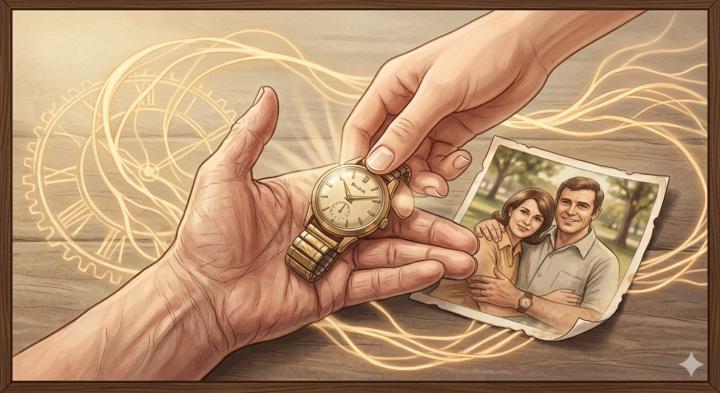
Beyond the Brand, Beyond the Value: A Legacy on the Wrist
We often spend hours discussing calibers, rare references, “tropical dials,” and authenticity. But let’s take a step back. What could be more “authentic,” in the purest and most visceral sense of the term, than our father's or mother's watch? It's not just a question of mechanics. It's that dent on the bezel made during a move thirty years ago. It’s the scratch on the glass that tells the story of an unforgettable vacation. It’s that chrome case, now a bit worn by time and use. It’s that natural patina that wasn’t created in a Swiss workshop, but by the sun of a thousand afternoons and contact with the skin of those who raised us. In a market that in 2026 obsessively seeks “factory fresh” perfection, where every slightest scratch caused by use is removed, or, conversely, “fauxtina” is created artificially, the family watch remains the only true unique piece. It is not a financial investment: it is an emotional investment. It needs no certificates of authenticity: its story is written in our memories. It will never go out of style because affection does not follow Geneva trends or prestigious brands. Is it not precise because it is fitted with a “crappy” movement? Perfectly measured time is not actually that important: what matters is the value we place on it. Wearing your parents' watch means carrying a piece of their time, and of ourselves, with us. It is the strongest physical bond that an object can convey. What about you? Do you have a watch in your collection that belonged to your parents? Let's see them.
0 likes • Mar 13
Don't have a parents' watch(es); wish I did... wouldn't necessarily wear it often, but maybe would once in a while... I do have a couple of old tools that belonged to my father... I intentionally keep them handy, and use them in order to remember him...
1-10 of 12
Active 52d ago
Joined Feb 18, 2026
Green Bay, WI