Activity
Mon
Wed
Fri
Sun
Jul
Aug
Sep
Oct
Nov
Dec
Jan
Feb
Mar
Apr
May
What is this?
Less
More
Memberships
Healing After Harm with Dr Sam
109 members • $22/month
7 contributions to Healing After Harm with Dr Sam
Feb 27 •
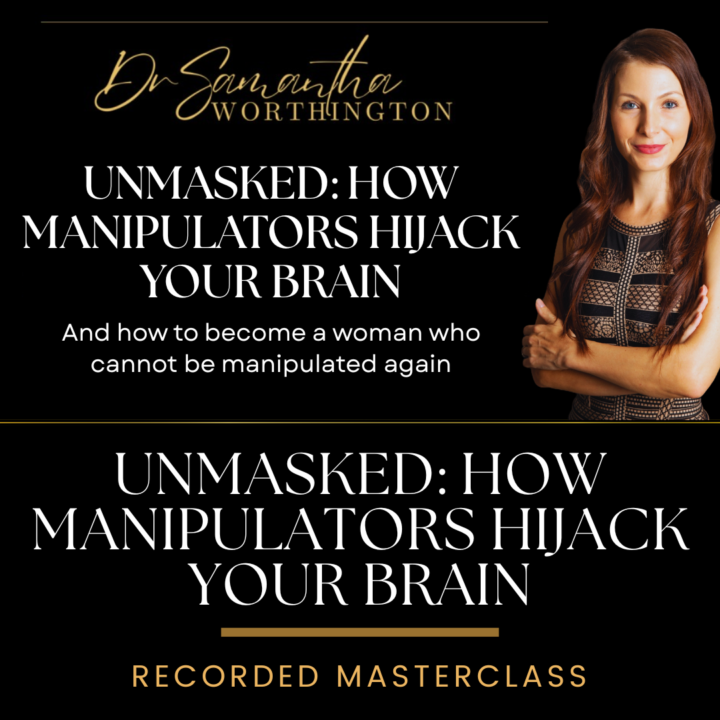
New Masterclass Available: UNMASKED: How Manipulators Hijack Your Brain
Hi Everyone, Last night's masterclass UNMASKED: How Manipulators Hijack Your Brain — And How to Become a Woman Who Cannot Be Manipulated Again is now uploaded and ready for you inside the Classroom tab. This is one of the most important pieces of work I’ve ever created, because every woman reaches a moment when she realises the truth: the problem was never her intelligence, her strength, or her intuition — it was the psychological architecture of the people who learned to exploit those very qualities. After more than a decade counselling women through the hidden realities of manipulation and emotional harm, the patterns became impossible to ignore. Those insights became the backbone of this masterclass and my upcoming book Unmasked: The Dark Psychology of Manipulators. This class takes you deep into the neuroscience of influence, the emotional mechanics of manipulation, and the invisible ways your nervous system was conditioned to doubt itself. And then — it walks you home to yourself. #Unmasked #ManipulationRecovery #TraumaInformed #NeuroscienceOfAbuse #RebuildSelfTrust #WomenWhoRise #EmotionalSafety #BreakTheCycle #InnerAuthority #HealingAfterHarm

0 likes • 24d
Loved, loved, loved this masterclass! ❤️

Apr 25 •
Celebrating the small wins
I had a tough moment today, but I’m genuinely proud of how I handled it. I stayed present, took a breath, and reminded myself how far I’ve come. Anyone else celebrating small wins today? I’d love to hear them.
0 likes • 24d
@Vlada Karpovich So good!
Mar 4 •
Why Women Lose Themselves - And How Safe Environments Help Us Rise Again
During a recent podcast recording, my co-host and I talked about what it really means to bring your authentic self to the table - for both men and women. That conversation stayed with me. It made me think deeply about the environments we move through every day as women, and how profoundly they shape (or suppress) our self‑expression. Somewhere along the way - often quietly, gradually, and without noticing - we start giving up the parts of ourselves that once made us feel alive. Before the rules. Before the expectations. Before the roles we were handed and told to carry with grace. When we were younger, we moved through the world without self‑consciousness. And then life happened. Careers, relationships, motherhood, invisible labour, and the pressure to be good, capable, responsible, appropriate, enough, begin to shape us. Piece by piece, women trade spontaneity for structure, joy for duty, intuition for approval. But something powerful happens with age, maturity, and consciousness: we begin to remember. We remember who we were before the world told us who to be. We remember what we loved before we were taught to minimise ourselves. We remember the parts of our identity that were never lost - only buried. And this rediscovery doesn’t happen in isolation. It happens in environments that allow it. Environments - at work and at home - that are psychologically safe, emotionally intelligent, and free from manipulation or dismissal give people permission to bring their whole selves forward. When people feel safe, they reconnect with their creativity, their joy, their intuition, their voice. They show up with authenticity rather than armour. Environments that are controlling, dismissive, or manipulative do the opposite. They shrink people. They silence instincts. They teach women (and men) to abandon the parts of themselves that don’t fit the unspoken rules. They reward compliance over truth, performance over presence, and self‑abandonment over self‑expression. In today’s world, women often forget who they are at their very core - not because they’re disconnected, but because they’ve been over‑responsible for too long in environments that didn’t make space for their full humanity.

0 likes • 24d
YUP!
Feb 24 •
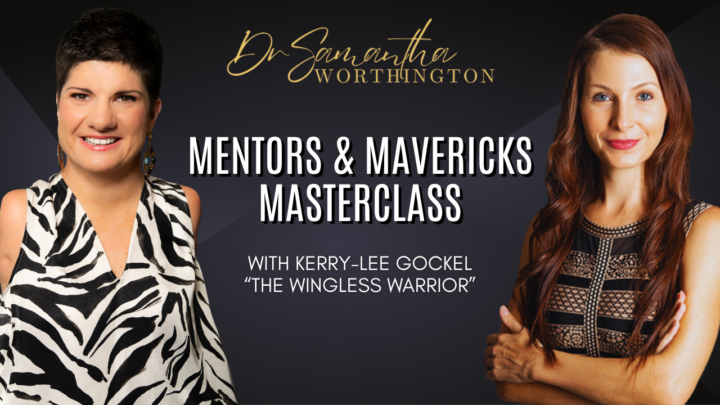
✨ New Masterclass Added to the Classroom: Overcoming Adversity with Kerry‑Lee Gockel
Hi everyone! I’ve just uploaded a new masterclass recording under the Classroom tab. In this masterclass, I sit down with Kerry‑Lee Gockel for a deeply honest and uplifting conversation about what it truly takes to stay positive through adversity. Kerry‑Lee opens up about the mindset shifts, daily practices, and inner frameworks that have supported her through some of the hardest seasons of her life. Together, we explore how she maintains hope, steadiness, and perspective when life becomes overwhelming, and how small, intentional choices can create profound emotional resilience. This conversation is gentle, real, and filled with practical insights for anyone navigating challenge, uncertainty, or change. If you’re looking for grounded inspiration, mindset tools, or a reminder that strength can be built one moment at a time, this masterclass will meet you exactly where you are. #OvercomingAdversity #KerryLeeGockel #Resilience #PositiveMindset #MindsetShift #EmotionalStrength #TraumaInformedHealing #GrowthMindset #InnerStrength #HealingAfterHarm #WorthWellness #DrSamanthaWorthington
0 likes • 24d
This was so inspiring! What an amazing woman!

Apr 29 •
Starting the Trauma Bond Worksheet: My Early Insights & a Question for the Community
I just started working through this new trauma‑bond worksheet and… wow. Even the first few prompts brought up things I didn’t realise my body had been holding onto. Mapping the nervous‑system responses has been especially eye‑opening. I’m noticing how quickly my body goes into “alert mode” even when nothing is actually wrong. The part about longing and withdrawal really landed for me too. Seeing it framed as a pattern rather than a personal flaw feels strangely relieving. It’s helping me understand myself with a lot more softness. I’m taking it slowly, and pausing when things feel tender. It’s already helping me make sense of why certain dynamics felt so powerful and why they were so hard to step out of. I do have a question for the community: When you first started recognising your own trauma‑bond patterns, what was the hardest part to sit with - the emotional pull, the nervous‑system activation, or the meaning your mind attached to it? Would love to hear how others navigated those early insights.
0 likes • 24d
@Rene Hunter I feel this so much. Those old meanings can wrap themselves around everything without us even realising it, and it’s such a strange mix of unsettling and relieving when you finally see it. I had a similar moment of “oh wow… I’ve been running on this without even noticing.”
1-7 of 7