Activity
Mon
Wed
Fri
Sun
Jun
Jul
Aug
Sep
Oct
Nov
Dec
Jan
Feb
Mar
Apr
What is this?
Less
More
Memberships
JK’s Racquetball academy
52 members • Free
7 contributions to JK’s Racquetball academy
Jan 17 •
Quick lesson with JASON B
JASON, you need to work on lowering your centre of gravity Getting your racket up in ready position Getting your left arm out of the way We’re going to work on micro, adjusting to the ball on our next session. We need to stop hitting the ball at waist height We need to bend our knees, widen our stance and hit the ball on a flatter level.

1 like • Jan 17
I will practice it much more when I am all alone Thank you coach
Jan 5 •
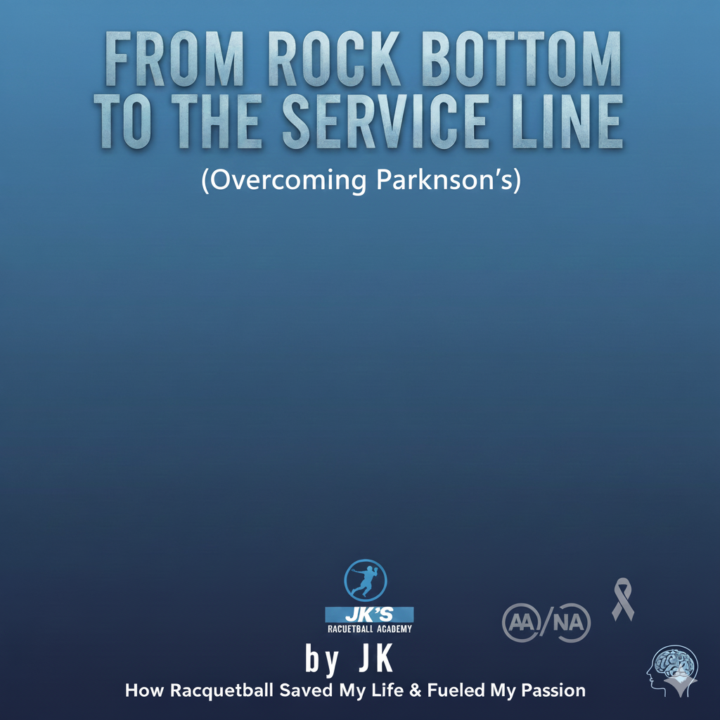
From Rock Bottom to the Service Line:” Overcoming Parkinson’s” How Racquetball Saved My Life By Jk
My journey with racquetball began in Philadelphia, as a young boy following my father to the local courts. He taught me more than just a game; he taught me a language of movement and discipline. He used to say, "If you love what you do for work, it’s not work—it’s progress." It took me forty years and a harrowing journey through addiction and illness to truly understand what he meant. The Sanctuary in South Florida Years ago, I found myself in Delray Beach, Florida, living in a halfway house at Royal Recovery. I was clean, but I was fragile. Part of the program required me to be out of the house during the workday, but I wasn't yet permitted to hold a job. While many of my peers struggled with the void of empty time—and tragically, nearly two dozen lost their lives to relapses during that period—I found my sanctuary. I was living just a stone's throw from a racquetball court. While others scattered, I retreated to the glass walls. I became a student of the game all over again. In the quiet of those courts, I found the "good quiet." I practiced until my lungs burned and my mind cleared. One day, I noticed a man watching me from the cardio equipment. He was also in recovery, and I could see the spark of interest in his eyes. Eventually, he approached me and asked, "Do you have an extra racquet?" I did. Teaching him didn’t just help his game; it solidified my own recovery. I realized then that racquetball wasn't just a hobby—it was a lifeline. A New Challenge: The Parkinson’s Pivot Life eventually led me to Montreal, where I settled down with my wife’s family and worked as a property manager. But recently, life threw a new curveball: a diagnosis of Parkinson’s Disease. The stress of a 9-to-5 job made my tremors unbearable. In our high-speed world, I found I could barely type; my left hand would jump across the keyboard, a constant reminder of a body I could no longer fully control. I felt lost, until one afternoon when I happened to have my gear with me at work. During a particularly bad tremor episode, I picked up my racquet. The moment my hand closed around the grip, the shaking stopped. Whether it is the muscle memory, the focus, or a sign from a higher power, racquetball is the only place where the tremors subside. Even the act of squeezing the ball brings me a peace that medicine cannot replicate. It was a clear message: I was meant to be on the court.
0 likes • Jan 8
Great title
Jan 6 •
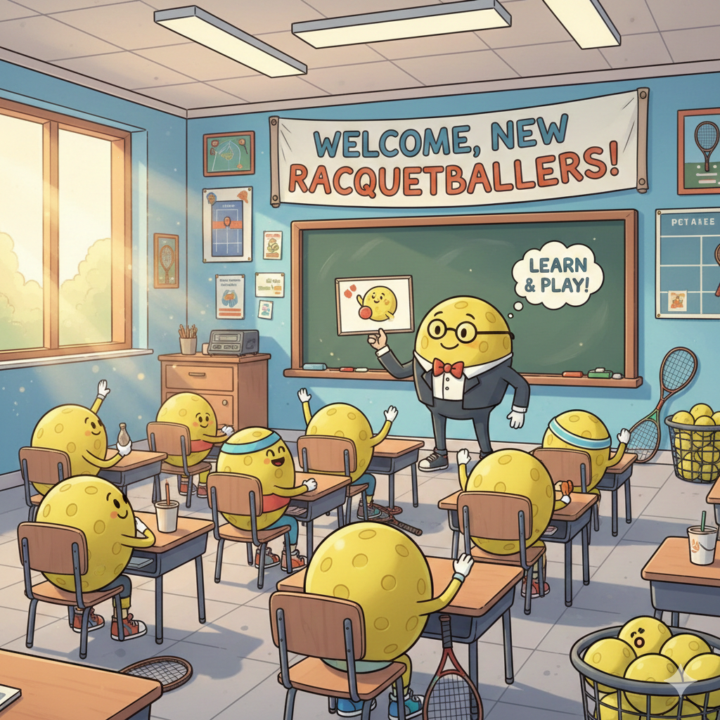
🚀 Our First Live Class is This Friday
Hey everyone! I’m so excited to get started. Just a reminder that our first video class is happening this Friday, January 9th, at 7:00 PM Eastern. In your SKOOL calendar you will find a Google Meet link to join. The link will be highlighted in blue. We’re going back to the basics to build those rock-solid fundamentals so you can eventually level up your skills. Here are some questions to think about for Friday. 1. Your Experience & Level: • How long have you been playing racquetball? • How would you self-rate your skill level? (e.g., Novice, Intermediate/B, Advanced/A, or Tournament/Open) 2. The Competitive Edge: • What is your biggest challenge when playing against equal or better players? (Is it a specific shot, court positioning, or mental toughness?) 3. Coaching Expectations: • What are you looking for most out of working with a coach? (e.g., Technical feedback, strategy, fitness, or breaking bad habits?) 4. What I need help with the most: • The "One Thing": If you could fix just one shot in your game tomorrow (like your backhand or ceiling ball), what would it be? • Your Gear: What racquet are you currently using, and do you feel it fits your playstyle? • The Goal: Are you playing primarily for fitness and recreation, or are you looking to move up the rankings in competitive tournament play? • Availability: How many days a week are you able to dedicate to practice versus actual match play? • Need technical help? If you’re unsure how to use Google Meet or have any questions at all, message me directly here on the Skool app. I’m looking forward to seeing you all there and helping you grow!
1 like • Jan 8
I am a A!!
Jan 4 •
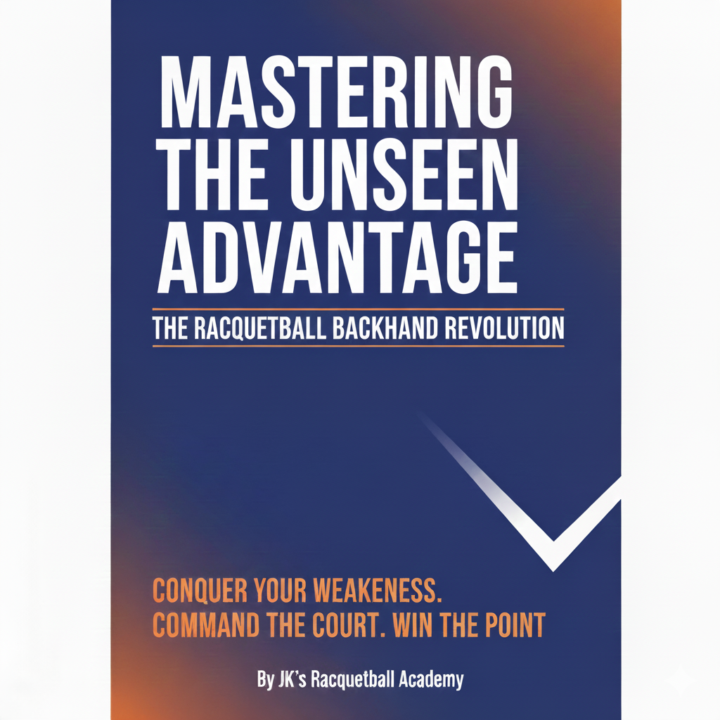
The Backhand Blueprint: Beyond the "Safety Forehand" By JK’s Racquetball Academy
1. The Trap of the "Run-Around" Forehand Most players fall in love with their forehand early. It’s powerful, it’s comfortable, and it feels safe. But relying on it for every shot is a strategic trap. When you "run around" your backhand to hit a forehand on the left side of the court, you commit a cardinal sin of positioning: You vacate the center. By pulling yourself out of position, you leave 90% of the court wide open. A smart opponent will let you hit that forehand once, then simply tap the ball into the massive space you just left behind. To level up, you must develop a backhand with equal strength and confidence. You shouldn't use your backhand because you have to; you should use it because it’s the right tool to keep you in control of the center. 2. The Physics of the Court: No Two Snowflakes are Alike In racquetball, no two shots are identical. Like a snowflake, every hit has a unique signature of velocity, spin, and direction. A master of the court doesn't just "chase" the ball; they predict it. Through years of observation, the ball's path becomes second nature. A high-level player can calculate where a ball will be within a few degrees the moment it leaves the opponent's strings. 3. Anticipation vs. Reaction Understanding the "Natural Corners" and the speed of the ball allows you to move before the ball arrives. • The Predictable Game: Most shots follow the laws of physics. If you study the angles, the game becomes a series of predictable outcomes. • The "Crack Out": Occasionally, the ball will hit the "crotch" (the junction of the wall and floor) and shoot off in an unpredictable direction. • The Solution: Good footwork and stamina aren't just about being fast; they are about getting into the set-up position early enough to handle even the weird bounces. 4. Moving from Defensive to Offensive If you are just running to the ball and "throwing it back" at the front wall, you are playing defensively. You are at the mercy of your opponent. By developing a reliable backhand and mastering court positioning, you stop reacting and start executing. You aren't just hitting the ball; you are placing it where your opponent isn't.
1 like • Jan 4
Huge advantage… I keep working on it
Jan 3 •
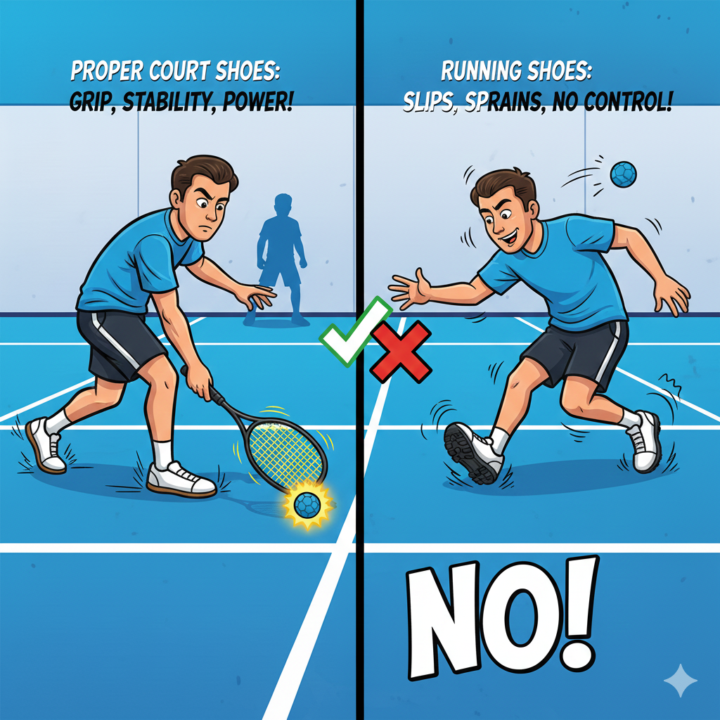
The Unsung Hero of the Court: Why Your Shoes Are More Important Than Your Swing
In racquetball, we obsess over racquets, strings, and even the color of the ball. Yet, one of the most critical pieces of equipment often gets overlooked: your shoes. Many players mistakenly believe any athletic shoe will suffice, leading to a frustrating cycle of poor performance and potential injury. Your shoes are the foundation of your game. Without the right foundation, even the most powerful swing in the world becomes a liability. Why Running Shoes Are a Racquetball Player's Worst Enemy Running shoes are designed for forward motion. They offer cushioning for linear impact and often have a raised heel, which is great for absorbing shock on pavement. However, on a racquetball court, you are rarely moving just forward. You are: • Sprinting sideways • Lunging diagonally • Pivoting rapidly • Stopping on a dime Running shoes simply aren't built for this dynamic lateral movement. The Dangers of Improper Footwear: 1. Ankle Sprains: The elevated heel and lack of lateral support in running shoes make your ankles vulnerable to rolling during quick directional changes. 2. Blisters and Foot Pain: Excessive sliding inside an unsupportive shoe creates friction. 3. Slower Court Coverage: Without proper grip, you're expending extra energy to stop and start, making you a step slower to every shot. 4. Damage to Court Surfaces: The aggressive tread patterns of some running shoes can scuff and mark the specialized court flooring. The Anatomy of a Proper Racquetball Shoe Court shoes (squash, badminton, volleyball shoes also work) are engineered specifically for the demands of indoor court sports: • Flat, Grippy Sole: The sole is designed to maximize contact with the court surface, providing superior traction for quick stops and explosive pushes. They often feature a non-marking gum rubber sole. • Lateral Support: Reinforced side walls prevent your foot from rolling outward during aggressive lunges and pivots, protecting your ankles. • Lower Profile: A flatter sole brings you closer to the court, enhancing stability and reducing the risk of ankle rolls.
0 likes • Jan 3
Some gym, lacks of maintenance can have a slippery floor. Dust nullify tye best shoes… The spray then shud do the trick, I can’t wait to try it 😃
1-7 of 7
Active 36d ago
Joined Jan 2, 2026