Activity
Mon
Wed
Fri
Sun
Jun
Jul
Aug
Sep
Oct
Nov
Dec
Jan
Feb
Mar
Apr
What is this?
Less
More
Memberships
Research Career Club
661 members • Free
20 contributions to Research Career Club

Mar 11 •
Stop waiting for the research community to discover your paper.
It’s time to be proactive in sharing your work. Here’s what you don’t need: 1. Endless hours spent waiting for citations that may never come. 2. Anxiety over whether your research will even reach the right audience. 3. Believing that simply publishing your paper is enough - newsflash, it’s not! 4. Assuming that social media is just for fun when it can be a powerful tool for academic outreach. Here’s what you do need: → A strategy for sharing your findings across various platforms. → Active participation in discussions relevant to your field. → A network of peers who support and amplify each other’s work. → Consistent engagement with the academic community through blogs, social media, and webinars. Stop hoping that your paper will be discovered by chance. Stop neglecting the power of storytelling to make your research compelling. Stop thinking that a single publication is the pinnacle of your work. The academic landscape is changing, and visibility doesn’t have to be a passive process. Take charge of your research narrative and watch the doors of opportunity swing wide open. What proactive steps do you take to ensure your research gets the attention it deserves?

1 like • Mar 11
These are tough sayings, but it's the truth.
Feb 11 •
Most academics use LinkedIn like a noticeboard.
You've probably seen this. “New paper.” “New project.” “New award.” And then they wonder why collaboration invites don’t follow. Here’s the lesson I learned the hard way: visibility doesn’t come from posting more. It comes from showing up where the right people already pay attention. Try this 15‑minute routine for the next 30 days: - Build a “Comment List” of 15 people: 5 in your niche, 5 adjacent, 5 decision‑makers (industry, funders, policy, lab heads). - Leave 5 comments/day that add value (not “Great post”): 1 insight, 1 implication, 1 practical example from your work. - When you comment, write for the room, not just the author (assume 500 silent readers). - Once/week, write 1 post that turns a paper into outcomes: Problem → What we did → What changed → Who it helps. - When someone replies to your comment, send 1 simple DM: “Thanks for the discussion—are you working on X as well? Happy to share a relevant resource.” If you did this for 30 days, what topic would you want to be known for on LinkedIn?
1 like • Feb 11
This is explicitly an eye-opener. Thank you.
Jan 20 •
What are your thoughts on use of AI for academic publications and training materials
AI is here to stay, whether we like it or not. I feel that we leave something out by using AI to do everything - we're losing the human creativity and uniqueness. But on the other hand, pressing deadlines and piling amount of work forces us to think how we can be more productive - and AI can help with that. So what are your thoughts?
Poll
31 members have voted
1 like • Jan 21
I think AI should be viewed as part of a long, continuous trajectory of human technological evolution rather than being suddenly disruptive. For decades, low-intensity forms of AI have been at work just as the world itself once functioned at a lower level of speed and complexity. From the 1960s to the 1980s, technology matched the pace of human life and thought at that time: *Manual and early electronic calculators replace pen-and-paper arithmetic but operate slowly and sequentially. *Vehicles and aircraft are mechanically simpler, less automated, limited by materials, computing power, and knowledge of safety that was available at the time. *Industrial systems and even warfare technologies relied heavily on human decision-making, linear logic, and analogue control systems. These were not ‘primitive’ by choice. They were constrained by the speed of thought, the availability of data, and the societal needs of that time. People thought more slowly, processed less information- largely within linear frameworks. Technology matched that reality. And so did Artificial Intelligence. The first rule-based systems, expert systems, basic optimisation algorithms- it was effectively ‘slow AI’ for a slow world. What has changed is not just AI but us. The world of today is connected; there is data, and everything moves in flows rather than straight lines. Humans deal with large flows of information, shorter deadlines, and increasingly complex systems. So machine learning! So large language models! So autonomous optimization! Higher-level tools of AI are needed because the environment now demands it.
Jan 19 •
LinkedIn training for researchers - is there interest?
Before I share the training plan for the next 3 months, tell me this - do you have an interest in developing your LinkedIn (or other social/internet platform) as a tool for communicating your research and positioning yourself as expert in your field?
Poll
36 members have voted
2 likes • Jan 19
Yes, absolutely. I’m very interested in developing my LinkedIn as a platform for communicating my research and positioning myself as an expert in my field. I’d be keen to see the training plan.
Dec '25 •
Happy New Year, everyone!
Wishing you all the best for the 2026! Hope your goals and aspirations will come true. I am truly grateful for your contributions to this community. Learning together and sharing expertise is the best way to grow as a person. Thank you - I’ve already learnt a lot from you. Looking forward to 2026 - let’s make it great!
1 like • Dec '25
Happy new year to this community
1-10 of 20
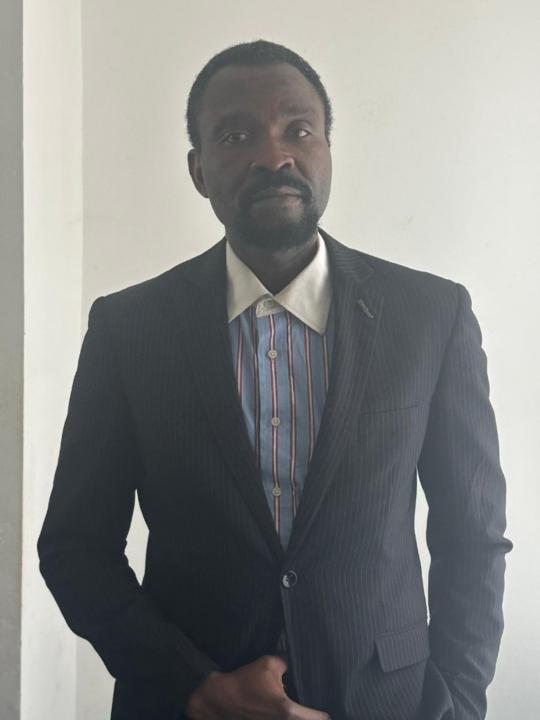
@iziegbe-usiohen-6249
IZIEGBE is a Mechanical Engineer and Energy Researcher creating impactful energy solutions via technical expertise and socio-technical research.
Active 25d ago
Joined Oct 23, 2025