Activity
Mon
Wed
Fri
Sun
Aug
Sep
Oct
Nov
Dec
Jan
Feb
Mar
Apr
May
Jun
Jul
What is this?
Less
More
Owned by Irina
Vetted development deals for passive real estate investors. No noise.
Memberships
Círculo Investidor Imobiliário
50 members • $10,000/y
74 contributions to Portugal Real Estate Investing

16h •
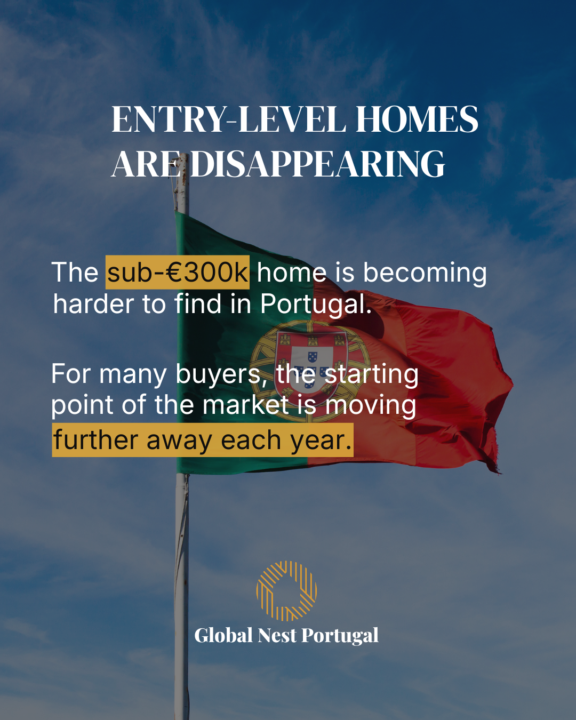
The Sub-€300k Home is Becoming Harder to Find in Portugal
Portugal’s affordability pressure is becoming more visible. Recent market data shows that only around one in three homes in Portugal is priced below €300k. That is not only a buyer issue. It is a supply issue. When entry-level stock disappears, pressure moves through the whole market: - First-time buyers compete harder - Renters stay renters longer - Families delay decisions - Developers face a different product question The answer is not simply “build more luxury stock.” Portugal needs more well-located, well-planned, realistic residential supply that matches real demand. For developers, this changes the question from: “What can sell at the highest price?” To: “What does the market actually need, and what can be delivered responsibly?”
0
0
8d •
I Live in a Magical Place
Lisbon is my home now, but every time I arrive in Caparica, it feels like I enter another dimension. The noise gets quieter. One day by the ocean can reset everything. The sea, the sunsets, the food, the people, the rhythm of life here — it all brings me back to myself. And maybe this is why I understand Portugal differently now. Not only as a market. Not only as a place for real estate, development, or investment. But as a place with its own culture, rhythm, and relationship with land, family, nature, and time. That matters. Because when you build here, you are not only building projects. You are building inside a place that needs to be understood and respected. Portugal is imperfect. But for me, it is perfectly imperfect. And it reminds me that building well requires more than ambition. It requires respect.
3
0

8d •
Why Prices Can Rise Even When Transactions Slow
A slower transaction market does not always mean weaker demand. In Portugal, we are seeing something important: transaction volumes can cool while prices continue to rise in many areas. That usually points to a supply-constrained market. There are fewer good homes available, buyers are more selective, and weak projects struggle to move. But well-located, well-structured projects can still hold pricing power. For developers, the lesson is simple: Do not build for hype. Build for real absorption. That means understanding the buyer, the location, the product, the pricing, and the exit before construction begins. The market does not reward every project equally. It rewards the projects that solve a real demand problem.
1
0

14d •
Portugal Changed It's Construction Rules
Portugal’s construction framework has changed. That creates opportunity, but it also raises the standard for execution. The developers who benefit will not be the ones who move fastest on paper. They will be the ones who understand licensing, technical constraints, construction timelines, and delivery risk before committing to a project. At GlobalNest Portugal, we do not treat regulation as background noise. It is part of the underwriting.
0
0

18d •
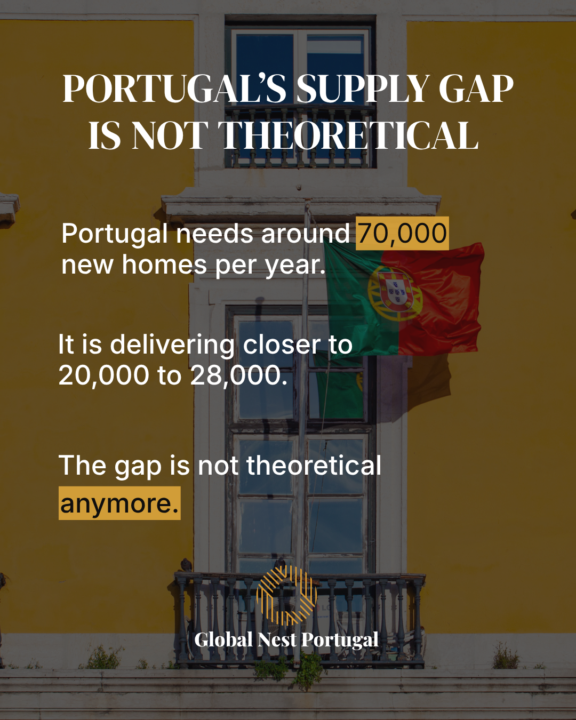
Portugal’s supply gap is not theoretical anymore.
Portugal needs around 70,000 new homes per year and is delivering closer to 20,000 to 28,000. That gap does not only show up in market headlines. It shows up in: • Permits • Licensing timelines • Construction capacity • Technical coordination • Financing conditions • The number of projects that actually move from plan to completion For developers, the question is not only: “Is there demand?” The better question is: “Can this project actually be licensed, financed, built, and delivered in the current environment?” Because demand alone does not deliver housing. Execution does.
0
0
1-10 of 74

@irina-leca-2437
Real estate developer & founder of Portugal REI Club.
Structuring 20%+ ROI opportunities and making real estate investing accessible in Portugal.
Active 16h ago
Joined Apr 30, 2025
Lisboa