Activity
Mon
Wed
Fri
Sun
Aug
Sep
Oct
Nov
Dec
Jan
Feb
Mar
Apr
May
Jun
Jul
What is this?
Less
More
Memberships
The School of Bits
55 members • Free
1 contribution to The School of Bits

Apr 15 •
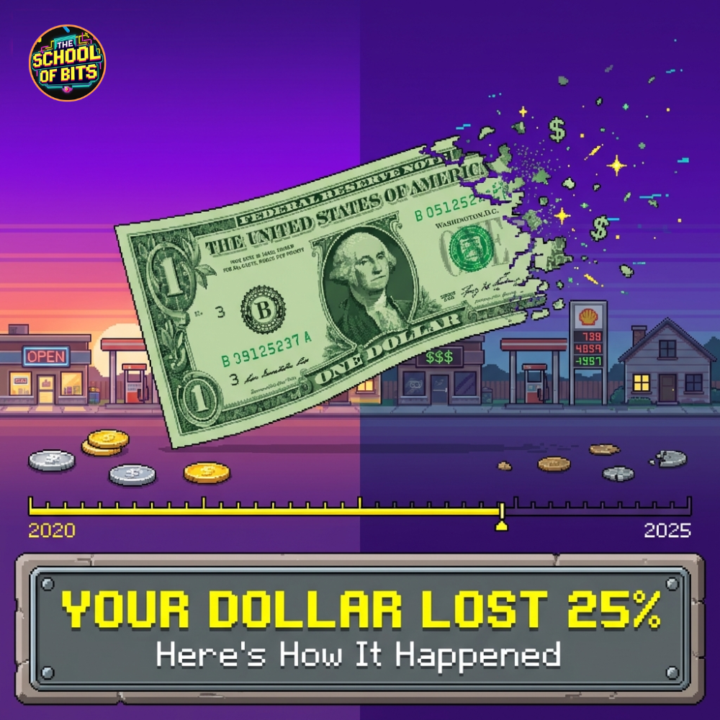
Your Dollar Lost 25% of Its Value. Here's How It Happened.
You've probably noticed it. Groceries cost more. Gas costs more. The same cart of stuff you bought in 2020 for $100 runs you closer to $130 now. And the weird part is, you might be earning more than you were back then. So what happened? Most people land on one of two conclusions: 1. "I'm spending too much." 2. "I need to earn more." Both feel logical. Both miss the actual problem. Between 2020 and 2022, roughly $6.4 trillion in new dollars were added to the U.S. money supply. That's about 26% of all dollars currently in existence, created in just 2 years. Here's where it gets interesting. When people hear "money printer," they picture a machine cranking out cash. The real version is quieter and way more technical. But the effect is the same. New dollars come from 4 places: - The Federal Reserve buys Treasury bonds from banks and pays with freshly created digital reserves. The Fed's balance sheet roughly DOUBLED during COVID. - Commercial banks take your deposit, keep a fraction, and lend the rest. That loan becomes someone else's deposit, which gets lent again. One dollar of reserves can generate around $10 in new loans circulating through the economy. - The U.S. Treasury issues bonds to cover spending that taxes can't. Stimulus checks, PPP loans, relief programs...all of these put brand new dollars into people's hands. - Shadow markets (repo lending, money market funds, derivatives) create money-like instruments that function as dollars. Mostly invisible, but massive in scale. So now there are trillions more dollars in the system. But the supply of houses, groceries, cars, and energy didn't grow at the same rate. More money chasing the same stuff. Prices go up. Your paycheck isn't the thing that shrank. It's the dollar. And that's the part that messes with people's heads, because the number in your bank account looks the same (or even bigger). But what that number buys keeps getting smaller, slowly, year after year. Most of us know it's happening. But the confusing academic jargon keeps most people from knowing how. Now you know.

1 like • Apr 15
@Joshua Tennefrancia not a bad conclusion
1 like • Apr 15
what about stonks ?!
1-1 of 1