Activity
Mon
Wed
Fri
Sun
Aug
Sep
Oct
Nov
Dec
Jan
Feb
Mar
Apr
May
Jun
Jul
What is this?
Less
More
Owned by Gillian
A welcoming, inclusive space that will foster community, creativity, fun and enjoyment in exploring all things pertaining to great music and beyond.
Memberships
Creator Conservatory
215 members • Free
The AI Video Lab
58 members • Free
The Scalp Science Lab
28 members • Free
Skool Copy Hub
929 members • Free
Skoolers
163.6k members • Free
11 contributions to The Scalp Science Lab
Mar 25 •
Hello, let’s talk 👋🏽🙋🏽♀️
How’s everyone doing? Just checking in to see how you all are? Would love to know how you’re feeling. Anything new and exciting or interesting. Some members have been really really quiet. You can comment with a GIF if you like to.


1 like • Apr 6
Feeling OK 👍🏽!
Apr 5 •
Easter weekend - what’s the vibe for you? 🐣
Curious what everyone’s up to: Resting and recharging? Family gatherings? Working through the long weekend? Church, brunch or both? Solo time to catch up on life? Treating yourself to something special? Drop your plans below 👇 Always love seeing how everyone in The Lab spends their downtime - we’re all about balance here (scalp health AND life health 😊). Enjoy the break, whatever you’re doing! 🌱

1 like • Apr 6
My weekend was busy as I was djing for an Over 50's event on Good Friday and then Sunday, hosting an Easter Egg Hunt for kids. So just chilling with hubby today. Hope you had a relaxing weekend! 🙂
Mar 11 •
🌿 WELLNESS WEDNESDAY
What's your favourite way to de-stress? Gardening? Reading? Painting? Walking? Yoga? Cooking? Time in nature? Dancing? Drop it below - let's see what brings The Lab community peace. Bonus: If it's something others can try, share why it works for you. 🔬

1 like • Mar 14
I love to chose and play music! It's a great destressor!
1 like • Mar 23
@Tanesha Coley R&B 80's and 90's! My era
Feb 28 •
💬 THE "ONE SEAT" QUESTION
@Nicole Crooks (one of our new members) just shared something that hit me hard: "I am a stylist for about 20 years and I have been in the space where I do not know what to do for my clients experiencing hair loss besides refer them to a dermatologist." I know this feeling intimately. How many times have you sat across from a client and realized you didn't have the answer they needed? For me as a hairdresser, it happened constantly: Client: "Why is my hair breaking at the crown?" Me: "Try this deep conditioner." (I was guessing.) Client: "Why won't my edges grow back?" Me: "Maybe it's stress." (I didn't actually know.) Every time, I felt helpless. I could SEE something was wrong, but I didn't have the clinical framework to diagnose it. How many times have you sat in that chair, asking for help, and left with... nothing? Just another product recommendation. Just "maybe it's stress." Just "try this oil and see what happens." No answers. No diagnosis. No understanding of WHY your hair is failing. Just guessing. And when you're losing your hair, "guessing" isn't enough. This is what I call "The One Seat Question." That moment—whether you're the practitioner who doesn't have answers, or the client who can't find them—where you sit across from someone and feel completely helpless. I've been on both sides. As a hairdresser who couldn't help clients. As someone who watched family members struggle to find answers. That gap—between what practitioners are trained to do and what people actually NEED—is what pushed me to become a scalp care specialist. And here's what shocked me: The clinical frameworks I learned in trichology certification—how to assess fibre damage, scalp pH, vascular flow, when to refer—NONE of that was in my 15 years of hairdressing training. It should have been. This isn't advanced knowledge. This is foundational. Every stylist should understand why hair breaks. Every barber should understand why razor bumps persist. Every practitioner should know when to refer vs. when it's something they can address.
1 like • Mar 4
I like when you pointed out that every stylist should know why hair breaks and every barber should understand why razor bumps persist. This speaks to a level of care which, sadly, not everyone has. It's hard to find good stylists whose practices don't actually damage your hair! I have had this experience. As a skincare specialist, I am quite interested in the scalp as an extension of our Facial skin but with more hair and I am happy to be in this community where this is explored. Thanks Tanesha for creating this space. I did my scalp ph and happily it was 4.9 (maybe 5?) which means well balanced and I'm 😊!
1 like • Mar 4
@Tanesha Coley 😊
Feb 28 •
🎉 NEW MEMBERS ALERT!
The Lab just grew! Welcome to: @Nicole Crooks @Liberty Morra We're now 18 investigators strong. 🔬 📋 IF YOU'RE NEW, HERE'S WHAT TO DO FIRST: 1️⃣ Download the Elasticity Audit from Resources (60-second diagnostic test) 2️⃣ Introduce yourself in this thread (name + location + hair frustration) 3️⃣ Post your audit results and I'll help you interpret them We don't recommend products here. We teach you to diagnose YOUR system, then match solutions to YOUR data. Assessment before Action. 💬 EXISTING MEMBERS: What's one piece of advice you'd give to new members joining The Lab or share an interesting fact or experience with us? Drop it below! 🔬
1 like • Feb 28
Welcome!!
1-10 of 11
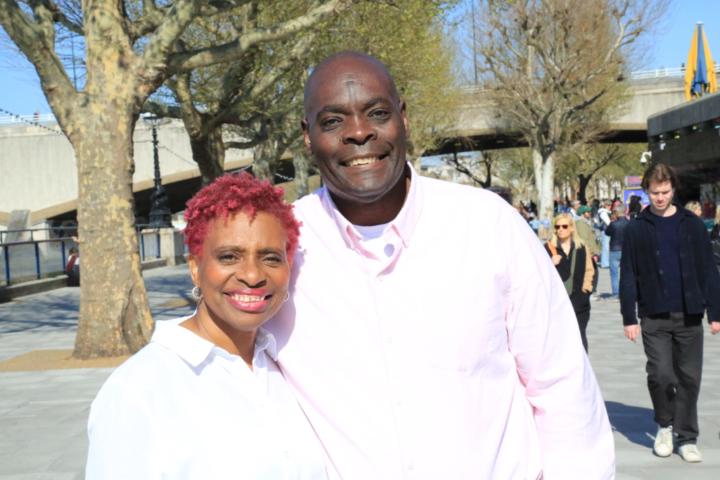
@gillian-wedderburn-9307
Rooted in Jamaican heritage and shaped by a global musical outlook, Gordon and Gillian Wedderburn are a dynamic DJ Duo sharing new sounds
Active 28d ago
Joined Feb 7, 2026
London, United Kingdom