Activity
Mon
Wed
Fri
Sun
Sep
Oct
Nov
Dec
Jan
Feb
Mar
Apr
May
Jun
Jul
Aug
What is this?
Less
More
The Drone Zone
99 members • Free
Progress is Progress.........
89 members • Free
AI Automation Society
446.2k members • Free
The Solar Network
44 members • Free
Solar Operations Excellence
329 members • Free
6 contributions to Progress is Progress.........

Jan 4 •
What do you think?????????????????
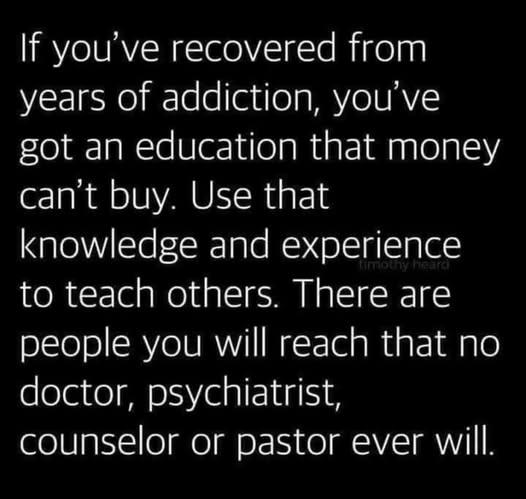
Here’s something nobody tells you when you’re clawing your way out of addiction: you’re getting an education money can’t buy. 🎓💥 No fancy school, no Ivy League, no “expert” in a suit has studied what you survived. You learned in real time, in the trenches, where it actually matters. There’s a kind of wisdom that comes from facing your worst days and making it through. You can’t fake it. You can’t buy it. And the wildest part? That knowledge—your scars, your story, your ability to really see someone who’s still stuck—is priceless. 💯✨ Doctors, therapists, lawyers—they all have their place, and I’m grateful for them. But there are people out there who won’t listen to anyone in a white coat or a fancy office. They’re waiting for someone like you—someone who’s been there, who gets it, who can say, “I know how dark it gets. I made it out. And you can too.” 🫂🌅 So don’t downplay what you’ve been through. Don’t hide your story or your experience. Use it. Teach. Lift. Share. Say the things you needed to hear when you were at your lowest. You might be the only voice that cuts through the noise for someone who desperately needs hope. Your pain has value. Your progress is real. And you—yes, YOU—are living proof that recovery is possible. That’s an education worth sharing. 📚🦋💪 If you’re out there, reading this, and you’re struggling: you’re not alone. Progress is progress. And sometimes the most powerful teachers are the ones who learned the hard way. ❤️🩹
1 like • Jan 4
Made me the person I am today.
Dec '25 •
Good Evening!
Alright, real talk — how was your day? Mine had its moments, but tonight I hit this quiet place that almost felt… weird? Like suddenly everything slowed down, and for a second, I didn’t know what to do with the silence or my own thoughts. That awkward pause where your brain wants to run but you gotta stay put. I grounded myself, took a breath, and rode it out. Not every day’s fireworks and breakthroughs — sometimes it’s just about showing up in the messy, uncomfortable middle. What about you? Did today toss you into any strange quiet places? How did you show up? Let’s hear it all — the good, the ugly, the awkward. This space is for the real stuff.

0 likes • Dec '25
I am 5 days sober!!!!
1 like • Dec '25
@Belinda Morey 6 days today and feeling strong, got a find habits to fill this newly found time lol 😜
Dec '25 •
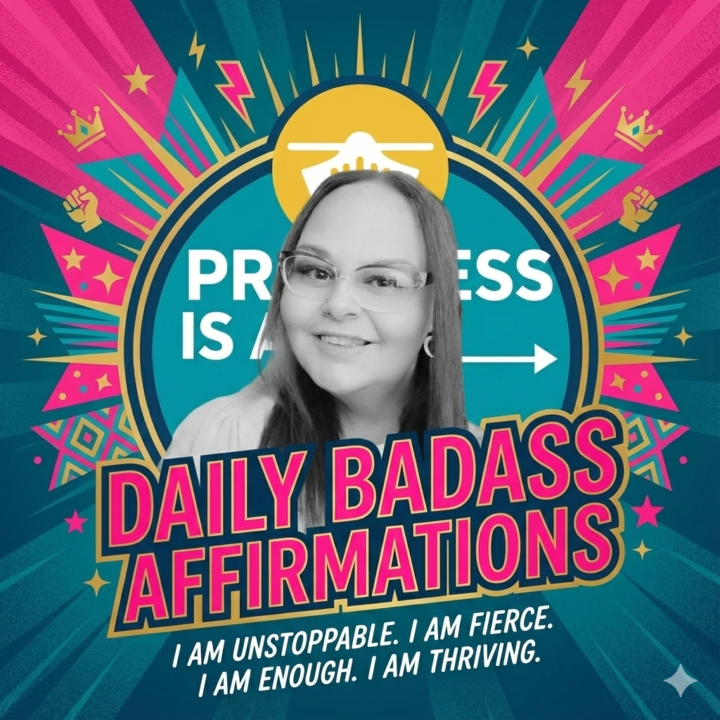
Are you ready for your daily inspiration?
Every day I will be sharing a daily dose of Progress is Progress's Badass Affirmations right HERE in this thread! You really don't wanna miss all this motivation in only the style I give it to you! 🤣
1 like • Dec '25
I am strong awesome and amazing!!! 💪
Dec '25 •
Half the battle is just getting out of bed and giving a damn—I win that part daily.
12/29/25-Let’s be honest: most mornings, the world doesn’t care if you show up or not. The bills still pile up. The pain and doubt don’t take a day off. And the hardest work? It isn’t chasing some perfect version of yourself—it’s rolling out of bed, planting two feet on the floor, and deciding to get back in the ring. Sometimes that’s all you’ve got. That’s enough. Maybe you got sober. Maybe you just managed to shower today. Maybe all you did was not quit when quitting sounded holy as hell. Doesn’t matter how it looks from the outside—if you showed up, you already beat the part of your brain that begged you not to bother. I don’t care what the highlight reels show. The win isn’t just in the glory—it’s in the days nobody sees. It’s in dragging your ass into the light and choosing, even for a second, not to let the darkness call the shots. So yeah—half the battle is just outlasting yesterday’s demons. I’ve been at war long enough to know: that’s a victory worth claiming. If you’re fighting that fight, you belong here. Want more real talk and less self-help fluff? Come through at Progress is Progress. The club’s open for anyone who’s sick of pretending progress is easy—and just wants to win today, no matter what it looks like.
2 likes • Dec '25
One day at a time
Dec '25 •
To the Next Wave—A Letter to the Ones Who’ve Been There
Jul 29, 2025 Let’s be honest: nobody grows up dreaming of becoming a peer support specialist, recovery coach, or harm reduction advocate. Most of us didn’t even dream of surviving. But here we are, standing upright(ish), coffee in hand, and suddenly there’s a new conversation in the field—one that’s about us. Wisconsin’s catching up to what most of us have known for years: people with lived experience are the secret sauce in real recovery work. As of 2025, Medicaid here is rolling out new coverage for peer recovery coach services, which means agencies can finally hire people like you—and bill for your work, not just your war stories. Certified Peer Specialists in Wisconsin (yes, it’s a real title—and you get a certificate and everything) are now recognized professionals using their own histories to walk alongside people still in the trenches. There are even training programs, recertification requirements, and a growing demand for people who “get it” because they’ve actually lived it. And here’s the thing: the old-timers in the field—counselors, clinicians, folks with ten-dollar words and fancy degrees—are finally starting to get it, too. They’re seeing that a peer specialist isn’t just a “nice to have,” but a game-changer. Research shows that peer support lowers relapse rates, breaks isolation, and injects real hope into places where clinical optimism sometimes falls flat. Let’s not forget harm reduction—because not everyone is ready for “abstinence or bust” and, honestly, neither was I. Wisconsin’s got harm reduction programs distributing naloxone (Narcan), fentanyl test strips, and running syringe service programs. These are saving lives every day, and they need people who can hand out supplies without a side of shame or a lecture on “willpower”. So here’s my pitch—no, scratch that, here’s my plea. If you’re reading this and you’ve made it far enough that you can imagine giving back, even just a little, consider stepping in. The field needs recovery coaches, peer specialists, harm reduction advocates—people who can look a newcomer in the eye and say, “Yeah, I’ve been there. No, you’re not too far gone. Yes, you’re worth it.”
0 likes • Dec '25
So Wisconsin is doing like a big brother program? Like a life couch type thing?
1-6 of 6
@gabriel-collom-9394
Indigo Printz LLC: Where construction knowledge, creative content, and business innovation intersect.
Active 226d ago
Joined Dec 29, 2025
INFJ