Activity
Mon
Wed
Fri
Sun
Sep
Oct
Nov
Dec
Jan
Feb
Mar
Apr
May
Jun
Jul
Aug
What is this?
Less
More
Earth 2.0 Community
1.8k members • Free
3 contributions to Earth 2.0 Community

25d •
The Missing Piece of Nutrition: It’s Not Just What You Eat… It’s When.
I genuinely believe this is one of the most important nutrition conversations we can have. For years, I did what many people in the health world recommended. I experimented with different fasting protocols, and for a long time I wouldn’t eat my first meal until around 2:00 PM. At first, it felt great. But over the years, I began noticing something different. My energy became less stable, my nervous system felt more dysregulated, my recovery declined, and despite “doing everything right,” I wasn’t thriving the way I wanted to. Eventually I realized something important: I wasn’t listening to my biology. Today my rhythm looks almost completely opposite. I eat the majority of my food much earlier in the day—often finishing my last meal between noon and 2:00 PM—and then naturally fast until around 7:00 AM the next morning. This simple shift has been one of the biggest improvements I’ve personally experienced in my energy, sleep, metabolic health, nervous system regulation, and overall sense of rhythm. Fairy has been following this approach with me, and we’ve both been amazed by how different we feel. The fascinating part? This isn’t another diet. This isn’t about keto vs. vegan, carnivore vs. plant-based, or another nutrition trend. It’s about circadian biology. Our pancreas, liver, muscles, gut microbiome, hormones, and nervous system all operate on an internal clock synchronized by light. Research consistently shows that identical meals eaten in the evening often produce significantly higher glucose responses than when those same meals are eaten earlier in the day. In other words: The same food can become a completely different metabolic event depending on when you eat it. That doesn’t mean food quality suddenly doesn’t matter—it absolutely does. But timing may be one of the most overlooked variables in modern nutrition. Instead of constantly asking: “What should I eat?” We might also ask: “When is my body actually designed to process this food most efficiently?”
1 like • 24d
Thanks for sharing! I haven't intentionally experimented eating earlier in the day but have inadvertently eaten earlier in the day just a handful of times where I did overall seem to sleep better. However I'm very susceptible to not being able to sleep well if I am hungry. I've been on a OMAD protocol for years where I eat once at around 5 PM and mostly finish eating by 7, to sleep by 10-11. I can say also that OMAD has also been one of the big breakthroughs for me where I wish I have done it sooner. I have also considered what you mentioned for eating by 2 PM (or just lunch). However, the main reasons why it hasnt stuck to me is the food coma I'd get (sugar crash), taking away time during your productive day hours, and how you can use it for your daytime supplements that would need to go with food or something fatty. Not knowing anything else, it seems reasonable that we may have evolved to hunt and gather during the day, then enjoy the spoils on the evening, and then rest/sleep. I haven't watched the video yet but I'm adding it to watch later!
29d •
MONDAY RESET The Signal You Bring Into The Week Matters More Than The Schedule You Fill It With.
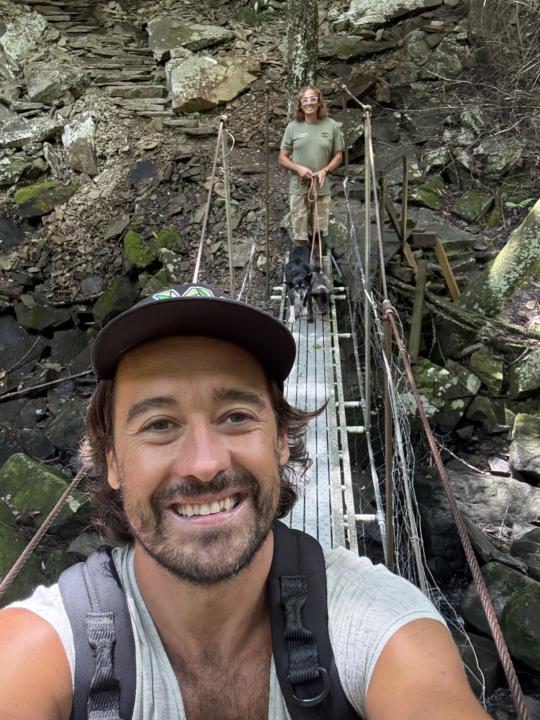
Every Monday, millions of people begin another week asking: “What do I have to get done?” Very few pause to ask: “Who do I want to become while doing it?” Science continues to show that our nervous system shapes how we perceive the world. When we’re dysregulated, our brain naturally becomes more sensitive to threats, urgency, and uncertainty. When we’re regulated, we gain greater access to creativity, emotional flexibility, problem-solving, empathy, and long-term thinking. The world around us may not change overnight. But the way we meet it absolutely can. At Earth 2.0, we aren’t just trying to accomplish more. We’re practicing becoming people who can remain present in the middle of uncertainty, compassionate in the middle of challenge, and clear in the middle of complexity. So before you plan your week… Pause for sixty seconds. Take one slow breath. Place a hand on your heart. Ask yourself: What signal do I want to bring into every room I enter this week? Maybe it’s… Calm. Courage. Joy. Curiosity. Presence. Patience. Trust. Generosity. Whatever your word is… Let it become your compass. Then, every decision this week becomes an opportunity to practice it. Not perfectly. Intentionally. YOUR MONDAY PRACTICE: In the comments, complete these three sentences: This week I choose to embody: ________ One thing I’m releasing: ________ One person I’ll intentionally uplift this week: ________ Then take a moment to read someone else’s response. Leave them one sentence of encouragement. One genuine message can shift someone’s entire week. Because that’s how Earth 2.0 grows. Not through algorithms. But through coherence, compassion, and conscious action—one human at a time. Happy Monday! Sharing with you moment this weekend from camping deep in mountains with my dad and kids.
1 like • 28d
@Chelsea Kallis Wonderful to hear, may you be dancing through this week from the joy and energy, even if it's just in your head! Frustration will soon be a thing of the past, and soon those around you will feel it too, like your husband Nick 💃
2 likes • 28d
@Nadiya Filimonova I think it could be so difficult to snap out of always wanting to be productive. But, if anything, perhaps one can take comfort in how it's likely that the effort to temper this mindset in itself would achieve that very thing (of being productive)? So, I'm guessing people still want to be productive (but don't want the negative aspect of it (the pressure)). Regardless, may you come back to the world a version of yourself that can more regulate and control that pressure! Nature can be so beautiful and without the distracting ripples of life, may you see its clear and beautiful image, and soak up its goodness this week!
Jul 6 •
MONDAY IS HERE & THIS WEEK’S COLLECTIVE EXPERIMENT: LIVE IN THE CIRCADIAN RHYTHM
One of the greatest realizations I’ve had over the past few weeks has been surprisingly simple. Not from another supplement. Not from another optimization tool. Not from pushing harder. Simply from coming home… and living in greater harmony with the biology we were designed for. For the first time in a long time, I’ve been following my body’s natural circadian rhythm as closely as possible. Waking with the light. Getting outside early. Hydrating before caffeine. (I have actually cut all caffeine all together just paraxantine intermittently) Eating when my metabolism is designed to process food most efficiently. Moving at the times my body naturally wants to move. Reducing artificial light at night. Taking daily naps before 2pm. Sleeping when my brain is asking for restoration instead of stimulation. The difference has been profound. It reminded me of something we often forget: Nature doesn’t rush. Your nervous system doesn’t own a clock. Your biology doesn’t care about your calendar. It follows rhythm. Modern life has trained many of us to override those rhythms. We eat when it’s convenient, stay under artificial light late into the night, wake to alarms instead of sunlight, and wonder why we feel disconnected, inflamed, exhausted, or anxious. Yet decades of research continue to show that when we do something can be just as important as what we do. Our hormones, metabolism, brain function, digestion, immune system, cardiovascular health, recovery, and even emotional resilience all follow predictable biological cycles throughout the day. When we begin working with those rhythms instead of against them, our bodies often require less force and begin expressing more balance. This week, I’d love for us to run a collective Earth 2.0 experiment. Not perfection. Just awareness. Choose one or two practices that help you synchronize with your biology: • Get outside within the first 30–60 minutes after waking. • Drink water before your first cup of coffee. (or try to eliminate caffeine for few days to restore all together and speak to your body in other ways to power it up)
3 likes • Jul 6
More specific to this week, I'd like to reclaim having deep sleep. Last night it was negatively affected by two things: 1. I woke up prematurely from a dream of hearing mosquitos (my house gets mosquitos inexplicably sometimes), and physically jolted myself out of that dream into wakefulness. I will not be able to sleep knowing there are bloodsuckers nearby. Often times your environment manifests itself in your dreams, so I spent some time ruminating if there actually was a mosquito nearby (I also didn't want to turn on the lights to check as that would disrupt sleep). Luckily I did not experience one last night as I lied there in the dark. 2. My ear was throbbing and aching where I was feeling my pulse throughout a good portion of the night as I then drifted in and our of sleep. I had my cartilage piercing downsized just yesterday and I seemed to not react too well to that and my ear is a little swollen. I am optimistic tomorrow night will be better and will consider at least the first factor to be a fluke!
0 likes • Jul 9
@Nadiya Filimonova That sounds like a great habit! As far as I know that will also help your sleep as viewing the reddish low angle light helps set your circadian rhythm (along with the morning blue wavelengths). Then, looking out to far distances is supposed to relax you and also help spark creativity and abstract thoughts. Of course having such a beautiful view is the cherry on top :)
1-3 of 3
Active 2h ago
Joined Jun 3, 2026
Powered by