Activity
Mon
Wed
Fri
Sun
May
Jun
Jul
Aug
Sep
Oct
Nov
Dec
Jan
Feb
Mar
Apr
What is this?
Less
More
Memberships
The George Method™
84 members • $9/month
4 contributions to The George Method™

6d •
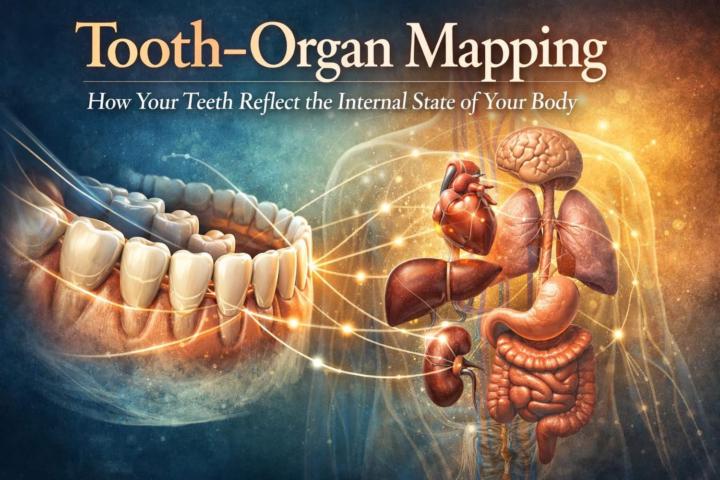
TOOTH–ORGAN MAPPING
Your Teeth Reflect the Internal State of Your Body Carey Ann George | The George Method™ Most people have been taught to see teeth as static, isolated structures—tools for chewing that either stay intact or break down over time. But when you begin to look deeper into the architecture of the human body, it becomes clear that each tooth exists as part of a larger communication network, one that extends far beyond the mouth and into the organs, the nervous system, and the body’s internal regulatory pathways. Each tooth is embedded within a highly innervated and vascularized environment, surrounded by connective tissue, lymphatic drainage, and neural input that connects directly into the brainstem. These connections are not random. They follow organized pathways that mirror what traditional systems have described as meridians, and what modern physiology recognizes as interconnected neurovascular and fascial networks. When you begin to view the body through this lens, the mouth reveals itself as a map—one that reflects patterns occurring throughout the entire system. The front teeth, for example, are often associated with the kidney and bladder systems, which play a central role in fluid regulation, mineral balance, and the body’s stress response through the adrenal glands. When there is chronic depletion, prolonged stress, or dysregulation in fluid balance, it is not uncommon to see changes in these teeth—whether through sensitivity, structural weakening, or recurrent issues that do not fully resolve. Moving laterally, the canines often reflect patterns related to the liver and gallbladder, systems responsible for detoxification, metabolic processing, and the regulation of biochemical flow. When these systems are under strain, whether from dietary load, environmental exposure, or emotional tension, the corresponding teeth can begin to mirror that burden. Further back in the mouth, the premolars and molars are closely tied to the digestive system, including the stomach, spleen, pancreas, and intestines. These organs are responsible for breaking down food, extracting nutrients, and maintaining stable blood sugar and immune function. When digestion becomes inefficient or overwhelmed, the effects often appear in the teeth that correspond to these systems, revealing patterns of mineral depletion, microbial imbalance, or chronic inflammation.

0 likes • 5d
This is very true, I have been having issues with a few teeth and they tie into exactly the organs I have had trouble regulating all these years. I look forward to feeling what good will happen doing this method.
25d •
April Weight Loss Challenge
Subscribe or upgrade your monthly Skool subscription to a yearly subscription ($99/yr) in April to unlock this course. The George Method™ Weight Loss Challenge Guided Group Workshop is launching on April first. 💎 Definitely NOT your typical weight loss challenge 😉 Most people try to change their body through force. More workouts. More restriction. More exhaustion. The body responds by tightening fascia, elevating cortisol, slowing metabolism, and holding on even harder. The George Method™ routine works differently. It restores flow to the systems that determine body shape. If you’re already a yearly subscriber, comment UNLOCK to be granted access and join us ⬇️ Carey Ann George

0 likes • 6d
I am not in the weight loss chat group yet.
0 likes • 6d
Thank you
26d •
New Course Launched!!!
Learn How Tongue Strength, Posture, and Fascial Integrity Influence Migraines, Neck Tension, Energy, Sleep, and Whole Body Health https://www.skool.com/thegeorgemethod/classroom/e4cefe59 Free this month only to YEARLY Subscribers-drop a comment to unlock this course ⬇️
1 like • 26d
Would like to learn more.
Mar 4 •
The George Method Guided Healing Journey
If you’d like to join our chat group and this months women’s guided healing journey, send me a message. Illness/sadness/anxiety/stress comes from the daily habits we form over time and the way we relate to the situations/people/things outside of us - The George Method teaches you to create new patterns of behavior from a place of conscious awareness rather than automatic responses - it helps you to create daily habits to slowly integrate new healthy responses into your life that allow you to release the negative aspects of life you keep replaying in the background every day that are leading to dis-ease. In the back of your journal, create a list of all the things that bring you joy or that once upon a time brought you happiness - when we rehearse the negative in the background more than the positive, depression occurs-symptoms arise from things that are continually “pressing” - create a list of daily habits you will be replacing your old habits with - decide that you will prioritize releasing any tension that arises in your body every day - drop your shoulders - breathe deeper - make a conscious decision that this is now the most important task in your life - you will prioritize you 👉Recharging yourself every morning like you charge your devices will change your life completely. Give yourself at least a half hour of time to unwind, breathe, listen to something positive either music or a motivational speaker audio and watch how much more productive and positive your day turns out. Here is a sample playlist you can listen to in the morning to start your day in a positive direction.https://youtube.com/playlist?list=PLc8C-ySONrwRifvPheoqyPsTDlQxFVk0Z&si=_rzxX3HXEgT53Xbg
1 like • Mar 6
I would like you to check and see if I finished signing up correctly. I joined the monthly group and downloaded skool. Thanks again
1-4 of 4