Activity
Mon
Wed
Fri
Sun
Nov
Dec
Jan
Feb
Mar
Apr
May
Jun
Jul
Aug
Sep
What is this?
Less
More
CSCS Accelerator Community
236
Free
106 contributions to CSCS Accelerator Community

Jul 1 •
CSCS Daily Practice Question #93
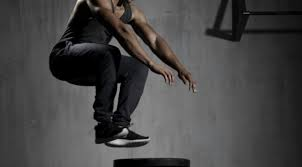
During an explosive jump, the quadriceps is briefly stretched as the legs extend to propel the body upward. Which proprioceptive response would immediately increase quadriceps activation? A. Relaxation of the hamstrings to allow unobstructed knee extension B. Activation of muscle spindles detecting stretch, triggering a reflex contraction of the quadriceps C. Activation of Golgi tendon organs, which inhibits muscle contraction to prevent excessive tension Answer in the poll, then explain your rationale below in the comments! I'll follow up with my breakdown of the question after enough people have responded. From Chapter 1: Structure and Function of Body Systems DCO Code: 1.A1 NOTE: Image is for illustration purposes, not needed to answer the question.
Poll
22 members have voted

0 likes • Jul 1
Stretch reflex
Jul 1 •
CSCS Daily Practice Question #92
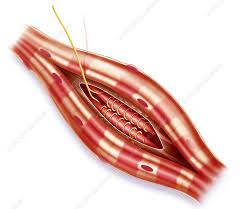
When a muscle is suddenly stretched, how does the muscle spindle reflex contribute to stability? A. The spindle signals the cerebellum to reduce motor neuron activity to the muscle B. The spindle's sensory neuron activates motor neurons, causing immediate contraction of the same muscle C. The spindle's activation causes the muscle to relax completely Answer in the poll, then explain your rationale below in the comments! I'll follow up with my breakdown of the question after enough people have responded. From Chapter 1: Structure and Function of Body Systems DCO Code: 1.B2 NOTE: Image is for illustration purposes, not needed to answer the question.
Poll
20 members have voted
0 likes • Jul 1
A sudden stretch activates the muscle spindle, causing the same muscle to contract and resist the stretch
Jul 1 •
CSCS Daily Practice Question #91
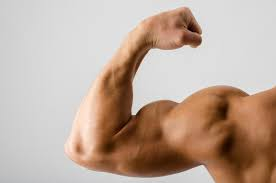
Why does the instantaneous force produced by a muscle depend on the number of crossbridges formed between actin and myosin? A. Crossbridges store elastic energy in sarcomeres that is released during contraction B. More crossbridges allow more simultaneous power strokes, each contributing to total force C. Crossbridges anchor myosin to actin, preventing filament separation Answer in the poll, then explain your rationale below in the comments! I'll follow up with my breakdown of the question after enough people have responded. From Chapter 1: Structure and Function of Body Systems DCO Code: 1.D1 NOTE: Image is for illustration purposes, not needed to answer the question.
Poll
25 members have voted
0 likes • Jul 1
More crossbridges = more simultaneous power strokes, producing greater force
Jul 1 •
CSCS Daily Practice Question #90
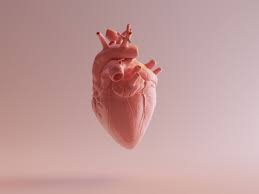
Why is the atrioventricular (AV) node's conduction delay important for cardiac function? A. It allows time for the atria to contract and empty blood into the ventricles before ventricular contraction begins B. It synchronizes the electrical activity between the left and right atria C. It prevents the ventricles from contracting too quickly and reduces blood pressure Answer in the poll, then explain your rationale below in the comments! I'll follow up with my breakdown of the question after enough people have responded. From Chapter 1: Structure and Function of Body Systems DCO Code: 1.G1 NOTE: Image is for illustration purposes, not needed to answer the question.
Poll
17 members have voted
0 likes • Jul 1
The AV node delay allows the atria to fill the ventricles before ventricular contraction
Jul 1 •
CSCS Daily Practice Question #89
What does the all-or-none principle of muscle contraction state? A. Muscles can only generate force in one direction of movement B. A muscle fiber contracts fully when stimulated above threshold or does not contract at all C. All muscle fibers in a muscle contract at the same force level Answer in the poll, then explain your rationale below in the comments! I'll follow up with my breakdown of the question after enough people have responded. From Chapter 1: Structure and Function of Body Systems DCO Code: 1.B1 NOTE: Image is for illustration purposes, not needed to answer the question.
Poll
16 members have voted

0 likes • Jul 1
A muscle fiber either contracts completely or does not contract at all.
1-10 of 106