Activity
Mon
Wed
Fri
Sun
Jun
Jul
Aug
Sep
Oct
Nov
Dec
Jan
Feb
Mar
Apr
What is this?
Less
More
Owned by Elena
Your health is your wealth. Understand the root cause of chronic inflammation and fix it for good. ⭐⭐⭐⭐⭐
Memberships
7 contributions to Syntropic Sunlands w/ Milan

15d •
A Tip to Prevent Weeding - Video Filmed in February
The Fava Bean Trick ! Fava beans are great for smothering weeds, and they sprout easily with the first rains. In this video, I show how I use them - and how much easier they make the work. No need to get on your knees pulling grasses in the first year. You get 2 cuts with them, and each cut took me 20min/100m/1 person. It's really not that much work - about 2 and a half hours for these 3 rows of 240m each. By the time they phase out, it’s already Summer here in the Mediterranean, so there’s basically no need to weed anymore. Then when the rains return, your rows should be established enough that weeding becomes a minimal task. You might need a bit of weeding in year two if your trees haven’t grown enough - but in my experience, one more pass is usually enough - cutting them, not even uprooting them. After that, the trees outcompete the grasses and take over. What other plants do you think could do a similar job? I’m thinking artichokes or cardoons could work really well - but they’d need to be started as seedlings.

🔥
1 like • 15d
interesting.
17d •
Growth Pulse & Lessons from Super Dense SAF
2 and a half years ago, I planted this very dense 400 sq/m SAF - design made by a consultant. I wanted to show you what a real growth pulse looks like just 2 weeks after management. That’s the effect of gibberellins and root exudates being released throughout the system. In a Mediterranean climate - growth is much slower than in the subtropics/tropics. The response is especially visible. Such a great feeling to witness this !
🔥
1 like • 17d
@Milan Marquis yeah. I always considered nature and permaculture my journey and no pruning in nature so no pruning for me :))
🔥
1 like • 17d
@Milan Marquis indeed
19d •
2 Years on the most degraded soil !
Hey you all ! I'm really excited to share the progress of the oldest syntropic system I’ve designed and planted. One of the biggest lessons from this site is that trees don’t always thrive right away - even the toughest species (such as casuarina, false pepper or eucalyptus) On highly degraded land, there are a couple of key limiting factors: - Compacted or poor soil can prevent taproots from penetrating deeply - Strong wind exposure can limit tree growth. Because of this, it’s essential to plant a good density of your placenta 2 to secondary bushes such as tagasaste, tree alfalfa and your typical Mediteranean herbs. They play a crucial role in : - breaking up the soil and create channels for roots - reducing exposure and create microclimates - preparing the space for your main trees to eventually take over This plot has been a really valuable trial for me, and I highly recommend doing something similar on your land. Start with your poorest soil on site. It gives you a true reference point and shows you which species can actually handle extreme degradation. And work from there !
🔥
1 like • 19d
Super interesting. Thank you
Mar 4 •
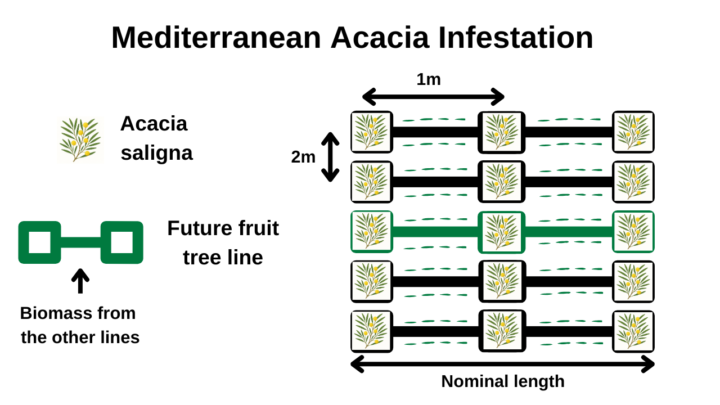
The Infestation - How to do syntropic ag amendments free
Hey everyone ! For the past two years I’ve been working toward something I’m finally beginning to implement: "the Infestation" a term coined by Scott Hall. Those of you on his platform will likely be familiar with it. Scott actually shared a design with me, and I’m currently in the middle of preparing the soil. - What is an infestation, and what’s the purpose? The concept of an infestation is simple—it’s essentially how nature most efficiently drives succession forward from bare or infertile soil. In natural ecosystems, a tough, fast-growing pioneer species colonizes poor ground because it’s the most adapted to those harsh conditions. It rapidly occupies space, outcompetes other plants, and establishes dominance so effectively that even grasses have little impact on its growth. After a few years, this often results in a dense hedge or stand of that species—you can clearly observe this along many roadsides. In my area, the species that naturally behaves this way is Acacia saligna. It self-seeds readily and is extremely resilient. Successional Accumulation Inspired by this natural process, Scott has been developing the concept of “Successional Accumulation.” The goal is to run syntropic agroforestry systems without external amendments by harnessing the initial growth and biomass production of the infestation phase. The system progresses through: - Infestation phase (pioneer dominance and biomass buildup) - Stabilisation phase - Succession phase - The end goal is the same abundance we seek in syntropic ag - but achieved only through plant power rather than external inputs. I won’t dive too deep into each phase here, but I’m happy to discuss further. Why acacias in the Mediterranean? Scott and I have discussed extensively how to adapt this to Mediterranean climates. We both see Acacia species as particularly promising pioneers (e.g., Acacia saligna, Acacia dealbata, Acacia pycnantha, etc.).
🔥
1 like • Mar 9
@Milan Marquis thank you
🔥
2 likes • Mar 9
@Milan Marquis in La Laguna
Jan 7 •
Stratification Mini - Course Incoming
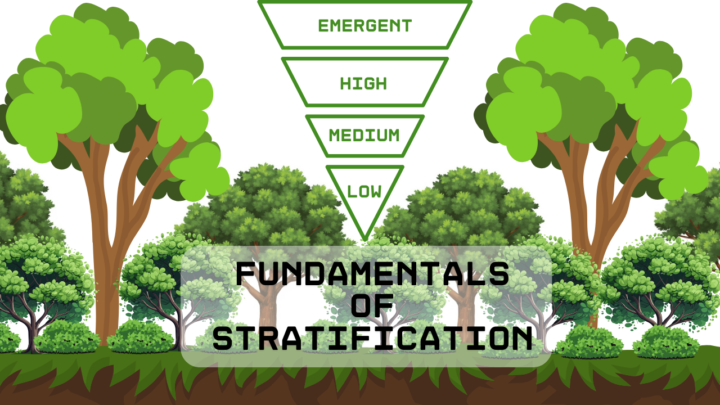
Hi, you all - little announcement - I am in the process of making a mini-course on stratification or plant layering. Meaning the way plants arrange themselves in nature according to their needs of light and how we can use this principle to accumulate the most energy, - photosynthesis therefore biomass therefore topsoil in one's system. These videos will be "whiteboard" style teachings with clear examples and identifications of plant stratas. While in the process, I am still open to receive feedback to make this course even more valuable for you. Any suggestions, any doubts for some of you that still have an issue understanding the basics of stratification properly ? Share them here and we can have a good talk about it !
🔥
1 like • Feb 10
I´ll keep an eye on the classroom to check this course. It sounds really interesting.
🔥
1 like • Feb 11
@Milan Marquis I'll be patient :). Sharing your knowledge here with us is great!
1-7 of 7

🔥
@elena-maren-8003
Nutritionist | Culinary Anthropology & Gastronomy |
Sk Community: INFLAMELESS Lifestyle
Online now
Joined Feb 10, 2026
SPAIN