Activity
Mon
Wed
Fri
Sun
Nov
Dec
Jan
Feb
Mar
Apr
May
Jun
Jul
Aug
Sep
Oct
What is this?
Less
More
Social Media College
1.8k
Free
Learn
473
Free
AI Automation Society
466.8k
Free
Recruitemy Launch Pad
2.7k
Free
Skool Course
36.7k
$29/m
Synthesizer
47k
Free
LinkedIn Strategy Lab
478
5.0
$7/m
Camping Wilderness Skool
204
5.0
$19/m
🪴 Cozy Plants 🌱🌼🌿☘️
116
5.0
Free
32 contributions to Oasis Builders
🔥
May 27 •
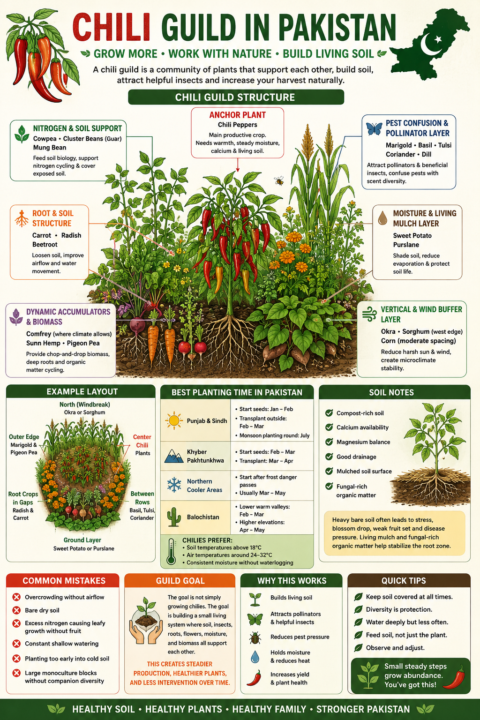
Chili Guild
This is made for warmer climates although the concept would work anywhere warm. @Mohammad Irtaza Tafheem @Oliver Wing

5 likes • May 27
Thanks a lot @Jim Flach
🔥
May 24 •
The Body-System Observation Map
The First Practical Map: Observing the Whole Person Once we understand constitution as the larger pattern, the next step is simple body-system observation. This is one of the easiest places for families to begin because it uses things we can notice in daily life. We are not diagnosing. We are observing. How is digestion? How is sleep? Is energy steady or up and down? Is the person often cold or often hot? Is the skin dry, oily, flushed, pale, irritated, or damp? Is elimination regular, loose, dry, sluggish, or urgent? Does stress show up as tension, restlessness, anger, worry, heaviness, or exhaustion? Does the person feel worse in winter, summer, damp weather, dry weather, or during seasonal changes? These observations begin to show us the person’s pattern. A child may run hot and restless. An older adult may tend toward dryness. One person’s digestion may become heavy after certain foods. Another person may become tense every time stress builds. This kind of observation matters because herbs are not chosen only by what they are “good for.” They are chosen by whether they fit the person and the pattern being shown. For example, two people may both say they feel tired, although one may be depleted and needing nourishment while another may feel heavy, sluggish, and stuck. Those are not the same pattern. Body-system observation helps us slow down enough to notice the difference. For family herbalism, this is a safe and practical starting place. We learn to see what is happening before we decide what kind of support may fit.
2 likes • May 25
Great point @Jim Flach ! There are certain class of herbs that eliminates similar symptoms, but yeah, it depends on an individual. Even if certain symptoms are of same nature among certain individual, they might be suited different herbs to eliminate that symptom. Certain factors like genetics, environmental, or medical history.
🔥
May 25 •
Tissue State and Herbal Energetics
After we begin observing the whole person, the next helpful map is tissue state. Tissue state asks, “What condition are the tissues showing?” Are they dry, irritated, inflamed, boggy, weak, tight, stagnant, overactive, or depleted? This matters because two people may have the same symptom but need different support. A cough may be dry, scratchy, and irritated, or it may be damp, heavy, and full of mucus. A stomach issue may feel hot and burning, or cold and sluggish. Tiredness may come from depletion, although it may also come from heaviness, congestion, and lack of movement. The symptom gives us one piece of the picture. The tissue state gives us another. Then we come to herbal energetics. Herbal energetics looks at the qualities of the herb and the qualities of the person or condition. Is the herb warming or cooling? Drying or moistening? Relaxing or stimulating? Moving or building? Lightening or nourishing? This is where herbalism becomes more careful. Ginger is warming and moving, so it may fit someone who feels cold, heavy, sluggish, or damp. Although for someone already hot, dry, inflamed, or irritated, ginger may be too much. Marshmallow root is moistening and soothing, so it may fit dryness and irritation. Although for someone who already feels boggy, heavy, and overly damp, it may not be the first place to start. This is why herbs cannot always be chosen by popularity. We are not only asking, “What does this herb do?” We are also asking, “Who does this herb fit, and does it match the pattern we are seeing?” That question helps keep family herbalism grounded, humble, and practical.
5 likes • May 25
Those chracteristics of herbs depend on amount of biochemicals it has and what kind of it has. Plus, those characteristic varies depends on the administration, like what if we take ginger via infusion. Whether it'll affect its nature to treat symptoms.
May 22 •
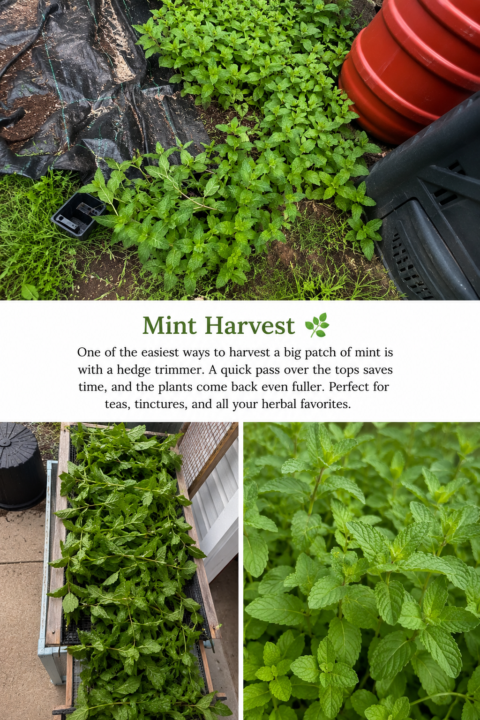
Mint
Mint season is officially here in zone 6b USDA! One of the fastest ways to harvest a big patch is with a simple hedge trimmer. Quick pass over the tops, gather the cuttings, then dry for tea, tinctures, or fresh use. The best part? Mint usually comes back even thicker after a good cut. Nothing fancy — just abundant herbs, simple tools, and a homestead doing what it does best.
0 likes • May 22
The season for growing mint depends on hardiness level. Since our hardiness zone is 12, most gardeners here find better to grow mint during winters.
0 likes • May 22
@Jon Shobe How are you growing that bushy? Last winter, attempted on potting rooted mind cuttings in a pot, but wasn't invasive.

🔥
May 7 •
This is why we can’t have nice things…
There are 14 hungry deer in my yard. Almost all of the does are carrying babies. They’re hungry and eating for multiples!!

3 likes • May 7
I had that similar situation with week old kittens who ruined my indoor plants, under shade. I was frustrated on them, but realized it was indirectly a good thing as those kittens were taking shelter under my plants from extreme heat. Seems like those doe might be taking shelter from something.
3 likes • May 7
@Theresa Elliott The mommy cat stayed with them, especially, after evening. Now their mom has taken them outside, along with it.
1-10 of 32

@mohammad-irtaza-tafheem-7272
A freelance job search strategist, writer and social media marketing manager, with an interest for gardening.
Active 3d ago
Joined Feb 11, 2026