Activity
Mon
Wed
Fri
Sun
Nov
Dec
Jan
Feb
Mar
Apr
May
Jun
Jul
Aug
Sep
Oct
What is this?
Less
More
Owned by Doug
We help the sailing community to improve their sailing skills and confidence. A place for learning and asking questions. “Skippers appreciate skills”
AI Business Friends
120
Free
Social Media Skool
388
5.0
$25/m
AI Automation Made Easy
20.7k
Free
How to Cross an Ocean
325
Free
Camping Wilderness Skool
204
5.0
$19/m
Learn To Live Aboard
26
Free
Nautical Me!
28
Free
AI Workshop Lite
67.6k
Free
147 contributions to All Things Sailing

19d •
Made a mascot to share my passion.
ChatGPT Created a Mascot for me 🐧 😅 This is a fun trend floating around on social media right now 🤓 1. Upload a photo of yourself into ChatGPT. 2. Copy/paste the prompt below into the chat. 3. Share the your mascot in the comments below! Here's the prompt: Give my personality a mascot using what you know about me and the uploaded photo for my appearance, invent a funny cartoon mascot that represents my personality. Feature a glamorous cartoon version of me posing beside the mascot as if we are an iconic duo. The mascot can be an animal, creature, object, or completely imaginary character. Give it one small accessory or detail that connects it to me. Add its name and one short tagline explaining its energy. Keep everything else minimal. White background, clean composition, polished colorful cartoon artwork. Do not ask me what the mascot should be. You decide. Which one do you like?
2
0

23d •
Always learning
Spending time on the water is always a learning process. What have you gained from your last trip? I had a wake-up call as I left a secure anchorage into open water only to find the wind stronger than I though. I had reef under gusty conditions. I paid the price for my inattention to the forecast.

0 likes • 23d
Reef early is a saying to abide by..
Sep 5 •
Long Weekend
This weekend (Sept 5–7) is Labor Day weekend in Canada and the US — Labor Day is a celebration of the achievements and contributions of labourers in the work place, honouring workers who fought for better conditions and quality of life. The holiday itself falls on Monday, September 7, since it's a federal holiday celebrated on the first Monday in September each year. It's widely seen as the unofficial end of summer, so a lot of people treat it as a last long weekend for cookouts, travel, or beach trips before fall sets in. How are you celebrating? I'm going sailing.
1 like • Sep 5
@Phil Clark we got so little rain so we celebrate it with a dance
Sep 5 •
Crew tribute
I sail on a Flying Tiger 10 racing at our local yacht club. I put this 'Rap' tribute to my fellow crew members. We had a tremendous summer season and now have two more months of fall sailing. Listen to this:- https://canva.link/mhnxdlepo1vfi84
0
0
Aug 30 •
New member
Let's all welcome Fabio Cruz to our community. Im sure he has some questions so let's help answer them. Looking forward to seeing his sailing journey.
1-10 of 147
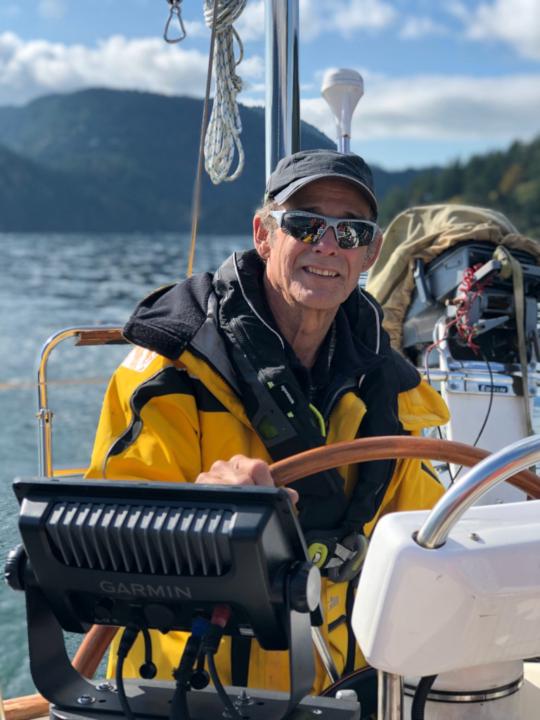
@doug-rutherford-3364
I am a passionate sailor with over 40 years of sailing experience. To share my skills is my main objective.
Active 5d ago
Joined Nov 14, 2025
Kelowna, BC. Canada