Activity
Mon
Wed
Fri
Sun
Nov
Dec
Jan
Feb
Mar
Apr
May
Jun
Jul
Aug
Sep
What is this?
Less
More
Beyond the surface
520
Free
2 contributions to Beyond the surface

Dec '25 •
INCIDENT CASE STUDY: When Production Pressure Kills Safety Culture
Date: 10 December 2018 Location: Las Palmas, Gran Canaria, Spain Company: Otech Marine Services Client: Diamond Offshore Project: Ocean Great White - Thruster Anode Welding Incident Type: Type 2 Decompression Sickness (Vestibular Bends) Outcome: Diver airlifted to Tenerife for hyperbaric treatment THE INCIDENT A commercial diver suffered Type 2 DCS with vestibular symptoms (severe dizziness, balance loss, ear pain) after a 56-minute bottom time at 60ft. Within 10 minutes of surfacing, the diver reported symptoms. What followed was a textbook example of how NOT to manage a diving emergency. THE SETUP: Recipe for Disaster Aggressive Schedule Dive Tables Used: USN Rev. 7 at 60ft/63min What Should Have Been Used: Norwegian tables (more conservative) Reality: Diver had completed 5 consecutive days of hard repetitive diving Red Flag: No formal deviation request submitted for using non-Norwegian tablesThe Dive Profile (Last Day) Date Bottom Time Surface Interval Max Depth Table Used 05.12.18 38 mins N/A 16.6m 18.3/63 60/63 06.12.18 38 mins 38 hrs 18 mins 13.5m 15.2/92 50/92 08.12.18 57 mins 26 hrs 56 mins 17.4m 18.3/63 60/63 09.12.18 24-45 mins 24 hrs 45 mins 17.6m 18.3/63 60/63 09.12.18 56 mins 19 hrs 34 mins 17.6m 18.3/63 60/63 Bottom line: This diver was being pushed to the absolute limit, repeatedly. THE CRITICAL FAILURES 1. REFUSAL TO RECOMPRESS IMMEDIATELY What Happened: Diving Supervisor decided AGAINST using the onsite DDC Reason given: "Faulty O2 analyzer - can't control O2% in chamber" Diver left breathing surface O2 instead Why This Was Wrong: Treatment Table 6 requires recompression to 60ft IMMEDIATELY O2 analyzer failure does NOT prevent chamber use Could have vented chamber and topped up with fresh gasEvery minute delayed = increased risk of permanent injury The Expert Opinion: "We should have used the Otech DDC immediately (treatment table 6) with direct communication with the hyperbaric doctor and not wait for the ambulance and the Hyperbaric facilities of the island because Lewis had obvious neurological signs and

2 likes • Jan 28
Cover ups, influence and lies. Incompetence, negligence and gross abandonment of Duty of Care. Big question marks around Supervisors genuine trainee Panel Hours. More to come on this one yet.
2 likes • Feb 26
Agreed Francis, add to this the well documented additional hyperbaric stress and the previous two dives also being at the extremes of the Tables and the resulting DCI becomes inevitable.
Feb 20 •
What about the use of a small electronic sensor in commercial diving
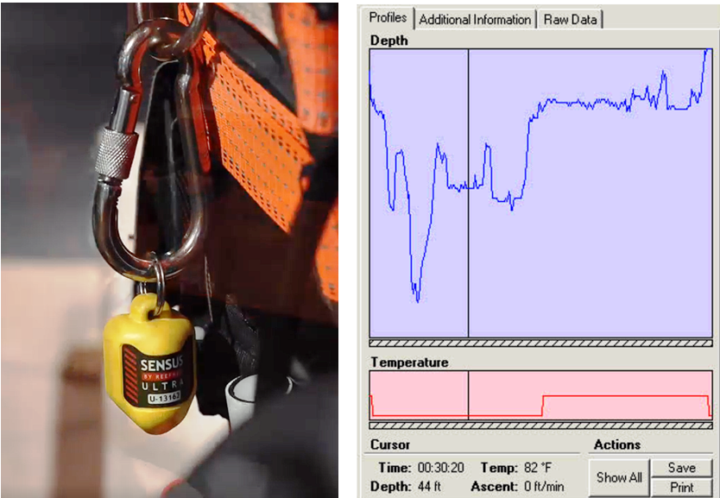
Hi everyone, I am opposed to the use of wrist‑mounted dive computers in commercial diving. However, I do wonder whether it might be worthwhile for commercial divers to wear a small electronic sensor of this type. The device cannot be read underwater, but it records and stores all dive information, which can later be downloaded to a computer. Several inshore divers here in Belgium have been using it for many years, and personally I find this kind of logging device very useful. In the event of a dispute, it can provide a great deal of valuable information about any problematic dives.
3 likes • Feb 26
Fully agree with your views regarding wrist mounted computers, especially for depth in commercial diving, Francis and the IMCA statement in D 033, although referencing SCUBA divers is very clear; "Some SCUBA divers wear decompression ‘computers’ but these are programmed for recreational users and may not be reliable for the heavier types of work normally carried out by commercial divers." NORSOK also have a similar statement. When we look at Lewis case in detail, it is clear that the supervisor was relying upon the depth readings for Lewis by infrequent and intermittent pneumo checks, (Lewis did not have a wrist device) whereas for Diver 2, he was using the wrist computer, this can be clearly seen on the BB video, this was how the supervisor managed to not see that Lewis had dropped down to slightly deeper than diver 2 when he went to his assistance, on the incident dive, supervisor did not pneumo Lewis at his deeper depth, as a consequence, Lewis dive was given a 18.3m Deco profile and Diver 2 a 21.3m Deco profile when in reality, for good dive management, the dive should have been treated as a single dive for both based upon maximum depths and bottom times.
1-2 of 2
@derek-beddows-3284
This year marks my 50 years in the Global commercial Diving Industry. I have held many roles from hard hat diving to being BP's first Global Diving TA
Active 87d ago
Joined Jan 28, 2026