Activity
Mon
Wed
Fri
Sun
Aug
Sep
Oct
Nov
Dec
Jan
Feb
Mar
Apr
May
Jun
What is this?
Less
More
Memberships
Carl The AI Old Guy
31 members • Free
The Portugal Club
269 members • Free
European Portuguese Challenges
55 members • $10/m
40 contributions to The Portugal Club

Apr 14 •
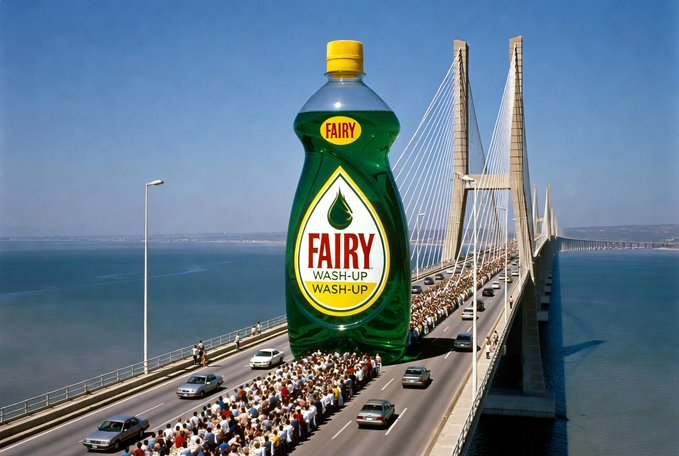
A bridge, beans & bubbles
In 1998, Lisbon celebrated the opening of Vasco da Gama Bridge by serving feijoada (a stew of meat and beans) to 14,763 people seated at a 5000-metre-long table. The event was sponsored by Fairy who used one bottle of its washing up liquid to wash all 14,763 dishes.
Poll
11 members have voted

1 like • Apr 14
I was going to vote true because this is not April 1st, but there's no way they would have served this on real dishes, I'm sure they used disposables.
1 like • Apr 14
And then I Googled it. 🤣
Apr 7 •
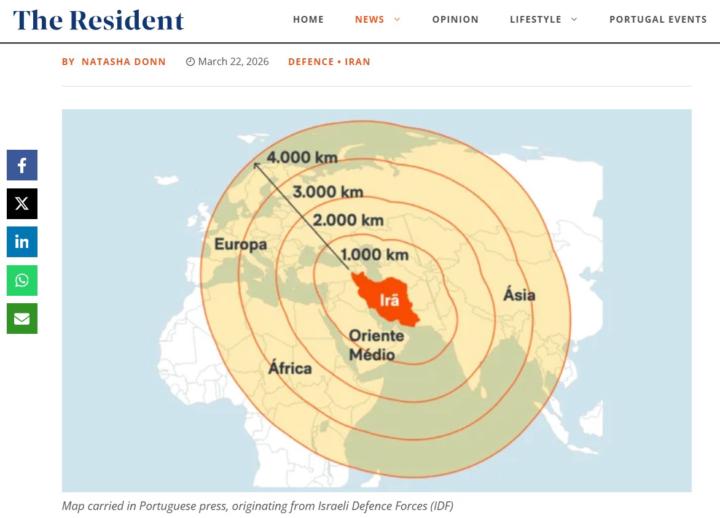
Portugal and Iran, a primer
As the US political leadership is threatening to bomb the country of Iran "back the Stone Age", let's look at the relationship between Portugal and Iran (historically 'Persia' under the Safavid dynasty and later periods): *Early Modern Period (15th–18th centuries)* 1489–1492: First indirect Portuguese contacts with the Persian Gulf region. Explorer Pêro da Covilhã visits the area while scouting trade routes for King João II. 1507: Portuguese forces under Afonso de Albuquerque conquer the strategic island of Hormuz (Ormuz) in the Persian Gulf, establishing control over key trade routes. This marks the beginning of direct Portuguese–Safavid interactions, often marked by both cooperation (against common Ottoman threats) and rivalry. 1513: Afonso de Albuquerque sends ambassadors (Miguel and João Ferreira) to Shah Ismail I of Persia, initiating formal diplomatic exchanges. 1515–1622: Portugal maintains a presence in Hormuz, using it as a trading and military outpost. Multiple embassies travel between the Portuguese Estado da Índia and the Safavid court. Relations involve trade, anti-Ottoman alliances, and occasional conflicts. 1622: Combined Anglo-Persian forces (English East India Company assisting Shah Abbas I) recapture Hormuz from the Portuguese, ending over a century of Portuguese dominance in the Gulf. A subsequent Portuguese attempt to retake it in 1625 ends in a naval stalemate. 1630–1722: After the loss of Hormuz, Portugal shifts focus to Bandar-e Kong on the Persian mainland as a trading center under agreements with Safavid Iran. This sustains commercial ties for about a century. 1736 onward: Relations decline sharply under Nader Shah Afshar. Official political and trade contacts largely cease for decades. *19th–Early 20th Century* Mid-19th century (Qajar period): Sporadic re-engagement, but no sustained official diplomatic framework until the 20th century. *Modern Diplomatic Era (20th–21st centuries)* 1932: Portugal opens its first consulate in Tehran.
Poll
7 members have voted
0 likes • Apr 7
Please write to your senators in the US and demand that they invoke the 25th amendment.
Apr 1 •
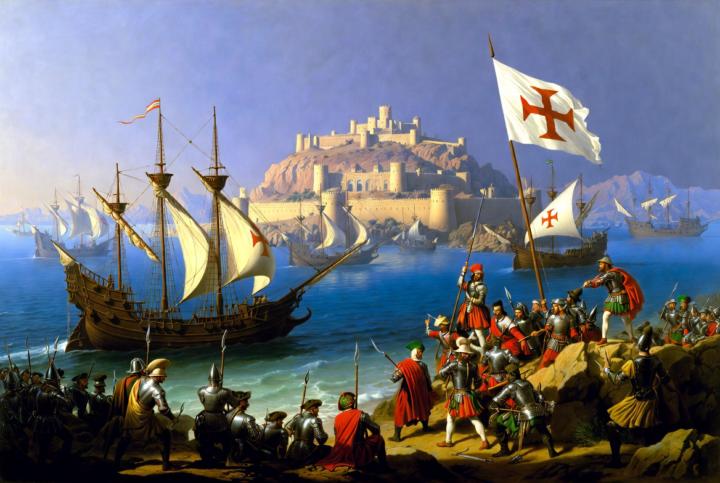
The Portuguese in the Strait of Hormuz?
On this day, in 1515, a Portuguese fleet commanded by Afonso de Albuquerque captured the strategic Persian fortress of Hormuz (Ormuz) in the Strait of Hormuz. Renamed the Fort of Our Lady of the Conception, it secured vital control over spice trade routes between Europe, India, and the Middle East, marking a high point of Portuguese maritime empire-building in the Indian Ocean.
Poll
10 members have voted
1 like • Apr 1
Because of the date, it was tempting to think it was a hoax! But I cheated and did a little research before voting. 😉
Mar 25 •
PTvsIT: Breakfast
Foregoing a traditional meia de leite or galão and pastel de nata, it's a cappuccino and croissant (with mystery filling) for me in Bologna this morning...

0 likes • Mar 25
I want all the Intel on Bologna! I'm going to be there in June for a week, but also exploring other parts of Italy from that base. Tell us what was inside the croissant!
Mar 23 •
Leaving Portugal for a week in Italy (blog) #PTvs IT
Is this a good idea?! This week I will be comparing life in Italy with my life in Portugal ... food, drink, coffee, cakes, the people etc Wherever you are and whatever you are doing, have a great day and week...
1 like • Mar 23
Have a wonderful time! I'm going to Bologna in June. Looking forward to it.
1-10 of 40

@debby-bradford-1469
Loving life in Coimbra and loving travel with my dog!
Active 11d ago
Joined Jun 20, 2023
Coimbra, Portugal