Activity
Mon
Wed
Fri
Sun
May
Jun
Jul
Aug
Sep
Oct
Nov
Dec
Jan
Feb
Mar
Apr
What is this?
Less
More
Owned by Dave
A community for accomplished people navigating the moment when success stops working in a time of metacrisis. Conversations and field notes.
Memberships
30-Day Weight Loss Sprint
21 members • Free
The YouTube Academy
2.4k members • Free
15 contributions to The Pivot Commons
🔥
1d •
The Second Move
DISPATCH April 2026 I’ve been watching the Iran situation this week. The threats, the counter-moves, the escalation. My first move is always a verdict. I notice that. The second move is one I have to choose. It starts with curiosity. What would have someone do what they’re doing? How does this make sense to them? What invisible forces are pushing their hands? Not to excuse it. Just to actually see it. Demonizing is easy. It’s also a dead end. Once I’ve named the villain I’ve stopped looking and this isnt useful to anyone trying to navigate what’s actually happening. The question I keep returning to: if there’s a larger logic at play here, what is it? What values are in genuine collision? What fears? What historical weight? I don’t always find the answer. But the question keeps me in contact with the greater more layered reality rather than my story about it. That feels like the right place to navigate from. One question worth living with: Where are you meeting the world right now with a verdict and what opens up if you get curious instead? Dave
0
0
🔥
Mar 14 •
Welcome to The PIVOT Commons.
You’re in the right place. Take a minute to watch the short video below. When you’re ready, introduce yourself — who you are, where you’re based, and maybe a little of what you’re navigating these days. Nothing formal. No need to have it figured out. Just step in where it feels natural.

🔥
1 like • 6d
@Jj Vega JJ — good to see you here. That arc you described… a lot of people would try to outrun that kind of sequence. You didn’t. What stood out is where you are now. Not the intensity of what happened, but that moment where the move isn’t forward in the old way. Slowing down sounds simple. It’s not, especially when competence and drive have worked for you. There’s a different kind of trust in what you’re naming. Less directional. More allowing something to come back online in its own timing. Glad you brought that in.
🔥
1 like • 6d
@Jj Vega yeah, it's so true. I find the same thing. Some days I feel totally connected. I actually feel the flow of life moving through me, and so the rhythms and all that are all in sync. The next day, or sometimes a few hours later, I'm looking at nature as an object and have to exert effort to feel it. So interesting, this human experiment.
🔥
6d •
The Map Is Not the Problem
Most of what I see called “adaptability” right now is just people trying harder to make the old map work. More resilience. More effort. Better mindset. I don’t think that’s the move anymore. At some point, the issue isn’t how well you’re navigating. It’s that the map itself no longer matches the terrain. Curious who sees it differently — where do you think doubling down is still the right move?
🔥
11d •
What “Moving Without Maps” Actually Points To
I often talk here about navigating without maps in these times. Underneath that is something more specific. It’s what happens when your usual sense of orientation drops. Not just the absence of a plan. The absence of the feeling that tells you how to move. What to trust. How to read what’s in front of you. When that goes, most people reach for a map. Old ones. Or someone else’s. But that’s exactly the moment the phrase points to. Not having a map isn’t the challenge. Losing orientation is. And what begins to form in its place when you stay with it isn’t another map. It’s a different way of orienting altogether. That distinction matters. Because the work isn’t learning to navigate without a map. It’s learning to trust a different kind of knowing.
🔥
1 like • 10d
@Geoff Davis Geoff, not dense at all—that’s actually the right question. When I say “maps,” I mean the mental models and assumptions we use to make sense of things and decide how to move. Things like: – what success looks like – how effort leads to results – how relationships work – what role you think you’re playing Most of the time we don’t even realize we’re using a map. It just feels like “the way things are.” The moment I’m pointing to is when that stops holding. Not just that a plan doesn’t work, but the underlying assumptions don’t quite fit anymore. That’s usually when we go looking for a better map. What I’m interested in here is something a bit different: how to stay oriented when no map fully fits. That’s the edge this space is exploring. What occurs to you as you read this?
🔥
14d •
Strange moment.
Talking about war then groceries then what’s on tomorrow. All in one conversation. That’s where we are.
🔥
2 likes • 11d
Its an interesting practice to hold both the meta and existential events and the mundane day to day. Has anyone found any particular movement, practice or way in that helps the holding of both ?
1-10 of 15
🔥
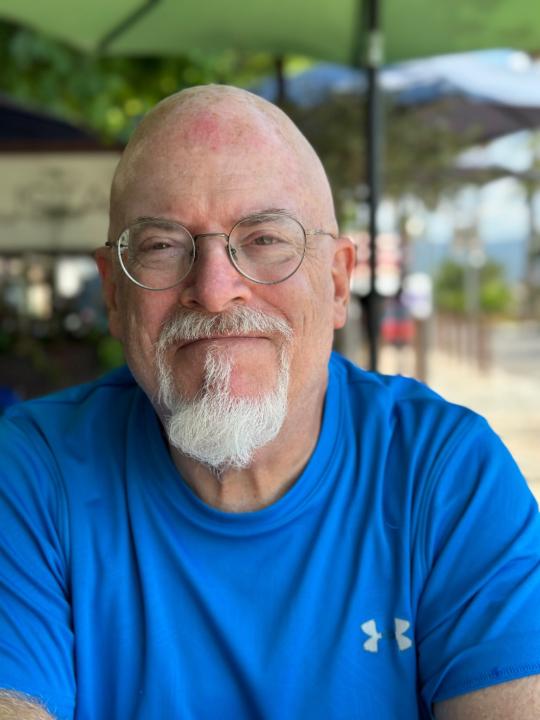
@dave-schoof-8127
I help accomplished people navigate and thrive when their old maps no longer work. Swiss-based, working globally. Founder of The Pivot Commons.
Active 4m ago
Joined Mar 13, 2026