Activity
Mon
Wed
Fri
Sun
Sep
Oct
Nov
Dec
Jan
Feb
Mar
Apr
May
Jun
Jul
Aug
What is this?
Less
More
Owned by Darin
For business leaders ready to put Type 2 Diabetes into REMISSION, regain energy, lose weight, & improve their metabolic health with a keto lifestyle
Skoolers
161.7k members • Free
42 contributions to ChatGPT Users

5d •
Turn daily AI news into content ideas without chasing every shiny thing
A daily AI news brief can be useful, but only if it saves you from another inbox-shaped rabbit hole. Pick one topic your customers or audience actually care about. Then ask ChatGPT to find the latest credible news, articles and videos from the last 24 hours. Have it return the headline, date, source, direct link, a short summary, why it matters to your audience, and three possible content angles. Try this prompt: "Search the web for the most important new developments about [TOPIC] from the last 24 hours. Prioritise primary sources and credible reporting. Give me a table with the headline, publication date, source, direct link, two-sentence summary, why it matters to [AUDIENCE], and three useful video or post angles. Flag anything uncertain or based on secondary reporting. If nothing material has changed, say so. Do not invent sources." If you use ChatGPT's recurring task features, you could run that prompt as a daily brief. Otherwise, keep it as a quick morning routine in a normal chat. The important part is what happens next. Open the links, decide whether there is a real angle, then make one useful piece of content. You do not need to cover every update. You need to notice the few that are worth your audience's time. What topic would you most like a daily brief to keep an eye on?


0 likes • 4d
@Jason West yeah, the repeat issue also happens because many outlets pick up the same story and do their spin on it, too. My GPT has a lot of my history, and business building blocks known, so the results I get are kind of tailored to me, as it knows my vibe. So, each day my brief opens with a theme, then I get the 5 different topics, then a "what matters most" section at the end, wrapping up the report, theme and takeaways. The headlines are interesting to me, as I almost always roll my eyes at them.... meaning, how the news gets spun my different orgs drives me nuts. So, for me, it's prob the angles for content that I could then plug into Claude to help flesh out more content. I will typically paste the entire brief, with sourced links, too... and my Claude is really dialed in on my voice, and ICP. For fun, here is one of todays 5 briefs. AI is getting increasingly good at interpreting CGM data. That creates a new problem: false precision. A 2026 research project called GlucoFM trained an artificial-intelligence foundation model on more than 109,000 hours of continuous glucose monitor data. Researchers designed the model to separate longer-term physiological patterns from short-term glucose events and reported improved prediction of diabetes risk, insulin resistance, and beta-cell dysfunction across several datasets. This is a preprint, not yet something to use clinically. But the direction is worth watching. Plain English Today a CGM mostly tells you: “Here's what your glucose did.” Tomorrow, AI may increasingly say: “Here's what this pattern probably means.” And eventually: “Here's what may happen next.” That sounds incredibly useful. It could be. Contrarian angle More sophisticated interpretation creates the illusion that glucose contains the entire metabolic story. It doesn't. An AI can find patterns in glucose that a human would never notice. But it still does not automatically know: - what you ate accurately; - your muscle mass; - why you slept poorly; - whether you're stressed; - whether you're ill; - what your medications changed; - whether the sensor is wrong; - what outcome actually matters to you.
0 likes • 3d
@Julie Helmer absolutely!
Apr 22 •
ChatGPT Image 2 is Here....Wow!
We’ve just had a pretty big update drop with ChatGPT Image 2… and it’s seriously impressive. I’ve been testing it over the last day, and the quality of the images it’s producing is on another level compared to what we’ve seen before. The detail, lighting, realism, and consistency are all noticeably better - no more gibberish text too! What stood out most for me: - Much more realistic faces and expressions - Better text handling inside images (still not perfect, but a big step forward) - More consistent styles across multiple images - Stronger understanding of prompts without needing loads of tweaking I’ve attached a bunch of examples to this post so you can see exactly what it’s capable of 👇 If you’re creating content, ads, thumbnails, product visuals, or even just experimenting… this is definitely worth spending some time with. 🤩 Curious to hear what you all think once you’ve tried it. Have you managed to get anything particularly good out of it yet that's going to be useful to your business? Cheers Jason 🙌
0 likes • Apr 28
@Jason West Yeah... I gave a very basic prompt for a line of copy I would be sharing online, and I received two different images from GPT. One came up with a pretty cool concept. Then I uploaded a couple of reference photos of me and asked it to create a movie poster... and it went pretty wild. The detail in the copy is pretty awesome.
0 likes • Apr 28
@John Santos gotta keep it real. 😂 That was a good tip, though.
Jan 16 •
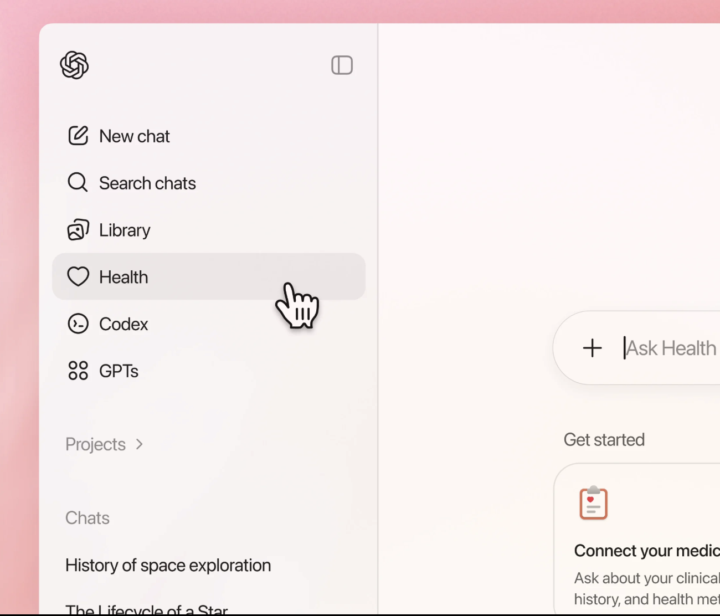
ChatGPT Health Mode 👩⚕️
ChatGPT quietly rolled out a new Health mode the other day, and it’s actually a meaningful addition rather than just a label change. The idea is simple: when you’re asking questions about health, symptoms, fitness, sleep, nutrition, or general wellbeing, ChatGPT now switches into a mode that’s more careful, more structured, and clearer about uncertainty and next steps. I get my blood tested every year and checked for everything and then I upload the results into ChatGPT for its feedback but now I can just keep it permanently uploaded in the ChatGPT health section for future questions etc. I also linked up my Apple Watch data to ChatGPT health so it has more health data on me to work from. At this point I think ChatGPT probably knows me better than my wife 😄 What I’ve noticed so far: - The answers are calmer and more balanced - It avoids jumping to conclusions or worst-case scenarios - It’s much better at explaining what’s normal vs what might be worth checking - It’s clearly designed to support thinking, not replace a professional This isn’t about diagnosis or medical advice. It’s about helping people understand what they’re experiencing, ask better questions, and make more informed decisions. If you’ve already used ChatGPT for things like: - training plans - recovery, sleep, or nutrition - understanding symptoms before a GP visit - general health education you’ll probably notice the difference straight away. Has anyone here tried it yet? Cheers Jason
4 likes • Jan 16
I am looking forward to seeing how this works once I have access. Hopefully get it soon. Prior to this, I have used GPT quite a bit to review my health data, so I am curious to see if things are improved or not.
Dec '25 •
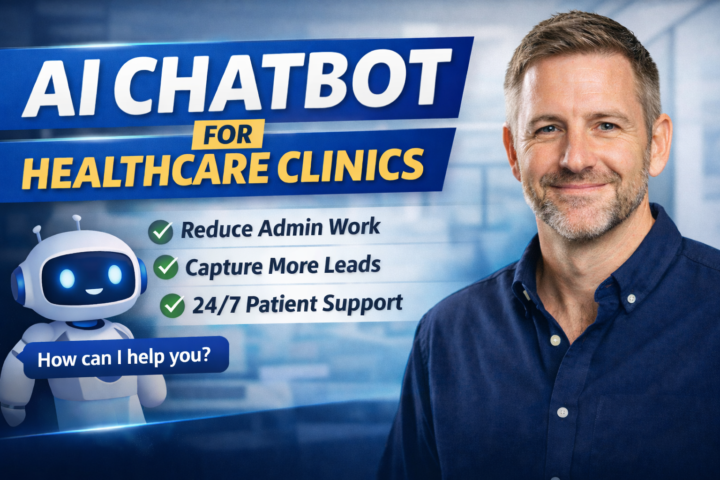
Check out the new ChatGPT Images for thumbnails
I’ve been testing ChatGPT’s new version of images and it’s fantastic for creating eye catching thumbnails. It's also really good for social media posts etc too. I’ve attached an example below so you can see what it can do. Let me know what you think! #ChatGPT #AIArt 😊
5 likes • Dec '25
Looking forward to trying it out. I have been using Gemini/Banana for a while now... it's hard to go back to GPT. But this does look promising.
2 likes • Dec '25
@Steffen Braun, I have looked in to Abacus previoulsy... may be worth checking out again one of these days.
Oct '25 •
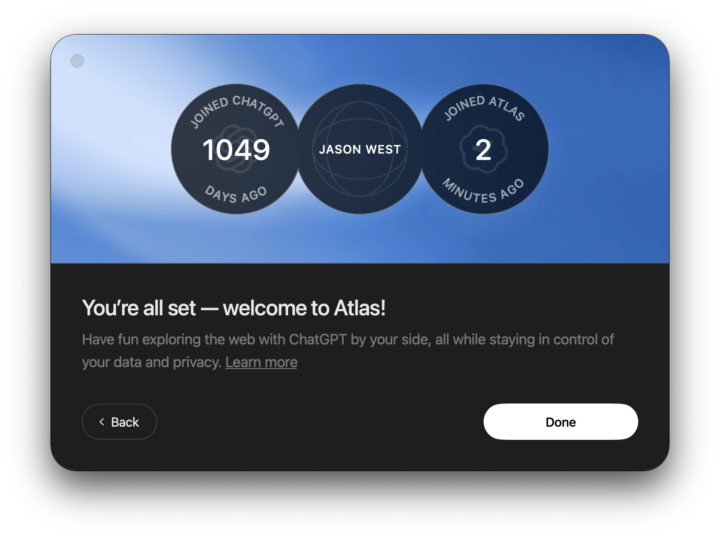
Anyone Tried the New ChatGPT Atlas Browser Yet?
I've been playing around with it today, and so far I quite like it. It's actually based on the Chromium browser, so it won't feel altogether too unfamiliar if you've been using Chrome. It's been quite helpful having ChatGPT in the sidebar and also having the agent be able to interact with whatever website you're on, perhaps to carry out some searches or create some summaries and things. I haven't found anything groundbreaking so far, and it always feels weird changing from a browser you have used for years, but I can see it becoming very useful the more I discover how to get the best from it. If you've given it a try, let me know what you think below! Cheers Jason
4 likes • Oct '25
I downloaded it, but apparently it will not run on my older MacBook Pro. Perhaps the Macs must be new and AI-enabled?
1-10 of 42

@darin-berntson
I Help Business Leaders Put Type 2 Diabetes Into Remission | 25+ Years Managing the Wrong Problem. 11 Months Fixing the Right One | Disney fan 🏰 ºoº
Online now
Joined May 23, 2023
Salt Lake City, Utah
Powered by