Activity
Mon
Wed
Fri
Sun
Nov
Dec
Jan
Feb
Mar
Apr
May
Jun
Jul
Aug
Sep
What is this?
Less
More
FLUTARIAN IMPROVISATION
173
Free
9 contributions to FLUTARIAN IMPROVISATION

11d •
Which Type of Flutes Do You Have? POLL! Picc-Concert-Alto-Bass
Piccolo (one octave higher than concert flute) Concert Flute (standard) Alto Flute (one fourth lower than concert flute) Bass Flute (one octave lower than concert flute) Anybody played Contrabass Flute??
0 likes • 2d
Powell wooden piccolo Miyazawa flute Purple Amazon flute A few head joints I’ve been trying to sell! A Gary Schocker and a Haynes alloy My moms alto flute I’ve been “borrowing” for 6 years now 🤣 Bass flute I bought last year and haven’t touched yet 🙈 D penny whistle
28d •
Forgot to post
I’m working through overcoming the resistance to playing. I honestly almost feel like I’m through it which is nice. I can see the light at the end of the tunnel of this moody return to my music chapter. I was leaving for a flight to family vacation early the next morning and I had friends over and I had to pack and I could see a whole week slipping through my fingers without playing again so I just sat down and made these. My flute is slowly creeping back up the priority list of my busy life. And for that, I’m grateful. I like how I smile and interact with the fly on my face musically. Next time I’d like to use more articulation and silence.

1 like • 23d
@Sue Lenssen thank you!!!
2 likes • 23d
@Sue Lenssen aww this is so sweet thank you
28d •
Colour My World
I mentioned this song today in Improv Games. It's one of the first ones I ever played with a band as a kid at my cousins wedding and it holds a special place in my heart as a flutist and classic rock girlie :) https://youtu.be/VZG3hSRo6ck?si=iO9SjSuV8vHqJT2d
Aug 3 •
Here we go…
Hello Flutarians 👋 This is my first post. I was a professional flutist in NYC until I was 27 then I walked away from my flute, my career and NY to travel in my van and never went back. Now settled in Baja Mexico with a new career a husband and a happy life I’m finally ready to heal my relationship with my flute and begin again. And honestly? I’m terrified and sad and I don’t wanna. lol but I do and it’s gonna be okay and I will. I am doing the mini improv challenge and Vic suggested I make 3 30 second videos on different instruments. I made the penny whistle one and then took out my flute played one noted and burst into tears. Had a long cathartic chat with my husband got up and went back in to finish the flute and piano videos. I like how I did it. Next time I don’t wanna cry so much. I included the first try at the flute one because I have a feeling some of you can relate. I want Vic to know I’m grateful to him for stewarding me through this part of my story. Because it’s a tough one 💜

2 likes • Aug 7
@Sheri Hudgins thank you so much 🫶
1 like • Aug 17
@Pat Marcello thanks Pat!
Aug 3 •
Sometimes the path to success is THROUGH the discomfort. Here's my simple direction to start improvising on piano too.
I just wanted to make a quick post applauding my recent student, @Daphne Sasson, on moving forward with improvising through the discomfort... discomfort to the point of tears. Some of us here in Flutarians carry enough baggage in our emotional journey that even just picking up our instrument and starting to make some mistakes we feel like crying. That's okay. I might even say it's normal. It's not normal for all of us, but it has been normal for some of us. It's better to feel the feelings than to squash them down, in my opinion. And we can even use the momentum of those feelings to inspire our creative choices when we're improvising. Perhaps we'll use that sense of tension to create a sense of tension or dissonance in the music that we can then resolve. And I wanted to address this concept of improvising on the piano: Now, when I started improvising, I started on the piano, and I discovered quickly that one of the main differences between improvising on the piano and improvising on the flute is that on the flute you can only play one note at a time! And on the piano, obviously, you can play multiple notes at the same time, which exponentially increases the complexity if you choose to play multiple notes at the same time! So, since my main goal was to improve my improvising on the flute, when I started improvising on the piano, I focused on just playing one note at a time. I would support in the left hand with something like... just let the note ring. But I would explore the interaction between that one note with one finger in my left hand and one note with one finger in my right hand... I discovered that certain notes play better together than others, or play more consonantly together. They get along better, and others have more of a tension to them. So another nice thing about the flute compared to the piano is that we can increase our volume on a single note! On the piano, it's technically a percussion instrument, so you can just strike the note, and that's as loud as it's going to be. It's not going to get any louder. Then it will get quieter.

1 like • Aug 3
Thank you for these pearls
1-9 of 9
@daphne-sasson-7095
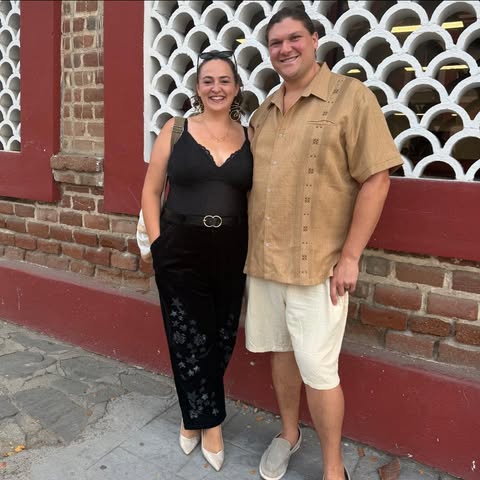
Flutist with a van living the dream ready to turn this classical baddie into a jazz baddie
Active 2d ago
Joined Jul 3, 2026
Baja California Sur, Mexico