Activity
Mon
Wed
Fri
Sun
Aug
Sep
Oct
Nov
Dec
Jan
Feb
Mar
Apr
May
Jun
What is this?
Less
More
Owned by Dante
Follow the plan. Earn everything. Strength, discipline, and accountability—no shortcuts.
Memberships
The Boss Suite
16.9k members • Free
103 contributions to UOU: The Standard

27d •
June Challenge
Walk 90 miles for the month of June. Post your progress here. Pictures for accountably is Always helpful :)
1
0

May 11 •
So you like Sugar! But did you know
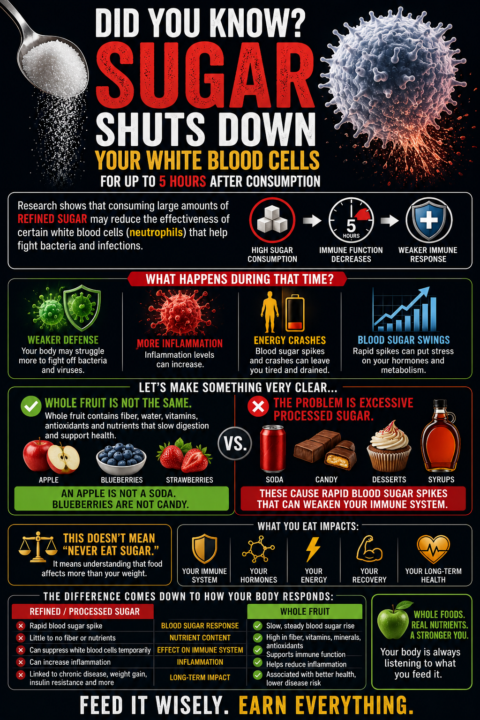
Did you know excessive refined sugar intake can temporarily suppress parts of your immune system? Research has shown that consuming large amounts of processed sugar may reduce the effectiveness of certain white blood cells for several hours after consumption. That means during that time: • Your immune response may be weaker • Your body may struggle more to fight off bacteria and viruses • Inflammation can increase • Energy crashes and blood sugar swings can rise But let’s make something VERY clear… This is NOT the same as eating whole fruit. Whole fruit contains: • Fiber • Water • Vitamins • Antioxidants • Nutrients that slow digestion and support health An apple is not the same thing as a soda.Blueberries are not the same thing as candy. The bigger concern is excessive intake of: • Soda • Candy • Syrups • Ultra-processed foods • Sugary drinks • Constant added sugars flooding the bloodstream This doesn’t mean “never eat sugar.”It means understanding that food affects more than your weight. What you eat impacts: • Your immune system • Your hormones • Your energy • Your recovery • Your long-term health Your body is always listening to what you feed it. Feed it wisely. Earn Everything.
May 10 •
🚨 Future Junior High school Athletes
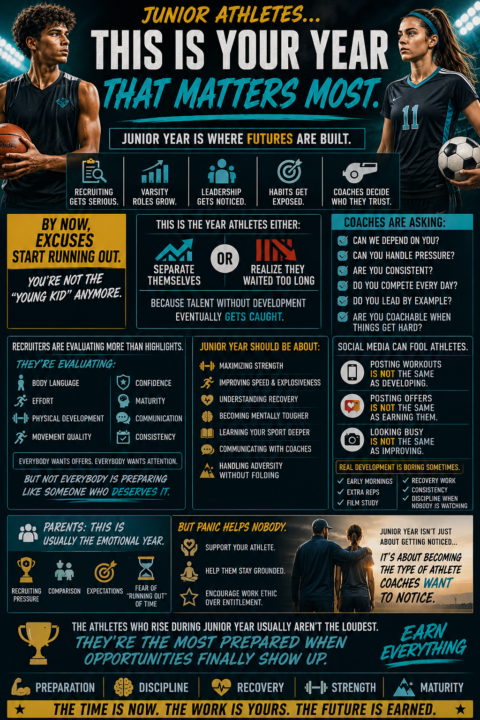
Junior athletes… This is the year everybody says matters most. And they’re not wrong. Junior year is where: • recruiting gets serious • varsity roles grow • leadership gets noticed • habits get exposed • coaches decide who they trust By now, excuses start running out. You’re not the “young kid” anymore. This is the year athletes either: • separate themselves OR • realize they waited too long Because talent without development eventually gets caught. At this stage, coaches are asking: • Can we depend on you? • Can you handle pressure? • Are you consistent? • Do you compete every day? • Do you lead by example? • Are you coachable when things get hard? And athletes need to understand something important… Recruiters are not just evaluating highlights. They’re evaluating: • body language • effort • physical development • movement quality • confidence • maturity • communication • consistency Everybody wants offers.Everybody wants attention. But not everybody is preparing like someone who deserves it. Junior year should be about: • maximizing strength • improving speed and explosiveness • understanding recovery • becoming mentally tougher • learning your sport deeper • communicating with coaches • handling adversity without folding This is also where social media can fool athletes. Posting workouts is not the same as developing.Posting offers is not the same as earning them.Looking busy is not the same as improving. Real development is boring sometimes. It’s: • early mornings • extra reps • film study • recovery work • consistency • discipline when nobody is watching And parents… This is usually the emotional year. Recruiting pressure.Comparison.Expectations.Fear of “running out of time.” But panic helps nobody. Support your athlete. Help them stay grounded.Encourage work ethic over entitlement. Because junior year isn’t just about getting noticed… It’s about becoming the type of athlete coaches WANT to notice. The athletes who rise during junior year usually aren’t the loudest.
2
0
May 10 •
🚨 Future Sophomore High School Athlete
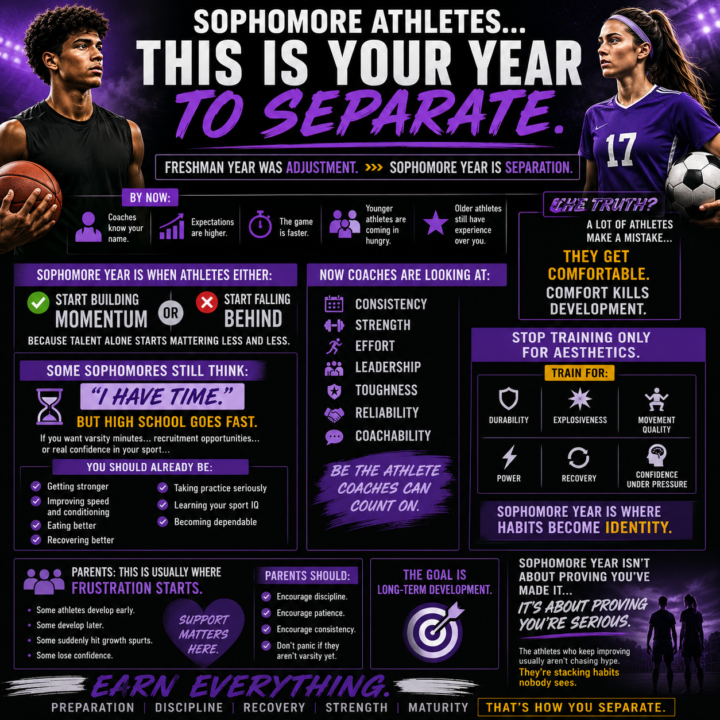
Sophomore athletes… This is usually the year the truth shows up. Freshman year was adjustment.Sophomore year is separation. By now: • Coaches know your name • Expectations are higher • The game is faster • Younger athletes are coming in hungry • Older athletes still have experience over you This is where a lot of athletes make a mistake… They get comfortable. Comfort kills development. Sophomore year is when athletes either:• start building momentum OR• start falling behind Because talent alone starts mattering less and less. Now coaches are looking at: • consistency • strength • effort • leadership • toughness • reliability • coachability And here’s the reality… Some sophomores still think:“I have time.” But high school goes FAST. If you want varsity minutes…recruitment opportunities…or real confidence in your sport… You should already be: • Getting stronger • Improving speed and conditioning • Eating better • Recovering better • Taking practice seriously • Learning your sport IQ • Becoming dependable This is also the year athletes need to stop training ONLY for aesthetics. Train for: • durability • explosiveness • movement quality • power • recovery • confidence under pressure Sophomore year is where habits become identity. And parents… This is usually where frustration starts. Some athletes develop early.Some develop later.Some suddenly hit growth spurts.Some lose confidence. Support matters here. Encourage discipline.Encourage patience.Encourage consistency. Don’t panic if they aren’t varsity yet. The goal is long-term development. Because sophomore year isn’t about proving you’ve made it… It’s about proving you’re serious. The athletes who keep improving usually aren’t chasing hype. They’re stacking habits nobody sees. Earn Everything.
2
0
1-10 of 103

@dante-dudley-8218
Personal Trainer looking to scale business with digital opportunities
Active 12h ago
Joined Mar 17, 2026
Powered by