Activity
Mon
Wed
Fri
Sun
Apr
May
Jun
Jul
Aug
Sep
Oct
Nov
Dec
Jan
Feb
Mar
What is this?
Less
More
Owned by Carly
Vitality Forever is for those who wish to learn powerful movement tools for empowerment over the body.
Memberships
BioOptimization Collective
217 members • Free
1 contribution to BioOptimization Collective

6d •
THIS Is Why Your Peptides Aren’t Working Like They Should And No One Talks About It
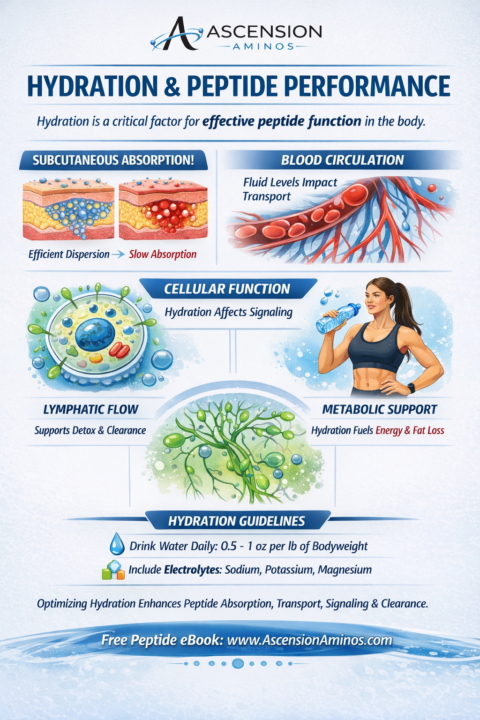
Hydration is one of the most overlooked variables in peptide performance, yet it directly influences how effectively peptides function in the body. Most peptides are administered subcutaneously, meaning they rely on the fluid environment beneath the skin to disperse properly. When hydration is adequate, peptides can spread more evenly and enter the circulation more efficiently. In a dehydrated state, absorption can slow down, and distribution becomes less consistent. Hydration also plays a major role in circulation. Blood volume largely depends on fluid status, which directly affects how well peptides are transported to target tissues. When hydration is low, delivery becomes less efficient, which can blunt the overall response. At the cellular level, water is essential for proper signaling. Cell membrane function, receptor activity, and intracellular communication all depend on a well-hydrated environment. When hydration is compromised, cellular stress increases, and signaling efficiency may decrease. The lymphatic system is another key factor. Proper hydration supports lymph flow, which helps with peptide clearance and overall metabolic waste removal. Without adequate fluid intake, this system becomes less efficient. For those running mitochondrial- or fat-loss-focused protocols, hydration becomes even more important. Increased metabolic activity and signaling demand a higher level of fluid and electrolyte balance to maintain performance and consistency. A simple guideline is to maintain daily water intake relative to body weight and ensure adequate electrolytes, such as sodium, potassium, and magnesium, to support proper fluid distribution. Drinking water alone is not always enough if electrolyte balance is not addressed. The key takeaway is that hydration is not just a general health habit. It is a controllable variable that directly impacts peptide absorption, transport, signaling, and clearance. Optimizing hydration is one of the simplest ways to improve overall outcomes in peptide research protocols.

1 like • 5d
So true! I was just telling this to one of my clients.
1-1 of 1
@carly-belle-6138
Carly Belle is a nationally recognized advanced Corrective Exercise Specialist, Parkinson’s Movement Trainer, Yoga Therapist, & nutrition guide.
Active 5d ago
Joined Nov 10, 2025
Powered by