Activity
Mon
Wed
Fri
Sun
Oct
Nov
Dec
Jan
Feb
Mar
Apr
May
Jun
Jul
Aug
Sep
What is this?
Less
More
ASA Service Dogs
119 members • Free
Cool Dog Skool
134 members • $97/month
Public Access Prep School
323 members • Free
Paradigm K9 Dog Training
269 members • Free
22 contributions to Paradigm K9 Dog Training

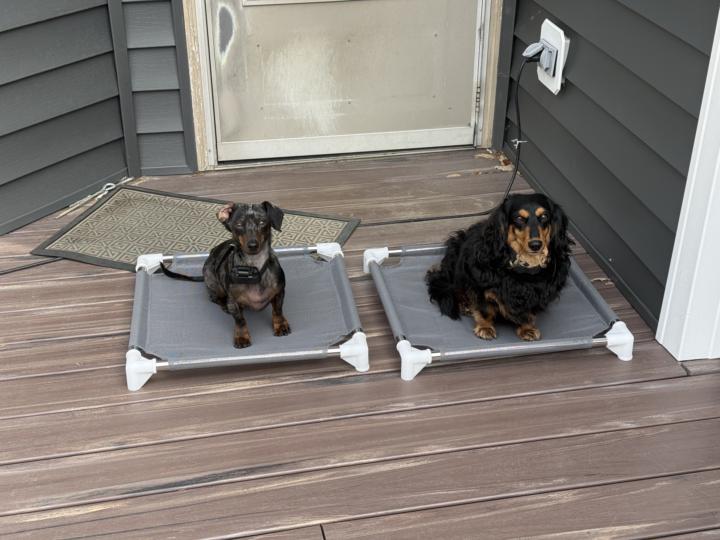
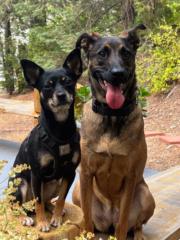
0 likes • 16d
Well done. It fun to see two dogs training together.
0 likes • Feb 3
How do you know when dogs like Cash are ready for a level up on correction? Like if he totally blew off the mild correction would you level up?
0 likes • Apr 8
@Jeff Thomson thanks for the explanation

Jan 19 •
January Dogs - Inside Look
This was the end of the first week for these guys. Check em out, everyone is doing awesome!
0 likes • Jan 22
Nice progression with all the dogs.
Jan 12 •
Cash – Day 1 | Building Trust Before Training
I want to introduce you to Cash. He’s an interesting case, but also a good example of why trust and emotional conditioning come before obedience. Cash will take food from me, but eye contact, direct body pressure, and certain types of interaction are very triggering for him. Based on his history, my working theory is that people previously tried to intimidate him—likely attempting to create aggression instead of stability. The result wasn’t protection… it was conflict, anxiety, and compulsive behavior. What you’re seeing here (the spinning, tail biting, tension) is a dog who learned he had no control over what was happening to him. So the goal on Day 1 is not commands. It’s not corrections. It’s not “testing” him. The goal is predictability. Right now, every interaction I have with him needs to communicate one thing: When I engage with you, good things happen. That’s why all of his food is being hand-fed through the kennel. It’s safe, controlled, and emotionally clear. I’m intentionally squaring up, talking to him, and occupying space—without forcing eye contact or pushing him past his threshold. If he chooses to disengage visually, that’s fine. We’ll build that later. Dogs’ behavior follows their expectations. If Cash learns to expect calm, predictable, positive interactions with me, his behavior will start to reflect that. But because of his history, there’s no room for sloppy handling or rushed progression. One wrong move can set him back—or put someone at risk. Over the next 6–8 weeks, I’ll walk him through this process step by step: • Reconditioning his emotional response to people • Creating safety and predictability • Gradually expanding freedom and interaction • Only then layering in skills and structure This is what real rehabilitation looks like. Trust first. Clarity second. Skills come later. Stay tuned — I’ll keep documenting his progress and the decisions behind each step.

0 likes • Jan 13
Cash is in good hands now. What were the reasons his owners brought him in? I’m looking forward to watching you work with Cash these next 6-8 weeks. How old is he?
0 likes • Jan 16
@Jeff Thomson how old is Cash? He looks young.
Dec '25 •
📢 Live Training Announcement
If you have more than one dog and your home feels calm one moment and chaotic the next, this training is for you. I’m hosting a free live training on how to manage multiple dogs in the home — covering structure, boundaries, and the rules that actually prevent tension and conflict. 📅 Date: Thursday, December 18 ⏰ Time: 6:30 PM EST This isn’t about teaching more commands. It’s about creating calm through management and leadership. 👉 RSVP to the event above and drop any questions you want me to cover live.
0 likes • Dec '25
@Jeff Thomson I have never watched a live on Skool, looking forward to it.
1 like • Dec '25
@Cameron Mann 🤣 this is a very common problem.
1-10 of 22
@carissa-stark-1151
Welcome to Stark K9 Academy. Where our two Super Pups Amica & Riley are learning all sorts of wonderful skills to complete special missions.
Active 4d ago
Joined Jul 24, 2025
Powered by